How to Clean Burnt Pots and Pans at Home (Jale Hue Bartan Saaf Karne Ka Tarika)
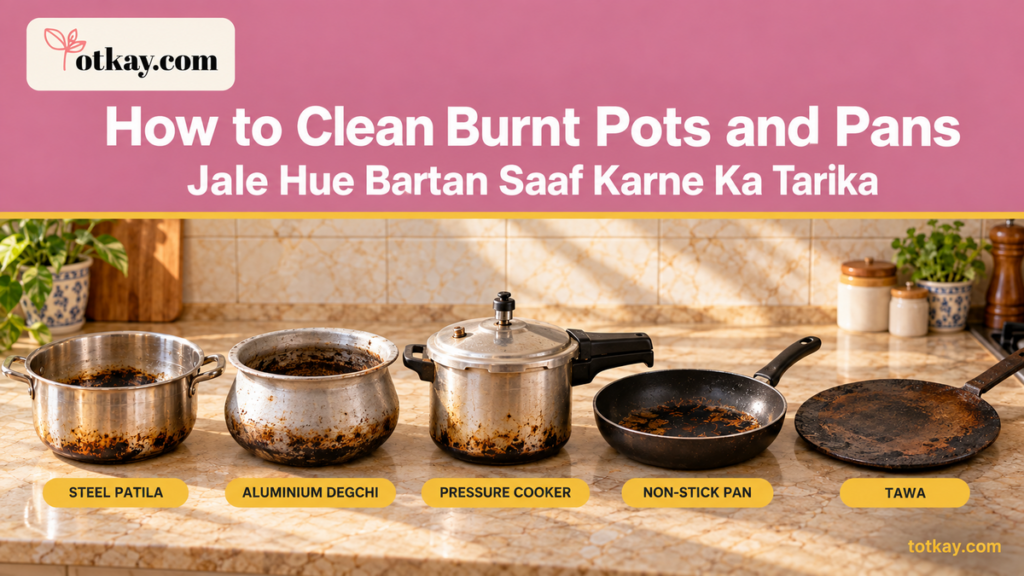
To learn how to clean burnt pots and pans, start with one rule: match the method to the metal. Let the pot cool, soak it in warm soapy water, then scrape gently with a wooden spatula. After that, simmer baking soda for burnt pan bottoms in stainless steel, use lemon or vinegar for aluminium, and stick to a soft sponge on non-stick. This jale hue bartan saaf karne ka tarika works with kitchen staples and protects your cookware from damage.
Table of Contents
- Match the Method to Your Cookware
- Step One for Every Burnt Pot: Cool, Soak and Scrape
- Burnt Steel Patila: The Baking Soda Simmer
- Burnt Milk or Kheer at the Bottom
- Black Stains on the Outside Bottom
- Burnt Aluminium Degchi: The Mild Acid Method
- Burnt Pressure Cooker Cleaning: Body, Lid and Gasket
- Burnt Non-Stick Pan: Soft Sponge and Baking Soda Only
- Burnt Cast-Iron Tawa: Scrub, Dry and Re-Oil
- Expert Tips and Mistakes to Avoid
- Bring Your Bartan Back Without Damage
- Frequently Asked Questions
Match the Method to Your Cookware
Most popular cleaning guides focus on Western cookware. Pakistani and Indian kitchens, however, mix several metals on one stove: a steel patila for daal, an aluminium degchi for rice, a pressure cooker for meat, and an iron tawa for roti.
Each metal reacts differently to heat, scrubbing, and cleaners, so the first lesson in how to clean burnt pots and pans is knowing your metal. The table below helps you pick the safest method before you touch a scrubber.
| Cookware | Best first method | Safe tools | Avoid | What to expect |
| Steel patila (stainless steel) | Simmer water with 1 to 2 tablespoons baking soda per litre of water | Wooden spatula, sponge, light steel scrubber | Boiling dry, bleach | Many burns lift in one or two rounds |
| Aluminium degchi | Simmer 1 part white vinegar to 2 parts water, or lemon slices | Wooden spatula, soft scrubber | Long baking soda boils, washing soda, dishwasher | Food lifts; a faint stain may stay |
| Pressure cooker | Remove gasket and whistle; clean body with lid off | Soft scrubber, small brush for the vent | Sealed-lid boiling, abrasives on hard anodised | Body cleans well; check vent before reuse |
| Non-stick pan | Soak, then baking soda paste | Soft sponge, cloth | Steel wool, scouring powder, high heat | Residue lifts; scratched coating will not recover |
| Cast-iron tawa | Coarse salt and oil scrub, then dry on flame | Flat spatula, stiff brush, paper towel | Long soaking, leaving it wet | Clean surface; may need re-seasoning |
Once you know your material, start every pot with the same gentle first step below.
Step One for Every Burnt Pot: Cool, Soak and Scrape
Every reliable method for cleaning burnt pots and pans starts with this gentle step, and different methods work better for different cookware and residue levels. Soaking softens the burnt layer, so you scrub less and scratch less. Light burns from milk or daal often lift at this stage alone.
- Cool it naturally: Let the pot reach room temperature, because cold water on a hot pan can warp a thin base or crack cast iron.
- Scrape loose food: Use a wooden or silicone spatula or a wooden spoon to remove anything that comes away easily.
- Soak with soap: Fill the pot with warm water and a few drops of dish soap until the water covers the burnt area, then wait 30 minutes to a few hours; after the pan has cooled, very stubborn burnt-on food may loosen faster if you use boiling water instead.
- Scrape again: Work the softened layer loose with the spatula, then wash with a soft sponge.
This first step cuts down on elbow grease before you move on to stronger cleaning methods.
For everyday soaking, a mild cleaner works well, and you can mix your own from our guide to DIY cleaning products.
Burnt Steel Patila: The Baking Soda Simmer
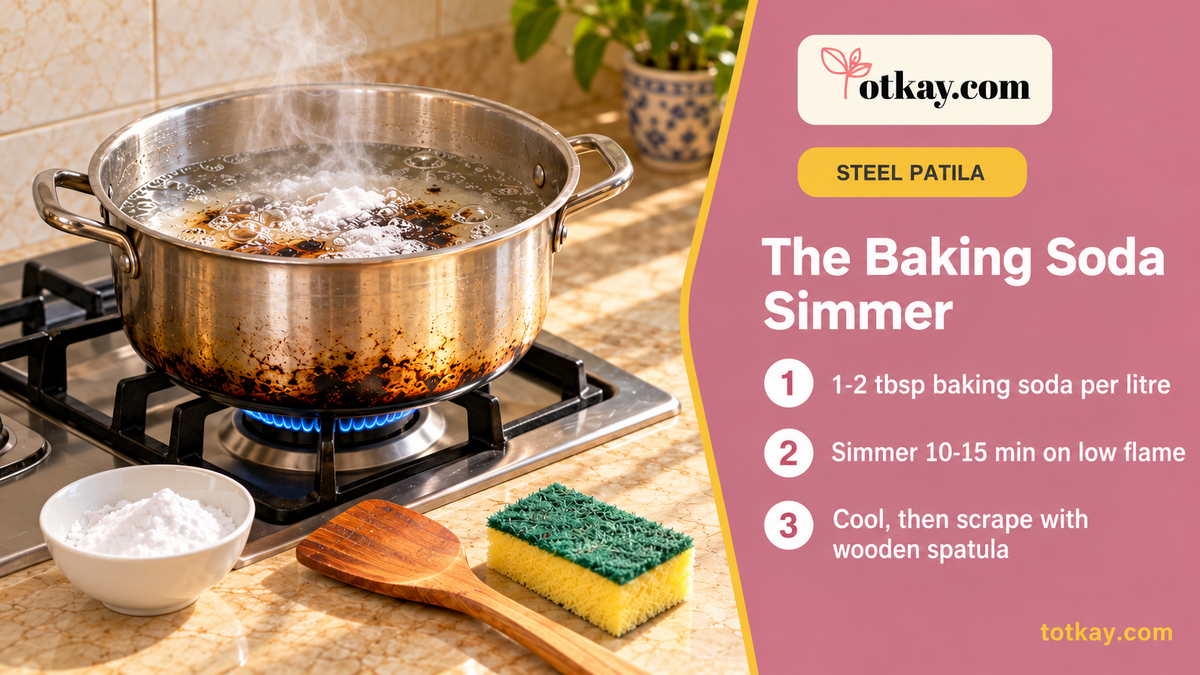
Stainless steel handles heat and scrubbing better than aluminium or non-stick. That strength makes baking soda for burnt pan cleaning most effective here. The mild alkaline powder loosens carbon without harming the steel.
- Add water: Pour enough water into the patila to cover the black layer.
- Add baking soda: Stir in 1 to 2 tablespoons of baking soda (meetha soda) per litre of water.
- Simmer gently: Keep it on a low-to-medium flame for 10 to 15 minutes, and stay nearby so the water doesn’t boil away.
- Cool and scrape: Turn off the flame, wait until the pot feels safe to touch, then scrape with a wooden spatula.
- Paste for stubborn spots: Mix baking soda with water to make a paste, spread it on the marks, wait 10 minutes, then gently scrub.
For heavier burnt stains on stainless steel, baking soda and vinegar can be used together for a fizzing reaction that helps lift the burn. For very tough stains, try a dishwasher tablet by heating it with water in the pan, then wash as usual.
Rubbing a cut lemon over the surface helps with light brown or rainbow-coloured heat marks. Start with a non-scratch sponge or scourer for stuck-on residue and remaining marks.
A ball of aluminum foil also works as a mild abrasive on plain stainless steel, especially with baking soda, often with less effort than a scouring pad, and it can be recycled after use.
Use a steel scrubber only for very heavy burns on plain steel, with light pressure in one direction. Some families also use the traditional koyla (charcoal ash) method, which we cover in koyla se bartan dhone ke fayde.
Burnt Milk or Kheer at the Bottom
Milk and kheer burn fast because their proteins and sugar settle and stick to the base, and the milk solids make food stick quickly to the bottom. Soak the patila in warm soapy water for 30 minutes, then run the baking soda simmer above; this method works especially well when the burnt layer is fresh. A few drops of lemon juice in the final rinse help clear the burnt smell.
Black Stains on the Outside Bottom
Gas flames leave a black, greasy layer on the outside of the base. Spread a thick baking soda paste mixed with a few drops of dish soap, leave it for 20 minutes, then scrub. Use a steel scrubber on plain steel only; for aluminium, use the lemon method below.
Burnt Aluminium Degchi: The Mild Acid Method
Many readers ask how to clean burnt aluminium pot bottoms without turning the metal darker. Aluminium heats fast and costs less, so many homes use it for biryani and rice. However, the metal is softer than steel and reacts with strong alkaline cleaners.
A long baking soda boil or washing soda can leave aluminium dull or grey. A mild acid works better, because vinegar or lemon softens burnt food on aluminium without darkening it.
- Soak first: Use warm soapy water for 30 minutes to soften the burnt layer.
- Add a mild acid: Cover the burnt area with one part white vinegar and two parts water, or try boiled lemons in water as a natural option; lemons also have antibacterial properties that help with cleaning. Some cooks use soaked imli (tamarind) water in the same way.
- Simmer and cool: Bring it to a boil, simmer for 10 to 15 minutes, then let the degchi cool before you handle it. Then discard the water and lemon pieces before scraping.
- Scrub softly: Loosen the residue with a wooden spatula and clean the surface gently with a soft scrubber and dish soap.
- Repeat instead of forcing: Run the same process a second time rather than scrubbing harder, since aluminium scratches easily.
Wash aluminium by hand, because dishwasher detergents can discolour it, and the lemon method helps you clean without harsh chemicals. A deep burn may leave a faint mark, but a clean, smooth surface still cooks perfectly well.
Burnt Pressure Cooker Cleaning: Body, Lid and Gasket
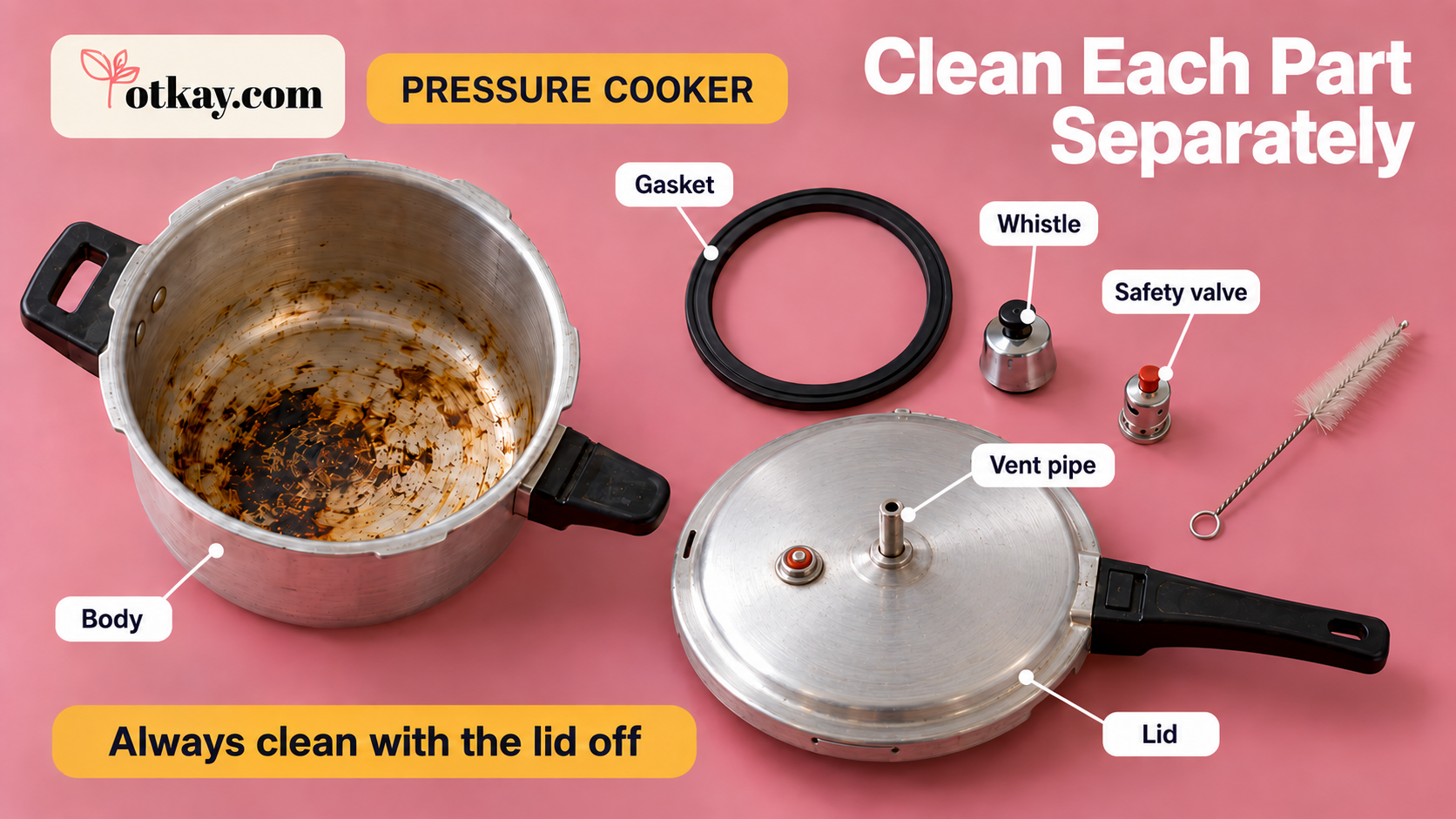
Burnt pressure cooker cleaning needs extra care because the lid holds safety parts. Food stuck in the vent or whistle can affect how the cooker releases steam. Clean the body and the parts separately.
- Take it apart: Remove the gasket (rubber ring), the whistle, and any removable valve parts, and wash them by hand in warm, soapy water.
- Clean the body by material: Use the aluminium method for aluminium cookers and the baking soda simmer for stainless steel models.
- Keep the lid off: Always simmer with the lid open, and never seal the cooker to clean it.
- Respect hard anodised finishes: Avoid steel wool and abrasive powders on dark grey or black hard anodised cookers, and follow the brand’s care guide.
- Check the vent: Look through the vent pipe and clear any food with a thin brush before you cook again.
If the gasket looks cracked, hard, or stretched, replace it with one that matches your cooker model.
Burnt Non-Stick Pan: Soft Sponge and Baking Soda Only
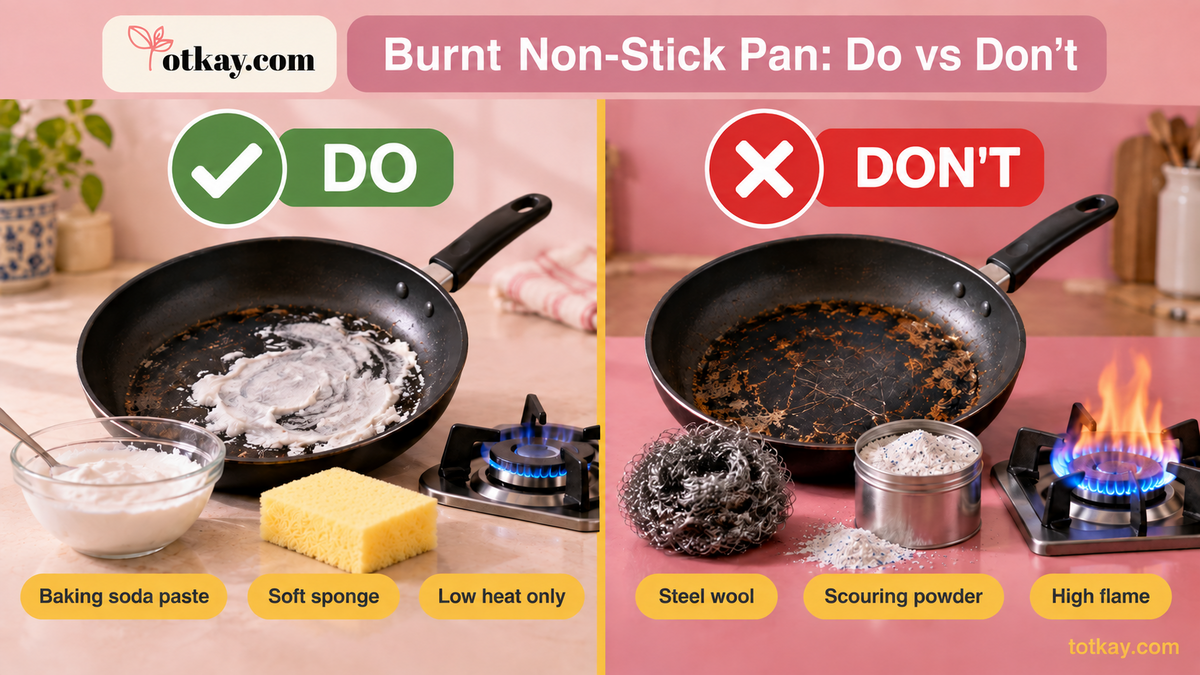
A burnt non-stick pan needs the gentlest approach in your kitchen. The coating gives the pan its value, and one rough scrub can damage it for good. Patience works far better than force here, and non-abrasive cleaners are safer for the coating than stronger scrub products.
- Soak for an hour: Fill the cooled pan with warm water and a little dish soap, then wipe away what lifts.
- Use a soft paste: Spread a generous layer of baking soda paste over stuck residue, wait 15 to 20 minutes, and rub in small circles with a non-abrasive sponge.
- Warm on low only: Add water and a tablespoon of baking soda, warm it on low heat for a few minutes, then cool and wipe with a soft cloth.
- Skip harsh tools: Keep steel wool, scouring powder, metal scrubbers, and the rough green side of a scrubber away from the coating.
- Know when to replace: Scratched, flaking, or peeling coatings will not recover with cleaning, so plan a replacement.
Every brand uses a slightly different coating, so read the care label before you try a new method.
Burnt Cast-Iron Tawa: Scrub, Dry and Re-Oil
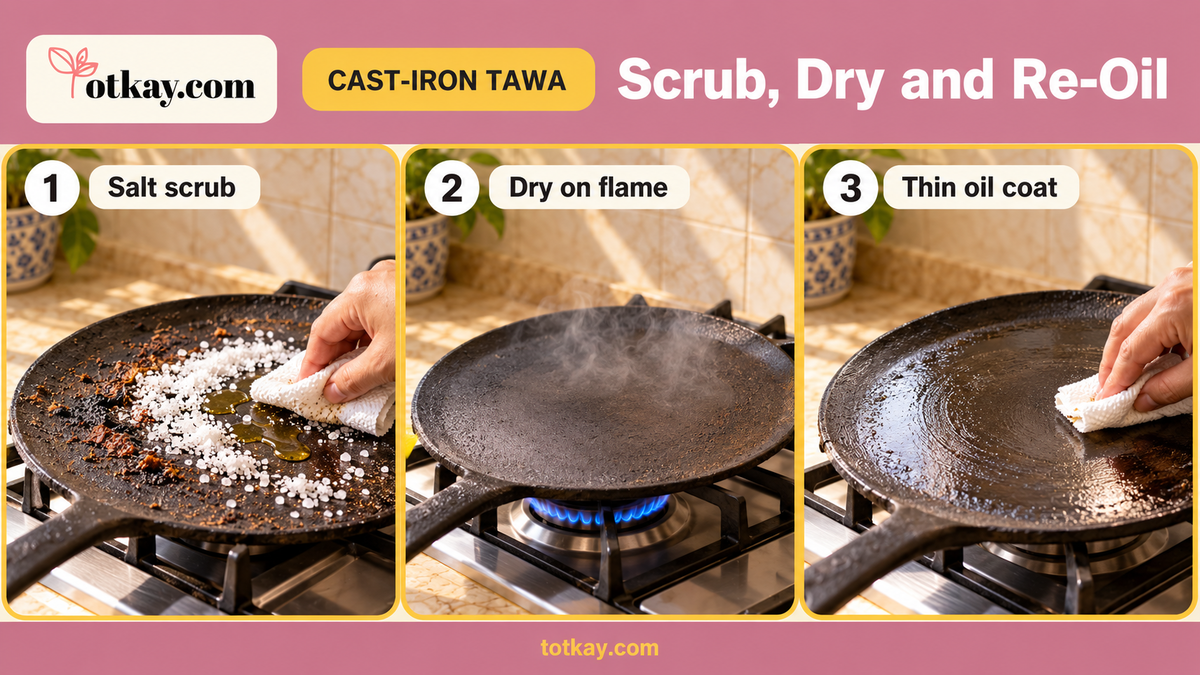
A cast-iron tawa or karahi, like a cast-iron skillet, carries a seasoned layer of baked-on oil; the same basic care applies to cast-iron pans, which handle high temperatures well, so seasoning care matters after high-heat cooking. That layer stops roti and parathas from sticking. Long soaking and heavy soap strip it and invite rust, so this method keeps water contact short. Vinegar can be corrosive to cast iron, so avoid acid soaks on this cookware.
- Scrape while warm: Remove burnt bits with a flat spatula once the tawa feels warm, not hot.
- Scrub with salt: Sprinkle a tablespoon of coarse salt with a few drops of oil and scrub with a folded paper towel or stiff brush.
- Rinse quickly: Use hot water and only a little mild soap for heavy residue.
- Dry on the flame: Wipe the tawa, then place it on a low flame for a minute or two to drive off moisture and dry it thoroughly to prevent rust.
- Re-oil thinly: Rub a very thin layer of cooking oil, such as mustard (sarson) or vegetable oil, over the warm surface and let the pan cool.
Grapeseed oil is another good option for seasoning. Store it in a dry location.
Orange rust spots respond to the same salt scrub, flame drying, and oiling. After a bad burn, some tawas need full re-seasoning, which usually restores them. A stainless steel karahi follows the steel patila method instead.
Expert Tips and Mistakes to Avoid
Knowing how to clean burnt pots and pans helps, but small habits decide how long your cookware lasts. These tips cover safety first, then the habits that prevent burning in the first place.
- Keep chemicals separate: Never mix bleach with vinegar, ammonia, or any other cleaner, because these mixtures release toxic gases.
- Skip harsh products: Leave oven cleaner and strong chemical sprays out of cookware cleaning, since burnt food does not need them, and natural options help avoid harsh chemicals on cookware. For greasy stovetops and cabinets, see our guide to cleaning grease off kitchen cabinets.
- Protect hot pans: Hold hot cookware with dry kitchen cloths or oven gloves, and let it cool before scrubbing.
- Stay near the stove: Watch any simmering pot, because a pan that boils dry overheats and burns again.
- Cook on lower heat: Use medium or low flame for daal, kheer, and milk, since thick food settles and scorches quickly.
- Stir and scrape often: Run your spoon along the base as the liquid reduces.
- Choose heavy bases: Pick a heavy-bottomed pot for long cooking, because thin bases scorch faster.
- Wash soon after cooking: Clean pots the same day so residue does not harden overnight. Your favourite cookware lasts longer when burnt residue is cleaned early.
Bring Your Bartan Back Without Damage
Learning how to clean burnt pots and pans comes down to patience and the right method for each metal. Soak first. Then use baking soda on steel, a mild acid on aluminium, salt on a tawa, and only a soft sponge on non-stick.
Not every stain disappears, and that is normal for well-used cookware. For daily washing, once your pots look clean again, try our homemade dishwashing liquid recipe, and browse more Totkay cleaning hacks for your home.
Frequently Asked Questions
Jale hue bartan jaldi kaise saaf karein?
Bartan ko thanda hone dein, phir garam sabun wale paani mein 30 minute bhigo dein. Steel patile mein 1 se 2 chamach meetha soda fi litre paani daal kar 10 se 15 minute halki aanch par pakayein. Aluminium degchi mein soda ki jagah lemon ya sirka istemal karein, aur non-stick pan par sirf naram sponge chalayein.
Does baking soda really remove burnt food from pans?
Yes, baking soda works well on most burnt food, especially in stainless steel. Simmer 1 to 2 tablespoons per litre of water for 10 to 15 minutes, let the pot cool, then scrape and scrub. For stubborn marks, leave a thick paste on the spot for 15 minutes. Use it gently on aluminium, because long alkaline boils can darken that metal over time.
What is the fastest way to clean burnt pots and pans?
Soak them while the burn is still fresh. Warm soapy water softens the layer within 30 minutes, and a wooden spatula lifts most of it. For heavier burns, a short baking soda simmer on steel or a lemon simmer on aluminium often lets you clean a burnt pan in about 20 minutes.
Why did my aluminium pot turn black after cleaning?
Aluminium reacts with alkaline cleaners such as washing soda, dishwasher detergent, and long baking soda boils. That reaction darkens the surface. To lighten it, simmer water with lemon slices, or one part white vinegar to two parts water, for 10 to 15 minutes, then wash with a soft scrubber. Handwashing with mild soap helps prevent the problem from returning.
Can I fix a burnt non-stick pan with a scratched coating?
You can clean the burnt residue, but cleaning will not repair a scratched, flaking, or peeling coating. Soak the pan, use a baking soda paste with a soft sponge, and avoid steel wool. If the coating has visible damage, food will keep sticking, so plan to replace the pan and follow the new pan’s care instructions.

Hi, I’m a dedicated writer at Totkay.com, passionate about sharing practical tips and solutions to make your life easier. Explore my articles for helpful insights and valuable advice. Stay connected for more expert content!