
Home Remedies for Dry Skin in Winter: Simple Totkay That Actually Help

Cold air, low humidity, hot baths, and room heaters pull water from your skin, which is why winter dry skin feels tight and flaky. The simplest of all home remedies for dry skin is to moisturise on slightly damp skin right after you wash.
Diluted glycerin and gulab jal (rose water) make an easy natural moisturiser for dry skin at home. Patch test any new remedy on your inner arm before you use it on your face.
Why Skin Gets Dry in Winter
Your skin barrier is the outer layer of skin cells and natural oils that helps your skin retain moisture and keeps irritants out. Winter conditions pull that water out faster than your skin can replace it, so it helps to know the cause. In desi winters, these four usually play a part:
- Cold air: it holds very little moisture, so cold weather dries your face, lips, and hands.
- Low humidity: dry air outdoors and indoors draws water from the skin surface and lowers skin hydration.
- Hot water baths: a long, steaming bath strips natural oils along with dirt.
- Room heaters: gas and electric heaters lower the humidity of your indoor environment.
Watch for these symptoms: tightness after washing, flakiness, itching, redness, and cracked lips and heels. The Mayo Clinic lists the same signs and notes that deep cracks can bleed.
Some people have a dry skin type, which stays dry in every season, and sensitive skin often feels the dryness first. Winter dryness is temporary and usually eases when the weather warms up. Ask a dermatologist if the dryness stays all year, and see our dry skin home remedy guide for year-round care.
5 Simple Home Remedies for Dry Skin
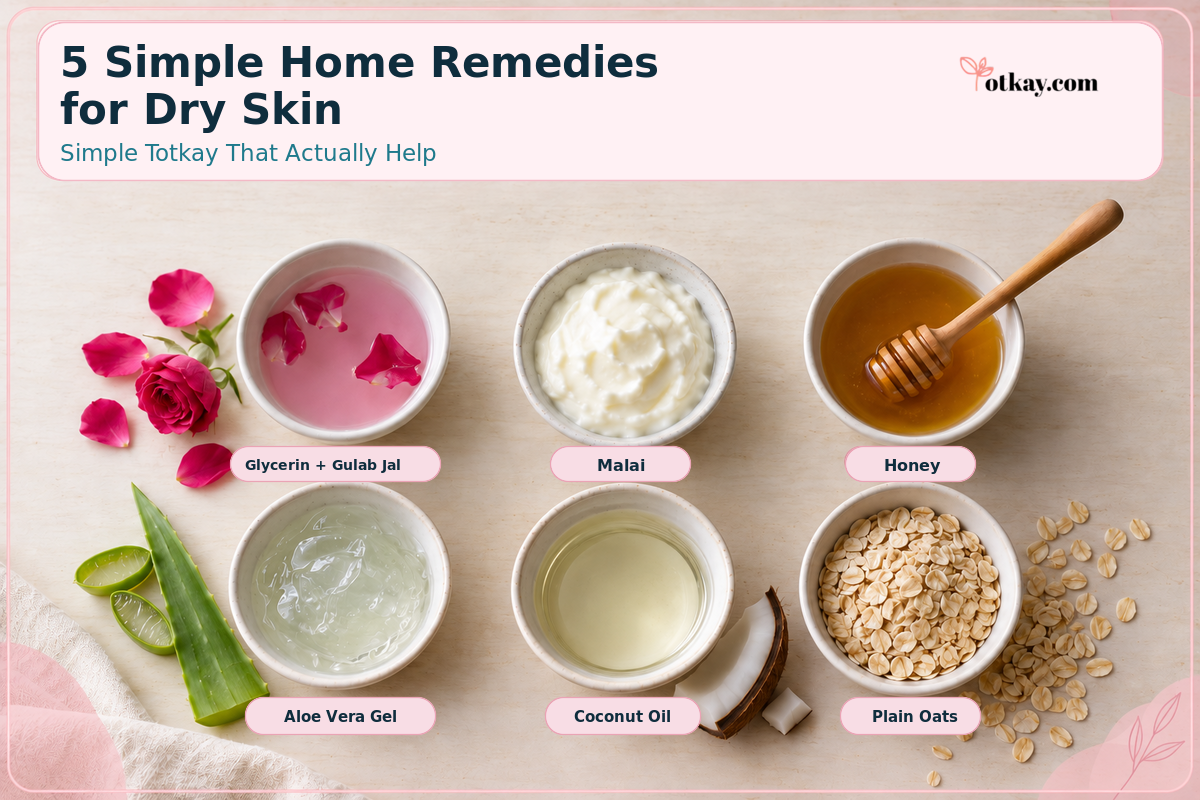
Each of these home remedies for dry skin suits a different area or problem, so pick one or two instead of trying all five at once. Starting small also makes a reaction easier to spot. Patch test every new remedy on your inner arm first.
| Remedy | Best for | How to use | How often | Note |
| Glycerin and gulab jal | Tight, dry face | A few drops on damp skin | Once or twice a day | Always dilute |
| Malai (fresh milk cream) and honey face pack | Rough, dull face | 10-minute pack, rinse with lukewarm water | Once or twice a week | Patch test first |
| Aloe vera gel | Face and body | Thin layer under moisturiser | Once a day | Patch test first |
| Coconut oil | Body, hands, heels, lips | A few drops on damp skin to seal in moisture | Once or twice a day | Avoid on acne-prone face |
| Oatmeal soak | Itchy body skin | 10 to 15 minutes in lukewarm water | Up to three times a week | Plain oats only |
Use clean hands and clean bowls, because a spoiled mixture can irritate your skin.
Glycerin and Gulab Jal
Glycerin is a natural humectant, which means it pulls water into the skin to hydrate it. This mix of glycerin and rose water for dry skin suits tight cheeks and dry patches because the gulab jal thins the glycerin so it spreads as a smooth, light layer.
Ingredients
- 1 tsp glycerin (vegetable glycerin from a pharmacy)
- 4 tsp pure gulab jal, with no added alcohol or perfume
Steps
- Pour both into a clean, dry bottle and shake well.
- Wash your face with lukewarm water and pat it lightly, so it stays damp.
- Press a few drops onto your face.
- Add your usual moisturiser on top to seal in the hydration.
How often: use it once or twice a day after washing. Make a small batch, store it in the fridge, and use it within a few days.
Caution: never use glycerin undiluted on the face, and stop if you notice redness, stinging, or itching.
Malai and Honey Face Pack
Malai is rich in milk fatty acids, so it acts as an emollient that leaves rough skin soft. Raw honey is a natural humectant that draws water into the skin and contains antioxidants. Together, they can nourish dry skin.
Ingredients
- 1 tsp fresh malai (from full-fat milk)
- ½ tsp raw or pure honey
Steps
- Wash your hands and mix both into a smooth paste.
- Spread a thin layer over a clean face and avoid your eyes.
- Leave it on for 10 minutes.
- Rinse with lukewarm water, pat dry,y and moisturise.
How often: use it once or twice a week, and make it fresh each time, because leftover packs do not keep. If you like face packs, try our natural face mask recipes too.
Caution: honey can cause an allergy in some people, so patch test first, and skip this pack if you have a milk allergy.
Aloe Vera Gel
Aloe vera gel feels light and cooling, and it can hydrate dry skin. It has a soothing effect, and its anti-inflammatory properties may help reduce inflammation and irritation. Use fresh leaf gel or pure gel with no added colour or perfume.
Ingredients
- 1 tsp fresh aloe gel, or pure aloe gel
Steps
- Scoop only the clear gel from a clean leaf, not the yellow sap.
- Spread a thin layer over clean skin.
- Wait a few minutes, then add your moisturiser on top.
How often: use it once a day. Keep leftover fresh gel in the fridge and use it within a few days.
Caution: aloe causes allergies in some people, so do a patch test first. Dab a coin-sized amount on your inner arm and repeat it twice a day for seven to 10 days, as the American Academy of Dermatology suggests for new products.
Coconut Oil for Body, Hands and Lips
Coconut oil is one of the emollients that protect dry skin by sealing in moisture. It suits the body, hands, heels, and lips, where the skin is thicker and pores clog less easily.
Ingredients
- About ¼ tsp pure coconut oil, enough for both hands
Steps
- Pat skin after washing so it stays slightly damp.
- Warm the oil between your palms.
- Press it onto your hands, elbows, heels,s and lips.
How often: use it once or twice a day, and after hand washing in cold weather.
Caution: coconut oil can clog pores for some people, so skip it on your face if you have acne-prone skin, an oily T-zone, or combination skin. Try our oily skin home remedies instead.
Oatmeal Soak for Itchy, Dry Skin
Colloidal oatmeal is finely ground oatmeal with soothing and anti-inflammatory properties that may calm itchiness. Plain oats that you grind at home make a simple version, although they are coarser than the pharmacy product. This relaxing soak suits itchy skin on the arms and legs.
Ingredients
- About ½ cup plain oats, which you grind to a fine powder
- 1 bucket of lukewarm water
Steps
- Stir the oat powder into the warm water until it turns milky.
- Soak the itchy area, or pour the water over your skin, for 10 to 15 minutes.
- Pat dry with a gentle touch and moisturise straight away.
How often: use it up to three times a week, and mix a fresh batch each time. Do not store the leftover water.
Caution: use plain oats only, with no flavouring or sugar, and keep the water lukewarm.
A Daily Routine That Locks in Moisture
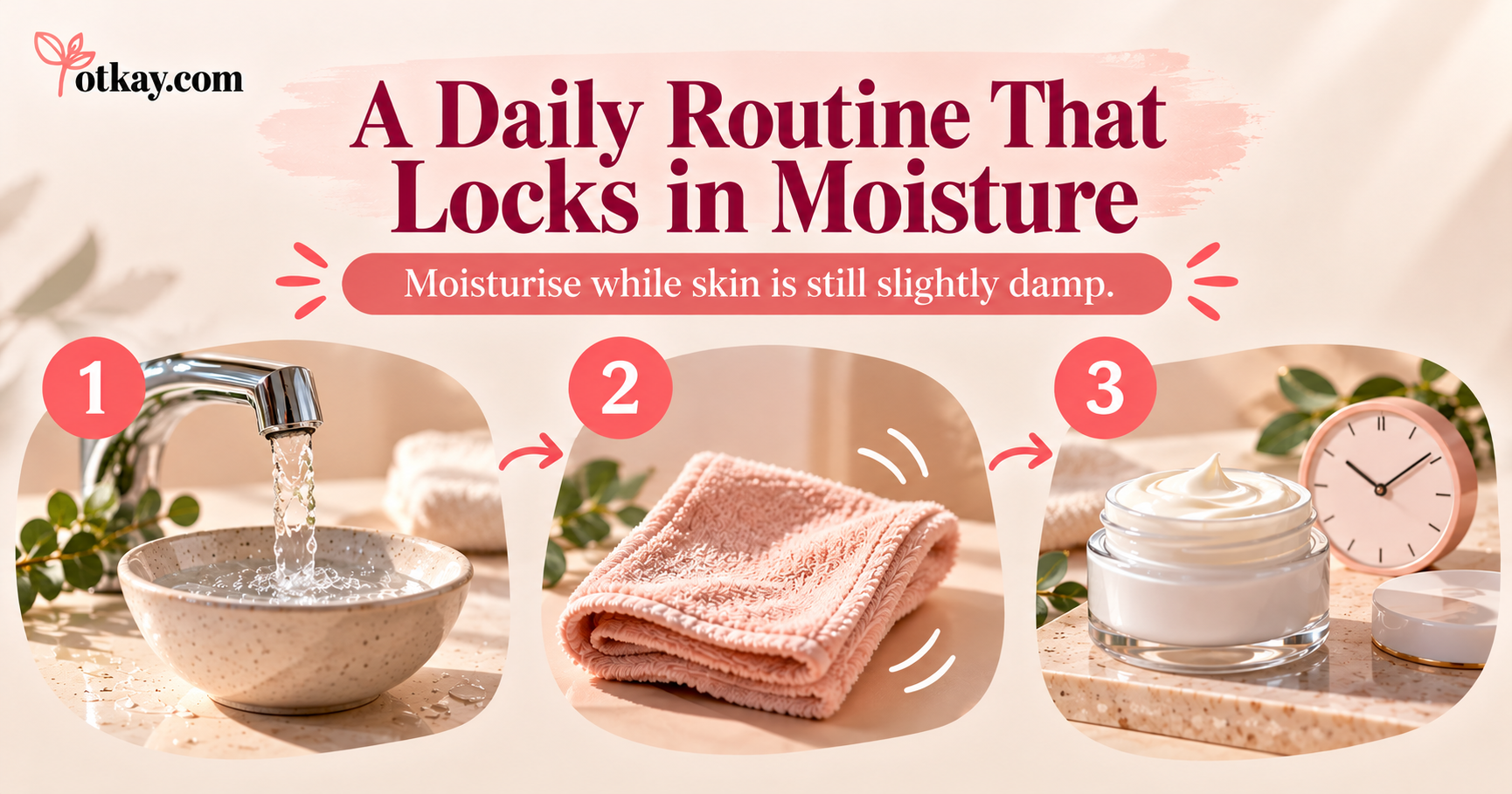
These remedies help, but daily habits decide whether your skin stays hydrated. These tips work as a simple dry skin treatment at home, and you can pair them with a skincare routine for your skin type.
Follow them daily, and give your skin a couple of weeks to settle.
- Warm water: use warm, not hot, water and keep each bath or shower to about 5 to 10 minutes.
- Gentle cleanser: choose a fragrance-free cleanser, remove makeup gently, and skip harsh soap on your face.
- Moisturise on damp skin: pat skin dry with a towel instead of rubbing, then begin applying moisturiser right away, within a few minutes of washing, while skin is still damp.
- Sunscreen in the day: wear a broad-spectrum sunscreen with SPF 30 or higher to protect your skin, even in winter.
- Lips and hands: use lip balm, wear gloves when you wash dishes and outdoors in the cold, and add a thin layer of petroleum jelly over moisturiser at night to seal very dry heels, hands and lips.
- Water and humidity: drink enough water through the day, and run a humidifier in your bedroom while you sleep. Clean it regularly.
When you buy a moisturiser, choose a fragrance-free cream with ceramides, hyaluronic acid, glycerin,n or shea butter. Wear loose cotton clothes next to your skin, because wool can irritate dry, sensitive skin.
Common Mistakes and Ingredients to Avoid
Some popular totkay and natural remedies make dryness worse, because they irritate skin that already lacks water. Even a good remedy cannot undo the irritation these ingredients cause:
- Lemon juice and baking soda: lemon juice is acidic and baking soda is alkaline, so both can irritate dry skin.
- Toothpaste: it contains ingredients that suit teeth, not skin, and they can sting.
- Undiluted essential oils: strong oils can burn the skin and irritate.
- Alcohol-based products: alcohol in a toner or other skincare product dries the skin further.
Your habits can also slow healing, so watch for these three.
- Scrubbing flaky skin hard: rubbing or exfoliating dry, peeling skin can make the dryness worse. Pat it gently and moisturise instead.
- Using many new products at once: you cannot tell which one caused a reaction.
- Very hot showers: hot water strips natural oils, so keep it lukewarm.
Home remedies support the skin barrier, but they do not treat eczema or other skin conditions. The American Academy of Dermatology shares more dermatologist tips on dry skin. See a dermatologist if you notice any of these:
- Cracking or bleeding skin
- Severe itching or a rash
- Signs of eczema or infection, such as swelling, pus, or spreading redness
- Burning, stinging, or swelling after a remedy
- Dryness that does not improve in two weeks
Conclusion
The best home remedies for dry skin are simple: dilute your glycerin, patch test every new ingredient, and moisturise while your skin is still damp. Pair one or two remedies with lukewarm baths, and your skin barrier can cope better with dry skin in winter.
These steps relieve winter dryness and help keep it away, but home remedies do not replace care from a dermatologist when you need it.
Looking for more gentle, natural ideas for your skin? Browse our skin care Totkay for remedies by skin type and season, or explore Totkay’s full guide to natural remedies for everyday health and beauty.
Ready to build a full routine? Find the right daily routine for your skin type.
Frequently Asked Questions
Can I apply glycerin directly on my face?
No, never apply glycerin directly on your face. Pure glycerin is thick and sticky, and it can irritate the skin.
Mix 1 teaspoon of glycerin with 4 teaspoons of pure rose water, patch test the mix on your inner arm, and then press a few drops onto damp skin.
Stop using it if your skin turns red or stings.
Is coconut oil good for dry skin on the face?
It depends on your skin type. Coconut oil softens dry skin on the body, hands, and lips, but it can clog pores for some people. If you have acne-prone skin or an oily T-zone, skip it on your face and choose a lighter moisturiser instead.
If you still want to try it, patch test first and use a tiny amount.
How often should I moisturise dry skin in winter?
Moisturise after every wash or bath, and again whenever your skin feels tight, which means at least twice a day. Of everything in this guide, regular moisturising on damp skin matters most, so keep your moisturiser where you will use it.
Use a thicker form of moisturiser, such as a cream or ointment, at night when your skin feels especially dry.

Hi, I’m a dedicated writer at Totkay.com, passionate about sharing practical tips and solutions to make your life easier. Explore my articles for helpful insights and valuable advice. Stay connected for more expert content!
Related posts:
 Home Diet Plans: 7 Proven Secrets to Reach Your Weight Loss Goals
 Totkay for Face – Beauty Tips in Urdu for Glowing Skin
 DIY Natural Perfume Recipes: Easy, Lasting Scents
 Ab Ghar main Bnayn Apna Pasandeda Face Wash For Oily Skin
 Aazmoda Desi Totkay for Skin Whitening in Urdu
 DIY Cleaning Products: Homemade Cleaner Recipes and Safety Tips