DIY Natural Perfume Recipes: Easy, Lasting Scents
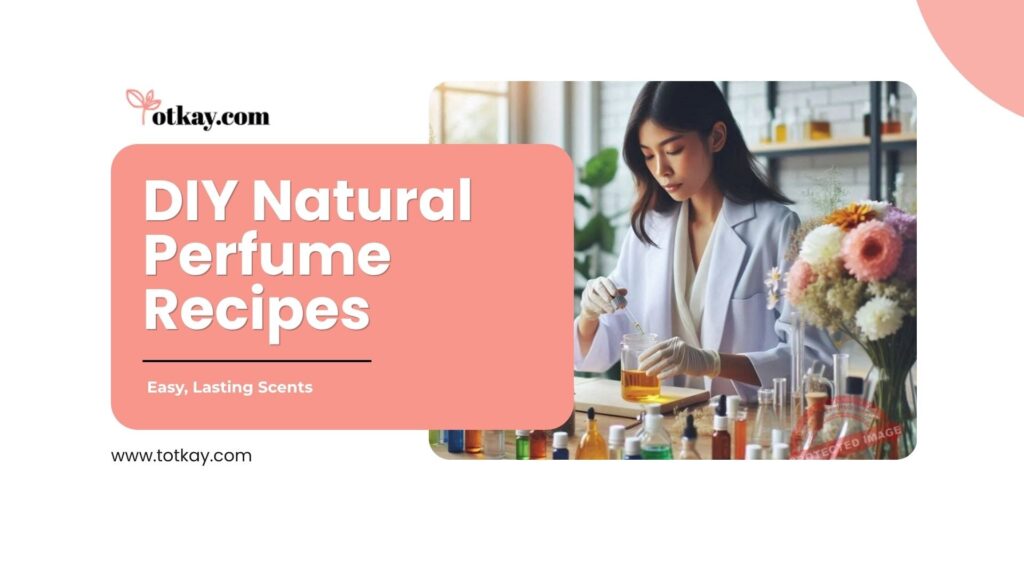
Natural perfume recipes combine essential oils, a carrier oil or alcohol base, and natural fixatives to build a chemical-free scent from scratch. A basic blend layers top notes, middle notes, and base notes in roughly a 3:5:2 ratio, then rests in a glass bottle for a few weeks to mature.
Learning to make your own custom scent this way costs less than most store-bought perfumes and lets you control every ingredient that touches your skin.
Table of Contents
- What Are Natural Perfumes?
- Benefits of DIY Scents
- How Natural Perfumes Work: The Science
- Why Natural Perfumes Fade Faster
- Essential Ingredients for Natural Perfume Recipes
- A Fuller Guide to Essential Oils by Note
- Types of DIY Natural Perfumes
- Natural Perfume Recipes Step by Step
- How to Make Natural Perfumes Last Longer
- Natural vs Synthetic Perfumes
- Best Practices for Blending Natural Perfume
- Common Mistakes to Avoid
- Final Thoughts
- Frequently Asked Questions
Creating natural perfume recipes means mixing plant-based ingredients like essential oils and botanical extracts to create chemical-free scents. You can formulate unique DIY scent blends that perfectly match your personal preferences, using a natural approach that replaces synthetic sprays with pure, organic fragrance in a single bottle.
The process requires basic supplies, a little patience, and knowledge of how different aromatic layers interact. You will learn the exact methods for blending, diluting, and storing your oils for beautiful results, and pick up a few practical tips for keeping every recipe consistent.
What Are Natural Perfumes?
Natural perfume relies purely on plant-based materials to create pleasant aromas. Perfumers extract these aromatics directly from nature rather than synthesizing them in a laboratory.
Do you wonder what exactly goes into a botanical fragrance bottle? Are you curious about the specific components? Look at the primary materials that build these scent profiles:
- Essential oils: extracted from flowers and leaves.
- Resins: harvested from tree sap.
- Botanical extracts: derived from roots and seeds.
- Absolutes: captured from delicate flower petals.
Benefits of DIY Scents
Making your own fragrances offers tremendous advantages for your health and wallet. Why should you consider crafting these blends at home instead of choosing to buy perfume off a shelf?
What makes them superior to store-bought options? Consider these compelling benefits:
- You avoid toxic chemicals completely.
- You create a personalized fragrance signature with your own perfume recipe.
- You save money by buying raw ingredients instead of a finished perfume bottle.
- You protect the environment by reducing packaging waste.
How Natural Perfumes Work: The Science
Understanding the Scent Pyramid
Perfumers structure fragrances using a three-tiered system. How do these layers interact to create a complete aromatic experience? What dictates the order in which you smell them? The scent pyramid organizes oils by their evaporation rates:
- Top Notes: These are the first fragrance notes you smell. They are light, fresh, and evaporate quickly, typically within 5-15 minutes. Think citrus and herbs.
- Middle Notes: Often called the heart of the perfume, these notes appear after the top notes fade. They are usually floral and spicy and make up the main body of the fragrance.
- Base Notes: These are the deepest, richest scents that anchor the perfume. They evaporate slowly, lingering on your skin for a very long time and providing the fragrance’s lasting impression. Think woods and resins.
Why Natural Perfumes Fade Faster
Botanical ingredients behave differently from synthetic chemicals. Why do essential oil fragrances seem to disappear more quickly from your skin? What causes this rapid evaporation? A few factors explain this phenomenon:
- Body heat interaction: Natural perfumes are made from botanical compounds that are inherently volatile. This means they evaporate quickly when they touch your warm skin, causing the perfume’s scent to dissipate faster.
- Absence of synthetic fixatives: Unlike synthetic fragrances, natural perfumes do not contain chemical stabilizers designed to make scents last longer. They rely solely on the natural properties of the oils.
- Molecular structure: The molecules in essential oils are generally smaller and lighter than their synthetic counterparts, so they lift off the skin more easily.
- Skin chemistry and absorption: Everyone’s skin is different, and factors like pH, oiliness, and hydration affect how quickly it absorbs the natural oils.
Essential Ingredients for Natural Perfume Recipes
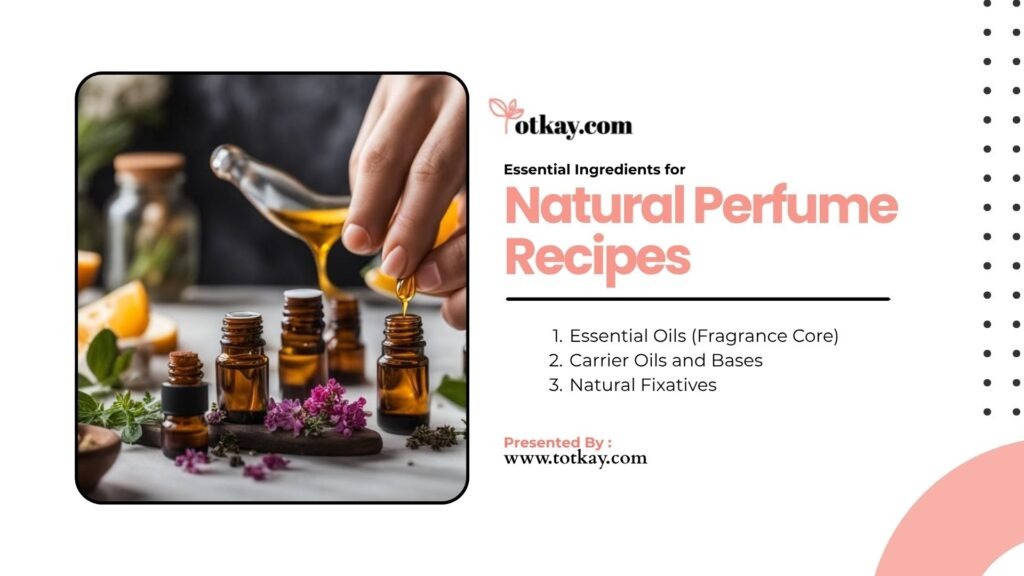
Essential Oils: Fragrance Core
Natural essential oils are the heart of every good blend, providing their aromatic character, whether the base is coconut oil, jojoba, or alcohol. For beginners, it is best to start with these reliable options:
- Lavender: Provides a calming and versatile floral note.
- Rose: Offers a deep and romantic heart note.
- Sandalwood: Delivers a rich and grounding base note.
- Citrus oils: Provide an uplifting and bright top note.
Carrier Oils and Bases
A fragrance needs a medium to carry the aromatic compounds to your skin. What liquid will you use to dilute your potent fragrance oils? How do you choose the right base? You have a few primary options:
- Jojoba oil: Works perfectly for oil-based roll-on perfumes.
- Fractionated coconut oil: Stays liquid at room temperature and carries scent without going rancid quickly.
- Sweet almond oil: Offers a light, skin-friendly base for sensitive skin.
- Perfumers’ alcohol: Plain vodka in a pinch; works best for traditional spray bottles.
Natural Fixatives
Natural fixatives are critical for your homemade perfume ideas. These dense oils hold the delicate top and middle notes in place, extending the life of your creation. Including them prevents the fragrance from fading too quickly.
- Cedarwood: Adds a dry and woody anchor.
- Benzoin: Contributes a sweet and resinous vanilla-like aroma.
- Vanilla: Absolute provides a warm and comforting foundation.
- Vegetable glycerin: Helps bind water and alcohol-based sprays together.
A Fuller Guide to Essential Oils by Note
The five oils above are a solid starting point, but a well-stocked collection opens up far more different types of blends. Here is a broader palette organized by where each oil sits in the scent pyramid.
- Bright, fast-fading top notes: Orange, lemon, lime, grapefruit, and bergamot all bring citrus energy, while rosemary and lemongrass add a sharper, herbal edge.
- Rounded, expressive middle notes: Jasmine, chamomile, geranium, and clary sage sit alongside rose and lavender to build the heart of a blend.
- Deep, long-lasting base notes: Vetiver and frankincense join cedarwood and sandalwood as anchors that keep a fragrance grounded for hours.
Mixing oils across all three categories, rather than leaning on one note type alone, is what gives a finished blend real depth instead of a flat, one-dimensional smell.
Types of DIY Natural Perfumes
Oil-Based Perfumes
Oil bases provide a deeply nourishing and gentle application. They sit close to the skin and create an intimate scent experience. You can blend them easily without worrying about harsh drying effects on your skin.
Alcohol Based Sprays
Alcohol bases project the aroma further into the air around you. The alcohol evaporates quickly and leaves the pure scent behind. You will appreciate this style if you want a traditional perfume experience.
Solid Perfumes
Solid bases use waxes and oils to create a balm. You can carry these small containers anywhere without worrying about spills. They make perfect companions for travel and daily commutes.
Roll-On Perfumes
Roller bottle applications provide the most convenient application method. You can apply the exact amount of fragrance you want directly to your skin. The rollerball prevents waste and keeps the oil safely contained.
Natural Perfume Recipes Step by Step
1. Basic Essential Oil Perfume Recipe
This recipe is the perfect starting point for beginners and one of the simplest diy perfumes. It uses a fundamental three-to-two-to-one ratio to help you make perfume for the first time, and it answers the common question of how many drops each layer actually needs.
Follow these exact steps:
- Gather a few drops, specifically three, of top notes.
- Add two drops of middle notes for fragrance.
- Add one drop of base notes.
- Pour the oils into ten milliliters of jojoba oil.
- Shake the bottle gently to combine the ingredients and check that the smell blends evenly.
2. Floral Herbal Perfumes Blend
Create a romantic, garden-fresh aroma with this soft and feminine fragrance. Imagine you are walking through a blooming flower bed as you combine these specific oils:
- Use five drops of rose absolute.
- Add four drops of lavender oil.
- Include three drops of sandalwood for depth.
- Mix into your chosen carrier base.
3. Citrus Fresh DIY Scent
Citrus blends awaken the senses and provide brilliant energy. Do you need an uplifting scent for early mornings? How can you capture the essence of a summer orchard?
Try this invigorating recipe:
- Squeeze in five drops of sweet orange oil.
- Add four drops of lemon oil.
- Include two drops of peppermint oil for a crisp finish.
- Blend thoroughly with perfumers’ alcohol.
4. Long-Lasting Woody Perfume
Create a grounding and sophisticated aura with a woody scent. This earthy and rich fragrance is an excellent unisex option. Craft this deep blend for a lasting impression.
Follow this recipe to create your signature woody perfume:
- Drop in five drops of patchouli oil.
- Add four drops of cedarwood oil.
- Include three drops of vanilla absolute.
- Mix into a rich carrier like jojoba oil.
5. Solid Perfume Recipe
Solid perfumes are a fantastic option in the world of natural perfume recipes, but they require a slightly different approach using heat. Crafting a beautiful aromatic balm involves turning liquid oils into a solid state.
Follow this simple melting process:
- Melt one tablespoon of beeswax pastilles in a double boiler.
- Stir in one tablespoon of sweet almond oil.
- Remove the mixture from the heat completely.
- Add twenty drops of your favorite organic fragrance blends.
- Pour the liquid into a small tin and let it harden.
How to Make Natural Perfumes Last Longer
DIY Natural Perfume Recipes: Easy, Lasting Scents 6
Use Base Notes and Fixatives
Proper construction dictates the longevity of your fragrance. How can you stop your beautiful citrus notes from disappearing immediately? What structural changes keep the scent intact? You must rely on heavy molecules:
- Base notes: slow the evaporation of lighter oils.
- Dense resins: trap the volatile compounds on your skin.
Let the Perfume Rest
Time plays a crucial role in fragrance development. Why does your perfume smell disjointed immediately after mixing? What happens when you leave the bottle alone in a dark place? Maturation improves the final product:
- Resting allows the individual oils to fuse into one cohesive scent.
- Aging rounds out sharp edges and deepens the overall aroma.
Apply on Pulse Points
Applying your botanical fragrance to the right places makes all the difference. For maximum projection, your own body heat is your best friend. Target specific areas like your pulse points to physically interact with and activate the aroma.
- Heat from pulse points activates the essential oils.
- The neck and wrists provide excellent warmth for fragrance release.
Natural vs Synthetic Perfumes
Before picking a side, it helps to compare natural fragrance against commercial options across the factors that actually affect daily wear.
| Feature | Natural Perfumes | Synthetic Perfumes | Best For | What to Expect |
| Ingredients | Plant-based oils | Lab-made chemicals | Sensitive skin, clean beauty fans | Fewer synthetic additives |
| Longevity | Shorter | Longer | Quick refreshes through the day | Reapply every few hours |
| Safety | More skin-friendly | Can cause irritation | Fragrance-sensitive users | Lower reaction risk with a patch test |
| Customization | High | Limited | Anyone wanting a signature blend | A true custom scent |
| Cost over time | Lower per bottle | Higher for niche brands | Budget-conscious hobbyists | Savings after the first few blends |
Best Practices for Blending Natural Perfume
A few habits separate a blend that actually smells intentional from one that smells like a science experiment.
- Dilute correctly every time: Keep essential oils under roughly 20 percent of the total blend when mixed with a carrier oil, and use distilled water rather than tap water in any water-based spray to avoid mineral residue.
- Label and date one bottle at a time: Testing multiple new blends at once makes it hard to tell which combination actually worked, so keep one bottle in progress and finish testing it before starting the next perfume.
- Store away from heat and light: A cool, dark cabinet protects the oils and helps a finished blend store well and keep smelling fresh for months.
- Keep notes on your ratios: Writing down your required recipe ratings of drops per note as you go means you can review recipe details and recreate a favorite blend exactly next time, instead of guessing.
Common Mistakes to Avoid
These recurring errors explain most of the disappointing first attempts at making natural perfume.
- Skipping the rest period: Testing a blend immediately after mixing gives an inaccurate impression, since the notes have not had time to settle.
- Overloading on one note type: A perfume built entirely from top notes fades within the hour; balance across all three layers instead.
- Using the wrong carrier for the format: Alcohol-based recipes and oil-based rollerballs are not interchangeable; swapping bases changes both texture and how the scent projects.
- Forgetting the patch test: Undiluted essential oils can irritate skin even when the ingredients are fully natural.
Final Thoughts
Crafting your own signature fragrance empowers you to take control of your personal care routine. You now possess the knowledge to build a balanced scent pyramid using top, middle, and base notes.
By selecting the correct carrier bases and fixatives, you ensure your essential oil fragrances remain vibrant and smell good for as long as botanical ingredients allow. Remember to practice proper dilution, test your own natural products on your skin safely, and allow your creations the necessary time to mature. Fast forward a few weeks, and a blend that smelled sharp on day one will settle into something far more balanced.
As you experiment with different own products and organic fragrance blends, you will craft a signature aroma that beautifully reflects your unique personality. For more DIY beauty projects like this one, see our guide to homemade lip balm and browse the full DIY beauty tips category on Totkay.
Tried one of these blends? Comment something below and tell us how your perfume recipe turned out, and check the beauty tips section for more natural formulas to try next.
Frequently Asked Questions
What is the ideal essential oil ratio for perfume?
The classic perfumery ratio is 3 parts top notes, 5 parts middle notes, and 2 parts base notes. This balanced 3:5:2 structure creates a harmonious scent that evolves beautifully over time, but feel free to adjust it as you experiment with your own blend.
How long does homemade perfume last on skin?
Natural perfumes typically last two to six hours on the skin. Their longevity depends on the ingredients used, particularly the base notes and fixatives. Applying your perfume to pulse points like the wrists and neck can also help it last longer.
What is the best carrier oil for making perfume?
Jojoba oil is the top choice for oil-based perfumes because it is odorless, has a long shelf life, and closely mimics the skin’s natural sebum. Other good options include fractionated coconut oil and sweet almond oil, which are also lightweight and absorb well.
How do I make my DIY perfume last longer?
To improve longevity, add strong base notes like sandalwood, vetiver, or frankincense to your blend. These act as fixatives, anchoring the lighter top and middle notes. Allowing your perfume to mature for a few weeks also helps deepen the scent.
Can I make perfume without using alcohol?
Yes, you can easily make perfume without alcohol. Oil-based rollerballs and solid perfumes made with beeswax are excellent alternatives. These alcohol-free options are often gentler on the skin and provide a more intimate scent experience for the wearer.
Are natural perfumes safe for sensitive skin?
Natural perfumes are generally safe, but you must properly dilute essential oils in a carrier oil, never exceeding a 20 percent concentration. Always perform a patch test on a small area of skin to check for any potential irritation or allergic reactions.
Why does my perfume need to mature?
Letting your perfume rest, or mature, for several weeks allows the different oils to meld together, creating a more cohesive and complex aroma. This aging process deepens the scent and can significantly improve its overall longevity on the skin.

Hi, I’m a dedicated writer at Totkay.com, passionate about sharing practical tips and solutions to make your life easier. Explore my articles for helpful insights and valuable advice. Stay connected for more expert content!