Your Guide to DIY Cleaning Products: Easy Homemade Cleaners for a Safer Home
DIY cleaning products are becoming a popular alternative to chemical-heavy household cleaners because they are affordable, eco-friendly, and safer for everyday use. Simple ingredients like vinegar, baking soda, lemon, and castile soap can help remove grease, odors, stains, and dirt without filling your home with harsh fumes.
Whether you want a healthier cleaning routine, non-toxic solutions for children and pets, or easy homemade disinfectants, this guide will show you how to create effective natural household cleaners that actually work.
Why More People Are Switching to Natural Cleaning
Families everywhere seek better ways to maintain their living spaces. Store-bought bottles often hide long lists of unpronounceable ingredients. Making the switch to homemade solutions brings peace of mind and tangible benefits.
You gain complete control over what touches your countertops and floors. Natural methods protect sensitive skin from harsh reactions. This shift represents a broader movement toward healthier household management.
The Problem With Harsh Chemical Cleaners
Commercial products often release strong fumes into the air. These airborne particles can cause immediate breathing irritation. You might experience headaches after scrubbing a small bathroom.
Frequent exposure to harsh products can also cause:
- Dry hands
- Eye irritation
- Strong indoor fumes
- Surface damage from overuse
This is one of the biggest reasons why many families are now exploring non-toxic cleaning alternatives.
Why Homemade Cleaners Feel More Practical
One of the best things about making your own DIY cleaning products is flexibility. You can:
- Make small batches
- Customize scents
- Avoid unnecessary chemicals
- Save money over time
DIY cleaning also supports a more eco-conscious lifestyle by reducing plastic waste and limiting the use of harsh ingredients.
The Core Ingredients Behind DIY Cleaning Products
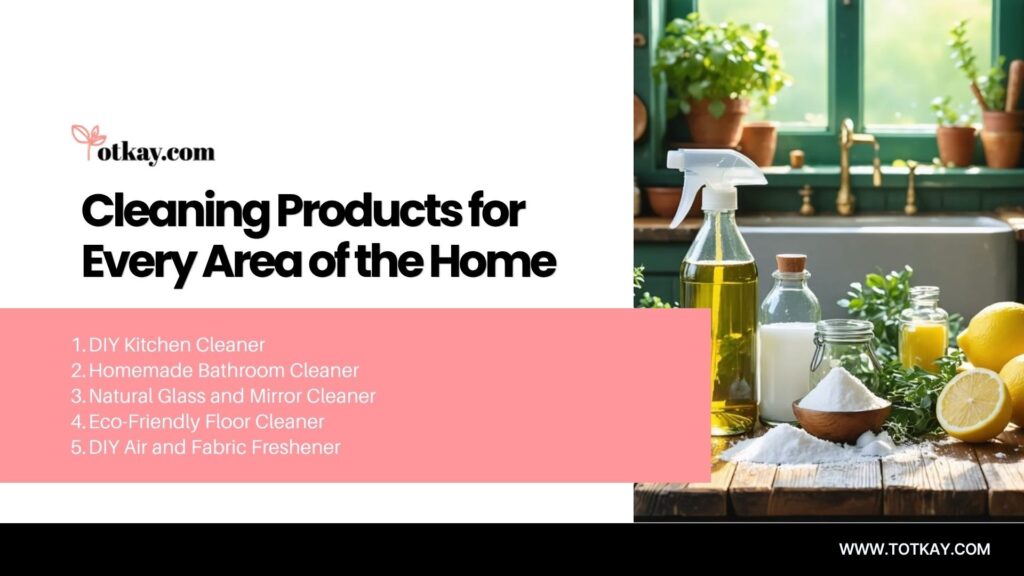
Creating powerful mixtures requires understanding your basic materials first. You do not need a chemistry degree to master this process. Your pantry likely holds everything required to start right now.
These staple items tackle everything from greasy pans to dirty windows. You will save money by buying these ingredients in bulk. They provide the foundation for almost all DIY cleaning products.
Vinegar (The Mineral and Grease Fighter)
White vinegar is one of the most popular ingredients in homemade cleaning because its acidity helps break down:
- Grease
- Mineral buildup
- Soap residue
- Water stains
It works especially well in kitchens and bathrooms.
Best Uses
- Glass cleaning
- Countertops
- Faucets
- Soap scum removal
Baking Soda (The Odor Neutralizer)
Baking soda acts as a gentle scrubbing agent. The mild abrasive texture removes stuck food without scratching surfaces. You can safely use it on delicate sinks and tubs.
Best Uses
- Carpet odors
- Refrigerator smells
- Sink cleaning
- Stove cleaning
Lemon (Natural Freshness)
Lemons provide a wonderfully fresh scent naturally. The citrus aroma makes your home smell clean and inviting. You avoid the artificial perfumes found in commercial sprays entirely.
The natural acidity of lemons makes them an excellent degreaser for various DIY cleaning products. Lemon juice cuts through sticky residues left by labels or tape and can brighten dull metal surfaces with just a quick rub.
Castile Soap (Plant-Based Cleaner)
Castile soap is a vegetable-based soap often used in green cleaning tips because it cleans effectively without harsh detergents.
Best Uses
- Floor cleaning
- General-purpose sprays
- Gentle surface cleaning
Understanding Which Cleaner Works Best for Which Problem
Using the right ingredient for the right mess is key to success with DIY cleaning products. It’s important to understand how different substances react to various stains to avoid wasting time and effort.
Acidic solutions handle minerals well while basic powders tackle grease. Natural items perform best when applied strategically to specific issues.
| Cleaning Problem | Best Natural Ingredient | Why It Works | Best Surface | Action Required |
| Greasy kitchen surfaces | Vinegar and lemon | Cuts oil buildup | Counters and stoves | Spray and wipe |
| Bad odors | Baking soda | Absorbs smells | Fridge and carpets | Sprinkle and vacuum |
| Soap scum | Vinegar | Dissolves mineral residue | Bathrooms | Soak and scrub |
| Dirty glass | Vinegar and water | Leaves no streaks | Mirrors and windows | Spray and polish |
| Sticky residue | Lemon juice | Breaks down adhesives | Hard surfaces | Rub and rinse |
You need to match natural cleaners correctly to the specific cleaning problem. Vinegar excels at removing hard water stains but fails against heavy soils. Baking soda neutralizes acids and handles oily messes perfectly.
DIY Cleaning Products for Every Area of the Home
Different rooms require different cleaning strategies. You can’t use a single formula for every surface, so tailoring your DIY cleaning products ensures they are effective throughout your house.
Creating specific blends for specific rooms keeps your routine organized. You will quickly learn which recipes perform best in each space. Here are the most reliable formulas for every corner of your home.
1. DIY Kitchen Cleaner
A vinegar and lemon spray handles most daily kitchen messes. The acid cuts through cooking oils splattered on the stove. You simply spray the mixture and wipe it away with a cloth.
Ingredients
- 1 cup white vinegar
- 1 cup water
- Lemon slices or lemon juice
This combination works wonderfully as a grease-cutting liquid. The lemon peel infused in vinegar provides a pleasant citrus aroma. You can safely use this around food preparation areas.
2. Homemade Bathroom Cleaner
Baking soda mixed with a little water creates a powerful paste. You can scrub away bathtub rings without scratching the porcelain. The mild abrasive action lifts dirt quickly. This mixture excels at soap scum removal. Adding a few drops of castile soap increases the cleaning power significantly. Rinsing with warm water leaves the shower sparkling clean.
3. Natural Glass and Mirror Cleaner
Equal parts vinegar and distilled water clean glass perfectly. Tap water often contains minerals that leave cloudy spots behind. Distilled water ensures a completely clear finish. This solution provides a streak-free shine every time. You should use a microfiber cloth to wipe the liquid away. A newspaper also works exceptionally well for drying windows without lint.
4. Eco-Friendly Floor Cleaner
Castile soap combined with warm water cleans hard floors safely. You only need a few drops of soap in a large bucket. Too much soap creates a sticky film on the wood or tile.
This mixture offers gentle cleaning for delicate surfaces. It lifts dirt without stripping the protective finish from your flooring. Mop the area with plain water afterward to remove any residue.
5. DIY Air and Fabric Freshener
Mixing essential oils with water creates a wonderful fabric spray. You must shake the bottle well before each use. The oil and water separate naturally over time.
This formula provides a fresh, natural scent instantly. Spritzing the air eliminates musty smells in closed rooms. You can lightly spray curtains and couches to refresh the fabric.
Homemade Disinfectants: What You Should Know
A common misconception is that all natural cleaners disinfect surfaces completely. There is an important difference between:
- Cleaning
- Sanitizing
- Disinfecting
Cleaning removes dirt and grease, while disinfecting targets germs more aggressively.
Natural Cleaning vs True Disinfection
| Aspect | Natural Cleaning | True Disinfection |
|---|---|---|
| Main Purpose | Removes dirt, grease, and odors from surfaces | Kills or inactivates harmful germs, bacteria, and viruses |
| Best For | Daily maintenance and routine cleaning | Illness outbreaks, contamination, and high-risk areas |
| Common Methods | Vinegar, baking soda, lemon, castile soap | EPA-approved disinfectants, bleach solutions, alcohol-based products |
| Effectiveness | Works very well for general surface cleaning and odor control | Designed specifically to reduce pathogens and infection risk |
| Safety Considerations | Often gentler, lower odor, and eco-friendly | May contain stronger chemicals and require careful handling |
| Ideal Use Areas | Kitchens, counters, floors, bathrooms for everyday upkeep | Sick rooms, toilets, high-touch surfaces during illness |
| Limitations | May not fully eliminate dangerous microorganisms | Can be harsher on surfaces, skin, or indoor air quality |
| Balanced Recommendation | Excellent for regular home care and maintenance | Important when dealing with illness, contamination, or vulnerable individuals |
What Natural Disinfectants Can and Cannot Do
Cleaning removes dirt and impurities from surfaces using friction. Disinfecting actually kills the germs living on those surfaces. Natural cleaners reduce dirt and odors effectively daily.
They may not replace EPA-approved disinfectants in high-risk situations. You should rely on commercial sanitizers if someone in the house falls ill. Natural options work best for routine maintenance rather than medical-grade sanitation.
Dangerous DIY Cleaning Combinations to Avoid
Mixing random household items can cause severe health hazards. You must never assume that all natural ingredients are safe to combine. Certain mixtures create toxic chemical reactions immediately upon contact.
| Unsafe Combination | Why It Is Dangerous | What Happens | Safe Alternative | Danger Level |
| Vinegar and bleach | Creates toxic chlorine gas | Severe breathing irritation | Use them entirely separately | High |
| Hydrogen peroxide and vinegar | Creates peracetic acid | Skin and lung irritation | Use individually on different days | High |
| Too much essential oil | Produces overpowering fumes | Headaches and nausea | Use very small amounts | Medium |
| Hot water and delicate surfaces | Causes thermal shock | Warping and cracks | Use lukewarm water instead | Medium |
| Bleach and ammonia | Creates deadly chloramine gas | Chest pain and shortness of breath | Never mix these chemicals | Extreme |
You must treat natural ingredients with the same respect as commercial chemicals. Always ensure proper ventilation when working with concentrated substances. Call poison control immediately if you accidentally mix hazardous elements.
How to Store Homemade Cleaning Products Properly
Proper storage is key to extending the life of your homemade cleaning solutions and ensuring your cleaning routine is as smooth as possible. By following a few simple storage guidelines, you can prevent ingredients from degrading, save money, and keep your mixtures effective.
Key storage tips include:
- Use the right container: This prevents ingredients from degrading prematurely.
- Avoid sunlight and heat: These can destroy the effectiveness of many natural recipes.
- Stay organized: Keeping supplies in order makes your cleaning routine much smoother.
Best Containers to Use
Glass spray bottles provide the safest storage option for acidic mixtures. Vinegar and essential oils can break down cheap plastic containers over time. Glass remains completely non-reactive to these strong natural substances.
Amber or cobalt blue bottles protect sensitive liquids from light exposure. Hydrogen peroxide loses its power quickly when exposed to sunlight. Dark glass ensures your mixtures remain potent for months.
Green Cleaning Habits That Make Your Home Healthier
True cleanliness goes beyond the liquids you spray on your counters. Your daily habits impact the overall health of your environment significantly. Adopting mindful practices improves your indoor air quality drastically.
Here are some simple strategies to elevate your natural cleaning game and reduce waste:
- Let the fresh air in: Open your windows while cleaning, even in winter. This flushes out stale air, prevents moisture buildup, and gets rid of lingering odors naturally.
- Switch to reusable cloths: Ditch paper towels for microfiber cloths. They’re better at trapping dust and dirt, and you can simply wash and reuse them.
- Use products sparingly: A little goes a long way. A light mist is usually enough to clean surfaces like kitchen counters. Using too much product wastes your mixture and can leave behind a sticky residue.
- Keep it simple: You don’t need a different cleaner for every surface. A few basic, multi-purpose mixtures can handle most of your cleaning needs, preventing you from feeling overwhelmed.
Final Thoughts
Switching to DIY cleaning products is not just about saving money—it’s about creating a healthier and more mindful home environment. With simple ingredients and the right techniques, you can handle daily cleaning tasks while reducing exposure to harsh chemicals and unnecessary waste.
The key is understanding which ingredients work best for specific problems, using safe combinations, and keeping your routine simple and consistent. For more kitchen-related tips and DIY hacks like homemade scrubs, perfumes, and other skin and hair care tips, visit totkay.com.
Frequently Asked Questions
Are DIY cleaning products really effective?
Yes, they clean daily dirt and grime exceptionally well. Ingredients like vinegar and baking soda have proven their worth over decades. They handle standard household maintenance just as effectively as commercial sprays.
What is the best natural cleaner for kitchens?
A simple mixture of equal parts vinegar and water works best. You can add lemon peels to boost the grease-cutting power naturally. This combination handles sticky countertops and dirty stovetops with remarkable ease.
Can homemade disinfectants kill germs?
Hydrogen peroxide and high-concentration rubbing alcohol kill bacteria very effectively. Standard vinegar reduces some germs but does not sanitize completely. You must use specific natural agents to achieve true disinfection.
Is vinegar safe for all surfaces?
No, you must never use vinegar on natural stone countertops. The acid etches marble and granite, dulling the expensive finish permanently. You should also avoid using it on unsealed wood floors.
How long do homemade cleaners last?
Mixtures containing water typically last between two to four weeks. Using distilled water extends this lifespan by preventing bacterial contamination. Solutions containing only oil or vinegar remain stable for several months.
Are eco-friendly cleaners safe for pets and children?
Handmade solutions are generally much safer than chemical alternatives. You avoid exposing your family to synthetic dyes and artificial fragrances. However, you must still store all cleaning supplies safely out of reach.

Hi, I’m a dedicated writer at Totkay.com, passionate about sharing practical tips and solutions to make your life easier. Explore my articles for helpful insights and valuable advice. Stay connected for more expert content!