
DIY Cleaning Products: Homemade Cleaner Recipes and Safety Tips
DIY cleaning products tackle everyday grease, soap scum, odors, and streaky glass. You make them with pantry items like white vinegar, baking soda, lemon juice, and castile soap. These homemade cleaner recipes are plant-based and gentler for routine jobs, but they are not harmless, and they do not disinfect. This guide covers natural cleaning products by surface, the mixes you must never make, the materials acids can damage, and a test patch step to use before every new recipe.
Why People Choose Homemade Cleaners
Many households want fewer harsh chemicals at home and less plastic waste from store-bought products. Making your own cleaning products helps in three practical ways:
- Control over ingredients: you know exactly what goes into the spray bottle.
- Lower cost: vinegar, baking soda, and castile soap are inexpensive and last a long time, so homemade cleaning solutions can save money.
- Flexibility: small batches let you adjust the scent and strength for each job.
Natural does not automatically mean safe.
Vinegar and lemon juice are acids, baking soda is a mild abrasive, essential oils can irritate skin and harm pets, and mixing the wrong products can release toxic gas.
Safety Rules and Test Patch Before You Start
Safety note: Plant-based cleaners are gentler than many harsh chemicals for routine jobs, but they still need care. Test every recipe on a hidden spot first, keep each cleaner in its own labeled bottle, and never combine cleaning products unless a recipe in this guide tells you to.
How to Do a Test Patch
- Choose a hidden spot, such as the inside of a cabinet door or the back of a tile edge.
- Apply a small amount of the mixture with a soft cloth and leave it for the time the recipe gives.
- Wipe the spot with plain water and let it dry fully.
- Check for dulling, color change, stickiness, or a rough texture. If you see any, do not use that recipe on the surface.
General Safety Rules
- Open a window or switch on an exhaust fan whenever you clean.
- Label every bottle with its contents and the date, and never reuse a food or drink container.
- Mix only what you plan to use, because homemade mixtures can lose their effect over time.
- Keep all cleaning supplies out of reach of children and pets, and away from food.
- Check the manufacturer’s care instructions for your countertop, floor, or appliance before you start.
The Core Ingredients and What Each One Cleans
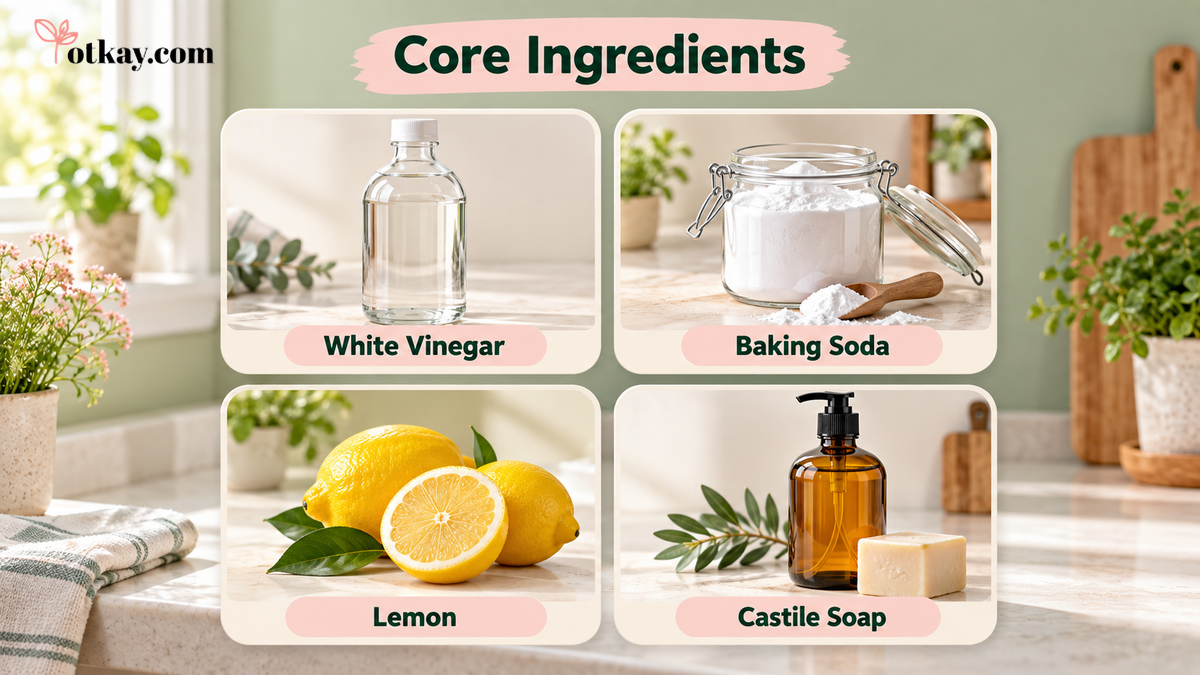
You do not need a long shopping list. A few simple ingredients cover most everyday cleaning, and each one has surfaces it should stay off.
White Vinegar
White vinegar is acidic, so it helps dissolve soap scum, hard-water spots, and mineral deposits on faucets, glass, and tile. It also helps cut light grease.
- Best for: glass, chrome faucets, shower doors, and sealed tile.
- Avoid on: natural stone such as marble, granite, and limestone, and fabrics that contain acetate. Always test first.
Baking Soda
Baking soda is a gentle abrasive and a natural deodorizer. It lifts stuck-on food without harsh scrubbing and helps with sink, tub, and refrigerator smells.
- Best for: sinks, tubs, stovetops, and odor control in carpets and refrigerators.
- Avoid on: polished, soft, or glossy finishes that scratch easily, unless a test patch shows no marks.
- Note: vinegar and baking soda fizz when they meet, and the gas can build pressure in a closed bottle, so never seal a freshly mixed batch.
Lemon Juice
Lemon juice is acidic and has a fresh scent. It cuts through sticky residue from labels or tape and can brighten dull metal with a quick rub.
- Best for: sticky residue on hard, sealed surfaces and light stains on stainless steel.
- Avoid on: natural stone and any surface that your test patch shows can dull.
Castile Soap
Castile soap is a vegetable-based soap. It lifts grease and dirt without strong detergents, so it makes a good base for floor cleaner and general-purpose sprays.
- Best for: hard floors, counters, and general cleaning with warm water.
- Use sparingly: a few drops go a long way, and too much leaves a sticky film.
Mild dish soap does many of the same jobs. For natural stone, the Natural Stone Institute recommends mild dish soap, stone soap, or a neutral cleaner.
Which Ingredient Works for Which Cleaning Problem
Match the ingredient to the mess to save time. Acids handle mineral deposits well, while soap and warm water do the heavy lifting on grease.
| Cleaning problem | Best natural ingredient | Why it helps | Best on | How to use |
| Greasy kitchen surfaces | Castile soap or mild dish soap | Soap lifts oil that vinegar alone leaves behind | Sealed counters and stovetops | Wipe with warm soapy water, then rinse |
| Bad odors | Baking soda | Absorbs and neutralizes some smells | Refrigerators, sinks, carpets | Sprinkle, wait, then wipe or vacuum |
| Soap scum and hard-water spots | White vinegar | Acid loosens mineral deposits | Tile, glass, faucets (not natural stone) | Spray, wait a few minutes, wipe, rinse |
| Streaky glass | Vinegar and distilled water | Distilled water leaves no mineral spots | Mirrors and windows | Spray lightly and buff with a lint-free cloth |
| Sticky residue | Lemon juice | Acid and natural oils soften adhesive | Hard, sealed surfaces | Rub, wipe, and rinse |
DIY Cleaning Recipes by Surface
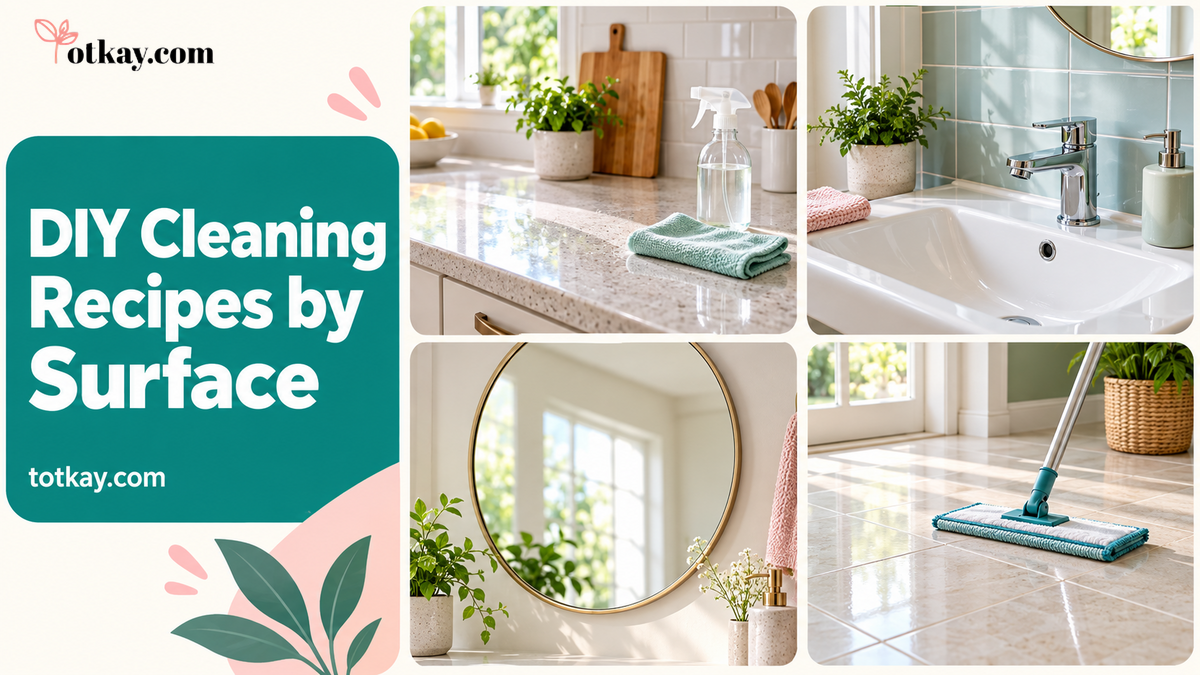
Each of these natural cleaning recipes uses only a few ingredients and tells you where not to use it. Do the test patch first, and use only the quantities given.
Kitchen Counter and Stovetop Spray
This light spray handles daily fingerprints, splashes, and cooking film on sealed, non-stone countertops and stovetops.
Ingredients
- 1 cup white vinegar
- 1 cup water
- A few strips of lemon peel (optional, for scent)
Steps
- Pour the vinegar and water into a clean glass spray bottle and add the lemon peel if you like.
- Do a test patch on a hidden spot.
- Spray a light mist on the surface and wait about a minute.
- Wipe the surface clean with a microfiber cloth, then rinse food-contact areas with plain water.
Caution: Do not use this spray on marble, granite, limestone, or other natural stone. It is a cleaner, not a disinfectant.
Sticky cabinet doors need more than a spray, so follow our guide to cleaning grease off kitchen cabinets.
For scorched cookware, read about cleaning burnt pots and pans.
Bathroom Soap Scum Paste
A baking soda paste scrubs gently on tubs, sinks, and tile.
Ingredients
- 3 tablespoons baking soda
- 1 to 2 tablespoons water, enough to make a spreadable paste
- A few drops of castile soap or mild dish soap
Steps
- Mix the ingredients in a small bowl to form a paste.
- Do a test patch on a hidden spot.
- Spread the paste over the soap scum with a soft sponge and leave it for a few minutes.
- Scrub gently, then rinse well with warm water.
Caution: Rinse this paste off fully before using any commercial bathroom product, and never combine a bleach cleaner with vinegar, other acids, or ammonia.
Glass and Mirror Cleaner
Homemade window cleaners need only two ingredients. Mix equal parts vinegar and distilled water for a streak-free shine on windows and mirrors.
Distilled water works better than tap water, which can leave mineral spots.
Ingredients
- 1 cup distilled water
- 1 cup white vinegar
Steps
- Pour both liquids into a clean glass spray bottle.
- Spray a light mist on the glass.
- Wipe with a microfiber or lint-free cloth and buff dry.
Caution: Skip screens and coated or tinted glass unless the manufacturer says vinegar is safe to use.
Floor Cleaner for Sealed Hard Floors
Castile soap and warm water clean sealed tile and vinyl without a heavy chemical smell.
Ingredients
- 4 liters (about 1 gallon) of warm water
- A few drops of castile soap
Steps
- Add a few drops of castile soap to the warm water.
- Dip the mop and wring it out well.
- Mop the floor, then go over it again with plain water to remove soap residue.
Caution: Use as little water as possible on hardwood floors and follow the flooring maker’s care instructions. Do not use vinegar or lemon on natural stone floors. Use a neutral stone cleaner instead.
Fabric and Air Freshener
A light spray freshens curtains and cushions. Essential oils add scent, but they do not replace a disinfectant, and they bring extra risks, so use this recipe only if it suits your household.
Ingredients
- 1 cup distilled water
- A few drops of essential oil (optional)
Steps
- Test a hidden corner of the fabric first.
- Add the water and oil to a spray bottle and shake well, because oil and water separate.
- Mist the fabric lightly from a distance and let it dry.
Caution: Essential oils are not always safe for dogs and cats.
The Pet Poison Helpline lists citrus oils, pine oil, tea tree oil, and eucalyptus oil among the risks, and cats are especially vulnerable. If you have pets, skip the oils, open a window, or sprinkle baking soda on fabrics and vacuum it up.
For more scent ideas, see these homemade air fresheners.
Can DIY Cleaners Disinfect?
No. Vinegar, lemon juice, baking soda, and castile soap clean surfaces, but they are not registered disinfectants.
Cleaning removes dirt, grease, and some germs with friction. Disinfecting uses a registered product to kill germs on a surface.
The EPA says products that claim to kill germs must be registered, and a disinfectant must stay visibly wet on the surface for the full contact time on its label. See the EPA’s list of registered disinfectants.
The University of Arkansas Extension also advises against relying on DIY green cleaners to disinfect.
Natural cleaners suit routine upkeep. If someone in the house is sick, clean the surface first. Then use an EPA-registered disinfectant, or a locally approved product labeled for the germs you want to target. Follow the label for contact time, and never combine it with other cleaners.
Cleaning Mixes You Must Never Make
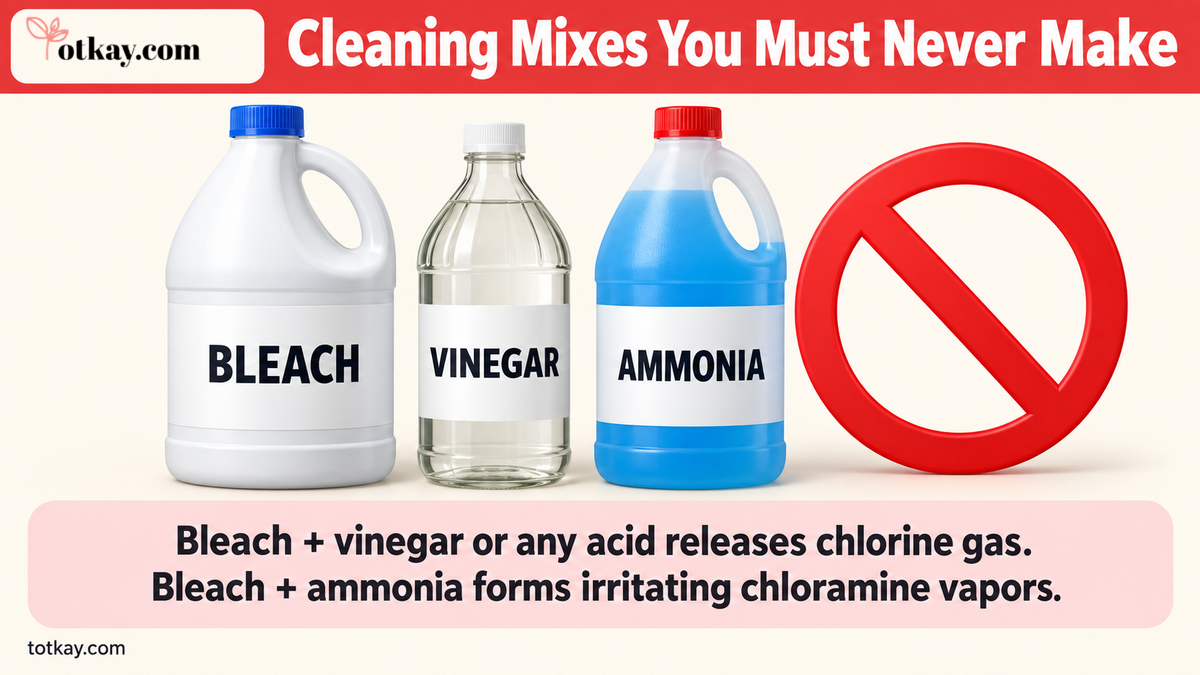
Never mix bleach with vinegar or any other acid. Never mix bleach with ammonia. These mixes can release toxic gases, even in small amounts.
Some DIY recipes online use hydrogen peroxide or rubbing alcohol. Do not combine hydrogen peroxide with vinegar, and do not combine rubbing alcohol with bleach.
| Mix | What can happen | What to do instead |
| Bleach and vinegar or other acids | Releases chlorine gas, which burns the eyes, nose, and throat and causes coughing | Use one product at a time and rinse the surface well in between |
| Bleach and ammonia | Forms chloramine vapors that irritate the airways | Never combine them, and ventilate the room |
| Bleach and rubbing alcohol | Listed by the University of Florida IFAS as a mix to avoid | Keep them in separate bottles and use them separately |
| Hydrogen peroxide and vinegar in one container | Forms peracetic acid, which is corrosive and irritating to skin, eyes, and airways | Store and use them separately, and do not combine them |
If you mix products by accident, leave the area right away and get fresh air. Get medical help or contact your local poison control or emergency number if you have trouble breathing, chest pain, or a cough that does not settle.
Poison Control explains what happens when bleach meets an acid or ammonia.
Surfaces and Materials to Protect
A recipe that works on glass can ruin another surface. Check this list before you spray, and always follow the manufacturer’s care instructions.
| Surface or situation | Avoid | Better approach |
| Natural stone (marble, granite, limestone) | Vinegar, lemon juice, and any acidic mix, which can dull or etch the stone | A neutral cleaner, stone soap, or mild dish soap with warm water |
| Fabrics that contain acetate | Vinegar-based sprays | Check the care label and test a hidden area first |
| Hardwood and unsealed wood | Soaking the surface or using vinegar mixes | A well-wrung damp mop, the maker’s instructions, and a test patch |
| Polished, painted, coated, or other delicate surfaces | Abrasive baking soda paste and acid sprays | A soft cloth, mild soap, and a test patch |
| Homes with pets | Essential oil sprays, especially tea tree, citrus, eucalyptus, and pine | Skip the oils and ask your vet if unsure |
How to Store Homemade Cleaners
Good storage keeps your mixtures effective and your household safe.
- Make small batches and use what you mix, since homemade cleaners have no preservatives and no standard shelf life.
- Keep bottles in a cool, dark cupboard out of reach of children and pets, and away from food.
- Keep hydrogen peroxide in its original opaque bottle instead of pouring it into a clear spray bottle, because light breaks it down.
- Throw out any mixture that changes color, smells off, or turns cloudy.
Simple Green Cleaning Habits
Small changes make your cleaning routine more eco-friendly:
- Let fresh air in: open windows while you clean to clear fumes and moisture.
- Switch to reusable cloths: wash and reuse microfiber cloths, which trap dust well.
- Use a light mist: too much product wastes the mix and can leave a sticky film.
Final Thoughts
DIY cleaning products work best when you match the ingredient to the job, test before you spray, and respect the rules about mixing and surfaces.
Start with one recipe this week, such as the glass cleaner or the kitchen spray. Label the bottle, and keep a separate bottle for each mixture.
Want more ideas? Try our other DIY guides, from homemade scrubs and perfumes to hair care tips, and browse more Totkay cleaning hacks.
Frequently Asked Questions
Do DIY cleaning products really work?
For everyday dirt, light grease, mineral spots, and odors, many do.
They are less suited to heavy baked-on grease and to killing germs. Match each ingredient to the job, and use warm, soapy water for grease.
Can vinegar or lemon juice disinfect surfaces?
No. Vinegar and lemon juice clean, but they are not EPA-registered disinfectants.
When you need to disinfect, clean the surface first. Then use an EPA-registered product exactly as its label directs, including the full contact time.
Is vinegar safe for every surface?
No. Avoid vinegar on natural stone such as marble, granite, and limestone, where acid can dull or etch the finish.
Be careful on acetate fabrics and unsealed wood, and always do a test patch first.
Are homemade cleaners safe around children and pets?
Not automatically. Plant-based ingredients can still irritate skin or eyes, and essential oils can harm pets, especially cats.
Store every bottle out of reach, keep pets out of the room until surfaces are dry, and ask your vet before using oils.

Hi, I’m a dedicated writer at Totkay.com, passionate about sharing practical tips and solutions to make your life easier. Explore my articles for helpful insights and valuable advice. Stay connected for more expert content!
Related posts:
 How to Clean Burnt Pots and Pans at Home (Jale Hue Bartan Saaf Karne Ka Tarika)
 Home Diet Plans: 7 Proven Secrets to Reach Your Weight Loss Goals
 DIY Natural Perfume Recipes: Easy, Lasting Scents
 Garmi Se Bachne Ka Tarika
 Eyelashes Ko Kaise Grow Karein: 10 Gharelu Totkay
 Bachon Ki Khansi Ka Asan Ilaj