
Skin Whitening for Men: 7 Natural Ways to Get a Brighter Glow

Skin whitening for men focuses on reducing dark spots, sun tan, and uneven skin tone using safe, natural methods. Remedies like aloe vera, turmeric, and yogurt support natural skin brightening for men without harsh chemicals.
Combine these with sunscreen, hydration, and a consistent men’s skincare routine for visible, long-term results. Results vary based on skin type, lifestyle, and consistency.
What Does Skin Whitening for Men Really Mean?
Many men search for skin whitening for men expecting dramatic results overnight. The reality is more nuanced, and more achievable, once you understand a few effective ways to work with your skin rather than against it.
Skin Whitening vs. Skin Brightening
Skin whitening typically refers to reducing melanin production to lighten overall skin color. Skin brightening for men, on the other hand, focuses on improving radiance, reducing dark spots, and evening out skin pigmentation without altering your natural complexion.
Brightening is the safer, more realistic goal—and the one natural remedies can genuinely support.
Can Natural Remedies Change Your Skin Tone?
Natural remedies cannot permanently change your genetic skin tone. What they can do is reduce surface-level discoloration caused by tanning, acne marks, or environmental damage.
Managing expectations matters here:
- Realistic goal: Clearer, more even-looking skin with reduced dark spots.
- Unrealistic goal: Permanently lightening your natural skin color.
- Achievable outcome: Healthier skin that looks brighter and more refreshed.
What Causes Dull or Uneven Skin in Men?
Dull skin rarely has a single cause. Stress, pollution, dehydration, and skipping sunscreen all contribute—and most men deal with several of these at once.
Understanding your triggers helps you choose the right remedy and avoid wasting time on approaches that do not match your skin’s actual needs.
What Causes Dark, Tanned, or Uneven Skin in Men?
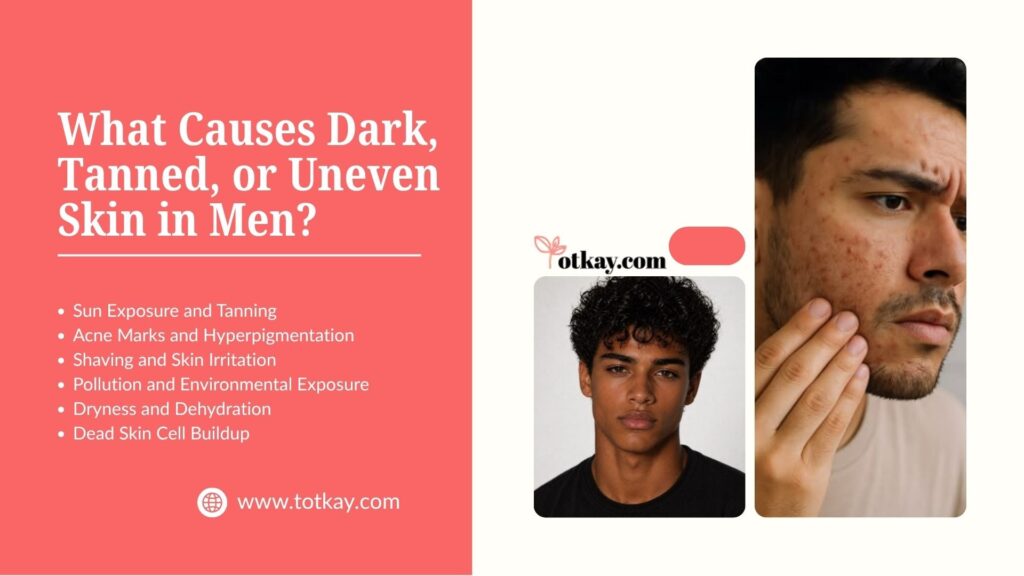
Before choosing any remedy, it helps to understand why your skin looks the way it does. Targeting the root cause leads to faster and more lasting improvement.
Sun Exposure and Tanning
UV rays trigger melanin production, which is your skin’s natural defense mechanism. Repeated exposure without sunscreen causes tanning, sun damage, and long-term skin changes, including freckles and a darker complexion that develops gradually over years of unprotected exposure.
Left unmanaged, chronic sun exposure also accelerates premature aging in the form of fine lines and rough texture.
Acne Marks and Hyperpigmentation
Post-inflammatory hyperpigmentation (PIH) develops after acne heals. The skin produces excess melanin during the healing process, leaving behind flat, discolored marks.
Shaving and Skin Irritation
Frequent shaving causes micro-cuts, razor burn, and ingrown hairs. These small injuries trigger inflammation that can leave dark patches, especially along the jawline and neck.
Pollution and Environmental Exposure
Airborne pollutants generate free radicals that break down collagen and disrupt skin tone, contributing to visible aging over time. Men who spend extended hours outdoors or in polluted environments often develop uneven pigmentation faster.
Dryness and Dehydration
Dehydrated skin looks dull, flaky, and uneven. Without adequate moisture, the skin’s surface scatters light poorly—making it appear darker and rougher than it actually is.
Dead Skin Cell Buildup
The skin naturally sheds dead cells every 28–30 days. Without gentle exfoliation, those dead cells accumulate on the surface and create a dull, patchy appearance, often clogging pores in the process.
Lifestyle Factors
Poor sleep, smoking, a low-nutrient diet, and excessive alcohol consumption all reduce skin health. These factors deprive skin cells of the oxygen and nutrients they need to regenerate properly.
7 Natural Ways to Improve Skin Whitening for Men

These seven methods represent the most practical, evidence-informed approaches to natural skin brightening for men. Each one works best when used consistently alongside sunscreen and a basic skincare routine.
1. Use Aloe Vera for a Fresh, Hydrated Glow
Aloe vera contains aloesin, a compound that may help reduce melanin production in skin cells, according to research published in Pigment Cell Research. Its anti-inflammatory properties also calm redness caused by shaving or sun exposure.
How to apply it safely and effectively:
- Hydration: Apply pure aloe vera gel directly to clean skin and leave it on for 20 minutes before rinsing.
- Patch test: Test on a small area of skin before full-face use to check for sensitivity.
- Consistency: Use three to four times per week for gradual improvement.
- Realistic expectation: Aloe vera supports hydration and soothes irritation—results on dark spots take several weeks.
2. Try Turmeric for a Natural Glow
Turmeric’s active compound, curcumin, has antioxidant and anti-inflammatory properties supported by research in the Journal of Ethnopharmacology. It has been used in traditional South Asian skincare for centuries.
Use it carefully to avoid staining and skin irritation:
- Preparation: Mix a small pinch of turmeric with yogurt or honey to create a paste.
- Application: Apply to clean skin, leave for 10–15 minutes, then rinse thoroughly.
- Staining risk: Turmeric stains skin yellow temporarily. Use a small amount and rinse well.
- Patch test: Always test before applying to your face, especially for sensitive skin types.
3. Use Yogurt for Gentle Exfoliation
Yogurt contains lactic acid, a natural alpha hydroxy acid (AHA) that loosens dead skin cells from the surface. Regular use reveals brighter skin underneath without the abrasiveness of physical scrubs.
Apply it correctly to avoid over-exfoliation:
- Method: Apply plain, unsweetened yogurt to your face and leave for 15 minutes.
- Frequency: Two to three times per week is enough. More frequent use can disrupt your skin barrier.
- Combination: Mix with honey or aloe vera for added hydration alongside exfoliation.
4. Use Honey to Keep Skin Hydrated
Honey is a natural humectant, meaning it draws moisture from the air into the skin. Well-hydrated skin reflects light more evenly, which directly improves how bright and clear it looks. A simple honey mask applied a few times a week is one of the gentlest remedies on this list.
Make the most of honey’s skin benefits with these steps:
- Application: Apply raw honey to clean skin and leave for 20 minutes before rinsing with lukewarm water.
- Skin types: Honey suits most skin types, including dry and combination skin.
- Patch test: Those with pollen or bee-product allergies should skip this remedy entirely.
5. Add Green Tea to Your Skincare Routine

Green tea contains epigallocatechin gallate (EGCG), a powerful antioxidant that helps protect skin from UV-induced oxidative damage. Research in the Journal of Nutritional Biochemistry suggests topical green tea extracts may reduce UV-related pigmentation.
Use it topically for the best surface-level results:
- Preparation: Brew a strong cup of green tea, cool it completely, then apply with a cotton pad.
- Method: Leave it on for 15–20 minutes, then rinse.
- Limitation: Green tea works best as a preventive measure alongside sunscreen, not as a standalone dark spot treatment.
6. Eat Vitamin C-Rich Foods
Vitamin C is essential for collagen synthesis and helps suppress melanin production at a cellular level. Dietary intake supports skin health from the inside out.
These foods deliver the highest vitamin C content per serving:
- Guava: One of the richest dietary sources of vitamin C.
- Bell peppers: Red and yellow peppers contain more vitamin C than oranges.
- Citrus fruits: Oranges, lemons, and grapefruits provide consistent daily intake.
- Tomatoes: Provide both vitamin C and lycopene, another antioxidant that reduces UV-related skin damage.
7. Protect Your Skin From the Sun
Sunscreen is the single most effective tool for preventing further darkening. Without it, every other remedy becomes significantly less effective.
Build sun protection into your daily routine with these steps:
- SPF: Use a broad-spectrum sunscreen with SPF 30 or higher every day, regardless of weather.
- Reapplication: Reapply every two hours during outdoor activities.
- Additional protection: Wear a wide-brimmed hat and seek shade between 10 a.m. and 4 p.m.
- Why it matters: UV exposure is the primary driver of tanning, dark spots, and uneven skin tone in men.
Best Natural Ingredients for Brighter Skin in Men
Before reviewing the table, consider that no single ingredient solves every concern. The best approach combines two or three compatible remedies alongside daily sunscreen and consistent hydration.
| Ingredient | Potential Benefit | Suitable Skin Type | How to Use It | Precautions |
| Aloe Vera | Soothes irritation, reduces redness, mild brightening | All skin types | Apply gel, leave 20 min, rinse | Patch test first; use pure gel |
| Turmeric | Antioxidant support, reduces inflammation | Normal, oily, combination | Mix with yogurt, leave 10–15 min, rinse well | Can stain skin; avoid large amounts |
| Yogurt | Gentle exfoliation via lactic acid | Normal, oily, dry | Apply plain yogurt, leave 15 min, rinse | Limit to 2–3x per week |
| Honey | Deep hydration, antimicrobial properties | Dry, combination, sensitive | Apply raw honey, leave 20 min, rinse | Avoid if allergic to bee products |
| Green Tea | Antioxidant protection, reduces UV damage | All skin types | Cool brewed tea, apply with cotton pad | Best used preventively, not as a treatment |
How to Build a Simple Men’s Skin Brightening Routine
A structured men’s skincare routine produces far better results than applying random remedies without consistency. The goal is simple: cleanse, treat, protect—every day.
Morning Skincare Routine
Start each morning by removing overnight oil and debris from your skin. A proper morning routine sets the foundation for the day.
Follow these three steps every morning:
- Cleanse: Use a gentle, sulfate-free face wash suited to your skin type.
- Moisturize: Apply a lightweight, non-comedogenic moisturizer to maintain hydration.
- Sunscreen: Finish with a broad-spectrum SPF 30+ sunscreen. Do not skip this step.
Night Skincare Routine
Your skin repairs itself while you sleep, making your evening routine one of the most impactful parts of your day.
Build your night routine around these steps:
- Cleanse: Remove pollutants, sweat, and product buildup from the day.
- Treat: Apply your chosen natural remedy—aloe vera, honey, or turmeric paste—to targeted areas.
- Moisturize: Use a slightly richer moisturizer at night to support the skin’s overnight repair process.
Weekly Skincare Routine
Exfoliation is the key weekly step most men skip. It prevents dead cell buildup and allows other products to absorb more effectively.
Keep these weekly practices simple:
- Exfoliate: Use a gentle exfoliant—yogurt, a mild AHA, or a soft-bristle brush—once or twice per week.
- Avoid over-scrubbing: Aggressive physical scrubs damage the skin barrier and worsen uneven tone over time.
Active Ingredients Worth Knowing: What’s Inside Store-Bought Formulas

Natural remedies work well for many men, but some prefer a brightening serum or targeted cream as part of their routine. Understanding what these products actually contain helps you choose wisely instead of guessing.
- Hyaluronic acid is a hydrating ingredient that holds water in the skin, often layered under a moisturizer or gentle cleanser for extra plumpness without clogging pores.
- Glycolic acid is an AHA similar to the lactic acid in yogurt, but stronger; useful for oily skin dealing with buildup, though it can irritate sensitive skin if overused.
- Salicylic acid is a BHA that penetrates oil-clogged pores, making it a common choice in cleansers and spot treatments for acne-prone, oily skin.
These ingredients complement natural remedies rather than replace them, and starting with lower concentrations reduces the risk of irritation while your skin adjusts.
Skin Whitening vs. Skin Brightening: Which Should Men Choose?
Understanding the difference helps men set realistic goals and choose the right approach.
Before reviewing this table, note that the distinction between these two terms matters for both safety and outcome. Most natural remedies support brightening, not whitening in the clinical sense.
| Factor | Skin Whitening | Skin Brightening |
| Meaning | Reducing overall melanin production | Improving radiance and evening skin tone |
| Goal | Lighter overall complexion | Healthier, more even-looking skin |
| Natural skin tone | Attempts to alter | Preserves and enhances |
| Tanning | May reduce with consistent treatment | Fades gradually with sun protection |
| Dark spots | Targeted reduction possible | Gradual fading achievable |
| Safety | Higher risk with chemical products | Lower risk with natural methods |
| Realistic expectations | Limited with natural remedies | Achievable with consistent care |
How Long Does It Take to Get Brighter-Looking Skin?
There is no fixed timeline for skin brightening for men. Results depend on the cause of discoloration, skin type, and how consistently you follow your routine, though most men notice visible change within a few months of steady care.
Why Results Differ From Person to Person
Genetics, melanin levels, and the severity of existing dark spots all affect how quickly skin responds. Someone dealing with mild tanning will see results faster than someone managing deep post-acne hyperpigmentation.
Why Consistency Matters
Sporadic use of natural remedies produces minimal results. Most improvements in skin tone happen gradually over four to eight weeks of consistent, daily care.
The Role of Sun Protection
Without daily sunscreen, new pigmentation continues developing faster than remedies can fade existing discoloration. Sun protection is non-negotiable.
When to Stop Using a Home Remedy
Stop immediately if you experience burning, redness, swelling, or increased breakouts. These are signs the remedy does not suit your skin type.
Final Thoughts
Skin whitening for men works best when the goal is healthier, more even-looking skin—not a lighter natural complexion. Natural remedies like aloe vera, turmeric, yogurt, and honey can genuinely improve the appearance of dark spots and uneven tone when used consistently and safely.
Sun protection, hydration, and a simple daily men’s skincare routine form the foundation. Natural skin brightening remedies enhance what that foundation builds. And when pigmentation persists despite consistent care, a dermatologist provides the expertise that home remedies cannot replace.
For best results, be patient, protect your skin, and stay consistent. Visit toktay.com for more natural skin, hair, and wellness remedies!
FAQs About Skin Whitening for Men
What is the best natural remedy for skin whitening for men?
No single remedy works best for every man. Among men’s skin whitening home remedies, aloe vera and yogurt are the most broadly safe and effective. Aloe vera soothes and hydrates while reducing inflammation, and yogurt provides gentle lactic acid exfoliation. Combined with daily sunscreen and consistent moisturizing, these two remedies support visible improvement in skin tone over four to eight weeks.
Can men naturally brighten their skin?
Yes. Natural skin brightening for men is achievable through consistent use of proven remedies like aloe vera, turmeric, and yogurt combined with sun protection and hydration. Natural methods cannot permanently lighten your genetic skin tone, but they effectively reduce dark spots, post-tan discoloration, and uneven pigmentation when used regularly over several weeks.
How can men remove a tan naturally?
Removing a tan naturally requires preventing further UV exposure, exfoliating gently to remove tanned surface cells, and keeping skin well hydrated. Using aloe vera or yogurt two to three times per week supports the process. Skin cell turnover takes approximately 28–30 days, so a tan typically fades gradually rather than disappearing quickly. Daily SPF 30+ sunscreen prevents new tanning during recovery.
Can aloe vera brighten men’s skin?
Aloe vera contains aloesin, which research suggests may inhibit melanin production. It also reduces inflammation caused by sun exposure and shaving, which are two common causes of uneven skin tone in men. Natural skin brightening benefits from aloe vera are gradual and most visible when used consistently. Apply pure aloe vera gel three to four times per week for best results.
Is turmeric good for men’s skin?
Turmeric is beneficial for men’s skin when used correctly. Its active compound, curcumin, provides antioxidant and anti-inflammatory support that may reduce surface-level pigmentation. Always mix it with yogurt or honey before applying to reduce the staining risk, and conduct a patch test before full-face application. Turmeric supports natural skin whitening for men as part of a broader routine, not as a standalone treatment.
Can lemon whiten men’s skin?
Lemon juice is not safe for direct skin application. Its high acidity and phototoxic properties cause chemical burns, increased UV sensitivity, and worsened pigmentation—especially in sun-exposed areas. Despite being a common suggestion, dermatologists consistently advise against using undiluted lemon juice on skin.
How can men get glowing skin naturally?
Natural skin brightening for men comes from combining several healthy habits: daily SPF 30+ sunscreen, consistent hydration, a diet rich in vitamin C, gentle weekly exfoliation, and the regular use of natural remedies like aloe vera or honey. A consistent men’s skincare routine built around these habits produces visible radiance over four to six weeks without harsh chemicals or expensive treatments.
Does sunscreen prevent skin from getting darker?
Yes. Broad-spectrum sunscreen with SPF 30 or higher blocks UVA and UVB rays, which are the primary triggers for melanin overproduction. Daily sunscreen use prevents new tanning, slows the formation of dark spots, and allows existing discoloration to fade naturally. No skin lightening for men routine produces lasting results without sunscreen as a foundation.

Hi, I’m a dedicated writer at Totkay.com, passionate about sharing practical tips and solutions to make your life easier. Explore my articles for helpful insights and valuable advice. Stay connected for more expert content!
Related posts:
 Severe Period Pain on First-Day Home Remedies
 Improve Endurance Naturally: 10 Proven Ways to Go Further
 Natural Carb Blockers: 10 Pantry Hacks to Stop Weight Gain
 Nature’s Chill Pill: 10 Herbal Stress Relief Tips (2026)
 What Causes Piles in Men? Expert Guide and Prevention Tips
 Pregnancy Hemorrhoids: Safe Relief and Natural Care