
Vegetables for Gut Health: Best Sabzi Choices and Totkay

Vegetables for gut health help nourish beneficial bacteria, improve digestion, and support a stronger intestinal lining. The best vegetables for gut health include lauki, tinda, turai, palak, onion, garlic, broccoli, cabbage, cauliflower, and karela. These vegetables contain soluble fiber, prebiotics, water, and plant compounds that help reduce bloating, support regular bowel movements, and calm gut irritation.
For better tolerance, cook the sabzi thoroughly and use digestive spices such as cumin, ginger, fennel, or ajwain. If your stomach is sensitive, start with soft options like lauki or tinda, then gradually add stronger prebiotic and cruciferous vegetables over time for lasting gut support.
How Vegetables for Gut Health Feed Your Internal Garden
Your gut microbiome contains trillions of bacteria, yeasts, and other microbes. Some protect you. Some create gas and irritation when they grow out of balance. Your diet shapes this ecosystem every day.
Vegetables help because they contain fiber, plant chemicals, water, minerals, and natural prebiotics. These compounds do more than “clean the stomach.” They feed beneficial microbes and help your gut lining repair itself.
Soluble Fiber vs. Insoluble Fiber
Vegetables contain two main types of fiber. Both matter, but they work differently.
Insoluble fiber adds bulk to stool. It helps move waste through the colon. You can think of it as a soft broom that supports bowel movement.
Soluble fiber absorbs water and forms a gentle gel. This gel slows digestion, supports stool softness, and feeds helpful gut bacteria.
For people with acidity, gastritis, IBS-like bloating, or weak digestion, soluble fiber often feels gentler than rough, raw fiber.
Good soluble-fiber sabzi options include:
- Lauki
- Tinda
- Turai
- Bhindi
- Cooked carrots
- Soft-cooked palak
Prebiotics, SCFAs, and Butyrate
Prebiotics are fibers that your body cannot fully digest. Your gut bacteria ferment them and create short-chain fatty acids, also called SCFAs.
One important SCFA is butyrate. Butyrate helps fuel the cells that line your colon. It also supports the gut barrier, which prevents unwanted particles from triggering the response system.
A stronger gut barrier may help reduce:
- Frequent bloating
- Irregular bowel movements
- Gut inflammation
- Sensitivity after spicy or oily meals
- General digestive discomfort
Vegetables like onion, garlic, leafy greens, and cruciferous vegetables help this process when you cook them properly and eat them in suitable amounts.
Takeaway: Sabzi supports gut health by adding bulk, forming soothing gels, feeding good bacteria, and helping the gut lining stay strong.
Sabzi Matrix: Best Vegetables for Gut Health and Desi Totkay
Use this sabzi matrix as a practical guide. It shows which vegetables to choose, what they offer, and how to cook them for better digestion.
| Sabzi Group | Local Examples | Key Compounds | Digestive Benefit | Desi Totka |
| Gentle Hydrators | Lauki, Tinda, Turai | Soluble fiber, water, minerals | Calms acidity, supports soft stools, and restores digestion | Cook lauki with cumin, ginger, turmeric, and a little ghee until soft |
| Bitter Balancers | Karela | Bitter polyphenols, saponins | Supports bile flow, fat digestion, and microbial balance | Salt sliced karela, rinse, then sauté with fennel and turmeric |
| Allium Prebiotics | Onion, Garlic | Inulin, fructans, allicin | Feeds beneficial bacteria and supports microbiome diversity | Cook onion and garlic slowly into a soft salan base |
| Microbe-Feeding Greens | Palak, Sarson | Plant sugars, minerals, and chlorophyll | Feeds good microbes and supports regular bowel movement | Steam or sauté greens with ghee; avoid raw spinach in sensitive digestion |
| Cruciferous Support | Broccoli, Cabbage, Cauliflower | Sulfur compounds, raffinose, fiber | Supports gut barrier and detox pathways, but may cause gas | Steam well and season with cumin, ginger, and ajwain |
This matrix helps you choose sabzi based on your current gut condition. If your stomach feels inflamed, start with gentle hydrators. If you struggle with heavy, oily meals, use bitter vegetables in small amounts. If you want long-term microbiome support, rotate all groups through the week.
Takeaway: The best gut-healing sabzi depends on your symptoms. Choose soft, cooked, low-irritation vegetables first, then build variety.
Gentle Hydrators: Lauki, Tinda, and Turai
Lauki, tinda, and turai work well for sensitive digestion because they contain high water content and gentle fiber. They do not demand much effort from the stomach. This makes them useful during acidity, gastritis flare-ups, loose stools, or recovery after heavy meals.
Why They Help Sensitive Stomachs
These vegetables act like a low-residue shield. They soften easily during cooking and become light on the gut.
They may help when you feel:
- Burning after spicy food
- Heaviness after dinner
- Mild constipation with dryness
- Gastric heat
- Nausea from oily meals
Lauki stands out because it becomes soft and soothing when stewed. Tinda offers a similar light texture. Turai adds mild fiber and moisture without feeling heavy.
The Lauki Reset Totka
Use this method for a 2–3 day digestive reset when your gut feels irritated.
- Peel and dice fresh lauki.
- Warm 1 teaspoon of ghee.
- Add cumin seeds and grated ginger.
- Add lauki, turmeric, salt, and water.
- Simmer until very soft.
- Mash lightly and eat warm.
Pair it with soft rice or plain khichdi. Avoid red chili, heavy masala, and deep frying during this reset.
Takeaway: Lauki, tinda, and turai give the gut rest while still providing fiber, fluid, and minerals.
Bitter Microbiome Balancer: Karela Gut Health Benefits
Karela has a strong taste, but that bitterness gives it digestive value. Bitter foods can stimulate digestive secretions and help the body handle fats more efficiently.
For karela gut health, the key lies in using it correctly. You do not need large portions. Small, well-cooked servings can support digestion without overwhelming the stomach.
How Karela Supports Digestion
Karela may help by:
- Encouraging bile flow
- Supporting fat breakdown
- Reducing heaviness after oily foods
- Helping balance harmful microbial overgrowth
- Adding bitter plant compounds to the diet
Bile helps emulsify fats. When bile flow feels sluggish, meals can sit heavy. You may feel bloated, sleepy, or uncomfortable after rich foods.
The Bile Booster Totka
Try this gentle karela method:
- Slice karela thinly.
- Add a pinch of salt and leave it for 15–20 minutes.
- Rinse lightly to reduce excess bitterness.
- Warm mustard oil or a small amount of ghee.
- Add fennel seeds, turmeric, and sliced karela.
- Cook until tender.
Avoid burning karela. Over-frying makes it harder to digest.
Takeaway: Karela can support fat digestion and microbial balance, but it works best in small, well-cooked portions.
High-Potency Prebiotics: Onion and Garlic
Onion and garlic are powerful prebiotic foods. They contain fibers that beneficial bacteria love. This makes onion a useful prebiotic vegetable, while garlic supports gut bacteria diversity when cooked in traditional meals.
The phrase garlic gut bacteria Pakistan fits a common local habit: most Pakistani and South Asian curries already begin with garlic and onion. That base can support gut health if you prepare it gently.
The Inulin and Fructan Effect
Onion and garlic contain inulin and fructans. These prebiotic fibers feed helpful microbes and may increase bacterial diversity over time.
However, they can also trigger gas in sensitive people. Raw onion, raw garlic chutney, and strong garlic sauces may cause instant bloating, burping, or cramps.
How to Avoid the FODMAP Triglyceron and garlic bloat, you do not remove them forever without testing your tolerance. Instead, change the cooking method.
Use these steps:
- Chop onion finely.
- Cook it slowly until soft and golden, not burnt.
- Add crushed garlic later so it does not scorch.
- Use ginger, cumin, and coriander to balance the base.
- Start with small amounts.
- Avoid raw onion salad during flare-ups.
A soft salan base breaks down harshness and makes prebiotic fibers easier to tolerate.
Takeaway: Onion and garlic can feed good bacteria, but sensitive stomachs need them cooked slowly and eaten in modest amounts.
Microbe-Feeding Greens: Palak and Sarson
Leafy greens provide fiber, minerals, antioxidants, and special plant sugars that support beneficial microbes. A practical leafy greens toolkit approach focuses on cooked greens, not raw overload.
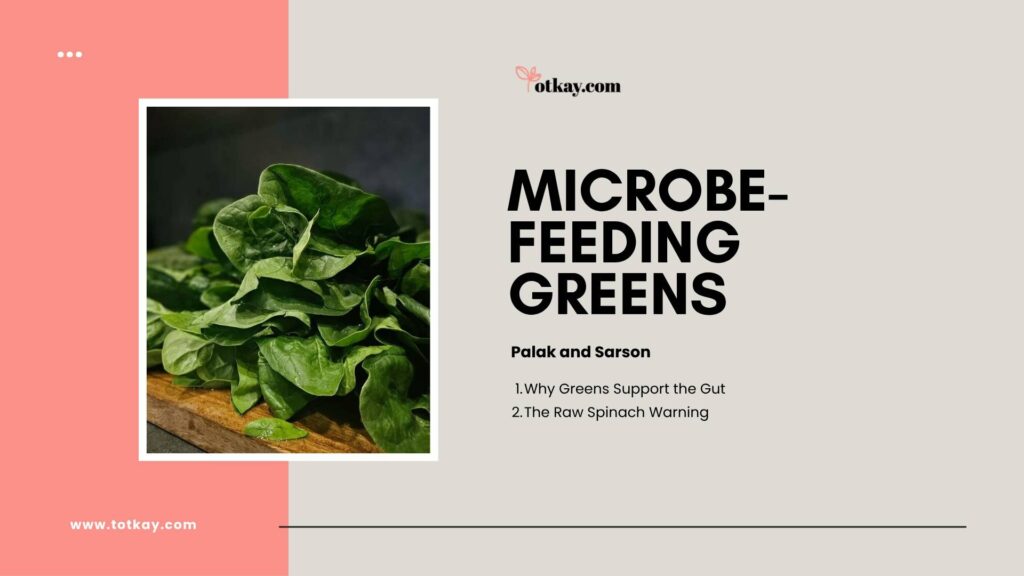
Palak and sarson are nutrient-rich, but they can irritate digestion when eaten raw or undercooked.
Why Greens Support the Gut
Dark leafy greens help by:
- Feeding selected helpful bacteria
- Supporting bowel regularity
- Adding magnesium and plant minerals
- Providing antioxidants
- Supporting a diverse diet
Sarson has a stronger flavor and heavier texture than palak. Cook it longer and pair it with warming spices.
The Raw Spinach Warning
Raw spinach contains oxalates. These compounds can bind minerals and may trouble people prone to kidney stones or mineral absorption issues. Raw greens can also feel rough on weak digestion.
Cook greens properly:
- Steam the palak for a few minutes before blending.
- Sauté sarson until fully soft.
- Add ghee to improve texture and comfort.
- Use ginger to reduce heaviness.
- Avoid large raw green smoothies during gut flare-ups.
Takeaway: Cooked palak and sarson can nourish gut microbes. Raw greens may cause bloating or mineral concerns in sensitive people.
Cruciferous Vegetables: Broccoli, Cabbage, and Cauliflower
Broccoli, cabbage, and cauliflower offer strong gut benefits, but they also cause gas for many people. The answer is not always avoidance. The answer is better cooking and portion control.

Broccoli’s gut health benefits come from fiber and sulfur-based plant compounds. These support the gut barrier and help the body manage oxidative stress.
Why Cruciferous Vegetables Cause Gas
These vegetables contain raffinose, a complex sugar. Gut bacteria ferment raffinose and produce gas. If your microbiome feels imbalanced, the gas can become intense.
Common symptoms include:
- Tight bloating
- Loud gas movement
- Pressure after meals
- Burping
- Cramping
How to Make Them Easier to Digest
Use these cooking rules:
- Steam broccoli until bright green and tender.
- Cook cabbage until soft, not crunchy.
- Avoid raw cauliflower during flare-ups.
- Add cumin, ginger, ajwain, or fennel.
- Start with ¼ to ½ cup portions.
- Do not mix several gas-forming vegetables in one meal.
Cauliflower paratha, cabbage salad, and raw broccoli bowls may overwhelm sensitive guts. Soft sabzi usually works better.
Takeaway: Cruciferous vegetables support gut health, but they need thorough cooking and digestive spices to reduce gas.
Raw vs. Cooked: Better Bioaccessibility for Weak Digestion
Many people believe raw vegetables are always healthier. This idea can backfire when the gut lining feels inflamed or when digestion runs weak.
Raw salads contain firm plant cell walls. A strong digestive system may handle them well. A sensitive gut may struggle, which leads to gas, pain, or undigested food in stool.
Why Cooking Helps
Light cooking improves bioaccessibility. That means your body can access nutrients more easily.
Cooking helps by:
- Softening tough fibers
- Reducing raw roughness
- Lowering gas-forming effects
- Making minerals easier to absorb
- Improving comfort after meals
Steaming, sautéing, and stewing work better than deep frying. Deep frying adds oxidized oils and heaviness, which can worsen gut irritation.
Best Cooking Methods for Gut Comfort
Choose methods based on your symptoms:
- Acidity: Stew lauki, tinda, or turai with cumin.
- Gas: Steam cabbage or broccoli with ginger.
- Constipation: Cook bhindi, palak, or mixed sabzi with ghee.
- Heavy digestion: Use small amounts of karela or methi.
- Weak appetite: Add ginger, black pepper, and ajwain in small amounts.
Takeaway: Raw vegetables are not always best for gut healing. Soft-cooked sabzi often gives better comfort and nutrient access.
Three Anti-Inflammatory Kitchen Recipes
These recipes use simple ingredients and traditional cooking logic. They focus on comfort, low irritation, and steady gut support.
Recipe 1: Cumin-Infused Soothing Lauki Stew
This recipe helps when your stomach feels hot, acidic, or tired.
Why It Works
Lauki gives hydration and soluble fiber. Cumin and ginger help move trapped gas. Ghee adds softness and supports a gentle texture.
Ingredients
- 2 cups peeled, diced lauki
- 1 teaspoon ghee
- ½ teaspoon cumin seeds
- 1 teaspoon grated ginger
- ¼ teaspoon turmeric
- Salt to taste
- 1½ cups water
Method
- Warm ghee in a pot.
- Add cumin seeds and ginger.
- Add diced lauki, turmeric, salt, and water.
- Cover and simmer until soft.
- Mash lightly and serve warm.
Eat it with soft rice, moong dal khichdi, or plain roti.
Recipe 2: Bile-Stimulating Karela Sauté
This recipe suits people who feel heavy after oily meals.
Why It Works
Karela’s bitter compounds support bile flow. Fennel helps reduce gas and sharp bitterness. Turmeric adds warmth and balance.
Ingredients
- 2 medium karela
- ½ teaspoon salt for resting
- 1 tablespoon mustard oil or 1 teaspoon ghee
- ½ teaspoon fennel seeds
- ¼ teaspoon turmeric
- Optionthin-slicediced onion, fully cooked
Method
- Slice karela thinly.
- Toss with salt and rest for 15–20 minutes.
- Rinse lightly and squeeze.
- Warm oil or ghee.
- Add fennel seeds and turmeric.
- Add karela and cook until tender.
Keep portions small. Use it as a side dish, not the main meal.
Recipe 3: Iron-Rich Steamed Palak Puree
This recipe works well when you want greens without raw roughness.
Why It Works
Steaming softens spinach and reduces harshness. Ginger supports digestion. Black salt adds flavor without heavy masala.
Ingredients
- 3 cups fresh palak
- 1 small piof ece fresh ginger
- Pinch of black salt
- 1 teaspoon ghee
- Optionsoft-cooked garlic
Method
- Wash palak well.
- Steam for 5 minutes.
- Blend with ginger and black salt.
- Warm ghee in a pan.
- Add puree and cook for 2–3 minutes.
Serve warm with rice, dal, or soft roti.
Takeaway: Gut-friendly recipes do not need complex ingredients. The right cooking method matters more than fancy additions.
Troubleshooting Bloating and Gas
Bloating does not always mean vegetables are bad for you. It often means your gut needs a slower transition.
When you suddenly increase fiber, bacteria ferment it quickly. This can create gas. Your gut may need time to adapt.
Start Low and Build Slowly
Use this approach:
- Add one new vegetable at a time.
- Start with ½ cup cooked sabzi.
- Eat it at lunch, not late at night.
- Chew slowly.
- Avoid mixing raw salad, beans, and cruciferous vegetables in one meal.
- Increase portions after 3–4 days if symptoms stay mild.
Choose Low-FODMAP Style Options During Flare-Ups
If you feel immediate bloating, choose gentler vegetables for a short period.
Try:
- Lauki
- Tinda
- Turai
- Peeled carrots
- Soft zucchini
- Small portions of bhindi
- Plain rice or khichdi as a base
Limit for a short time:
- Raw onion
- Raw garlic
- Cabbage
- Cauliflower
- Large palak smoothies
- Chana or rajma with cruciferous sabzi
Use Digestive Spices Wisely
Desi cooking already offers useful tools.
Helpful spices include:
- Cumin for gas
- Ginger for motility
- Fennel for bloating
- Ajwain for heaviness
- Turmeric for warmth
- Coriander for balance
Use small amounts. Too many spices can irritthe ate acidity.
Takeaway: If vegetables cause bloating, reduce the dose, cook more gently, and choose gentler options while your gut adapts.
Tracking Progress and When to See a Doctor
Gut improvement takes time. Your microbiome does not transform after one bowl of sabzi. Give your body a steady 3–4 week window.
Signs Your Gut Is Improving
Track simple changes:
- Easier bowel movements
- Less midday bloating
- Reduced heaviness after meals
- Better appetite
- More stable energy
- Less acid burning
- Fewer skin flare-ups
- Better sleep after dinner
Write down what you eat and how you feel. A simple food diary can show patterns quickly.
When HTalk Is Are Not Enough
Stop relying only on home remedies and consult a qualified gastroenterologist if you notice:
- Sudden unexplained weight loss
- Blood in stool
- Black stool
- Severe abdominal pain
- Persistent vomiting
- Long-term diarrhea
- Fever with digestive symptoms
- Pain that wakes you at night
- Trouble swallowing
These signs need medical evaluation. Sabzi and totkay can support gut health, but they cannot replace proper care for serious symptoms.
Takeaway: Track progress for a few weeks, but seek medical help quickly if you notice red-flag symptoms.
Common Mistakes to Avoid
Small cooking mistakes can turn healthy vegetables into digestive triggers.
Avoid these common problems:
- Eating too much raw salad: Raw vegetables can irritate weak digestion.
- Adding excess chili: Red chili may worsen acidity and burning.
- Deep frying gut-friendly sabzi: Frying makes food heavier and harder to digest.
- Combining too many high-fiber foods: Cabbage, beans, onion, and raw salad in one meal can cause gas.
- Ignoring portion size: Even healthy foods can bloat you in large amounts.
- Eating late at night: Heavy sabzi close to bedtime may slow digestion.
- Skipping variety: Repeating one vegetable daily limits microbiome diversity.
If you struggle with gas, simplify your plate. Use one cooked sabzi, one soft grain, and one light protein.
Quick Gut Benefits Checklist
Use this checklist when choosing sabzi for the week.
- Choose lauki, tinda, or turai for acidity and gentle digestion.
- Use karela in small portions for heavy meals and bile support.
- TheCook then and garlic slowly to make prebiotics easier to tolerate.
- Steam or sauté palak and sarson instead of eating them raw.
- Cook broccoli, cabbage, and cauliflower thoroughly with cumin or ginger.
- Add fiber slowly over several weeks.
- Rotate colors and vegetable groups.
- Avoid deep frying when your gut feels weak.
- Track symptoms after meals.
- Seek medical help for red-flag symptoms.
A Simple 7-Day Gut-Friendly Sabzi Plan
This plan gives variety without overwhelming digestion. Adjust portions based on your tolerance.
| Day | Main Sabzi | Gut Focus | Simple Totka |
| Day 1 | Lauki stew | Acidity relief | Cook with cumin and ginger |
| Day 2 | Turai sabzi | Soft fiber | Use light ghee and turmeric |
| Day 3 | Palak puree | Microbe-feeding greens | Steam before blending |
| Day 4 | Tinda curry | Gentle hydration | Keep masala mild |
| Day 5 | Karela sauté | Bile support | Add fennel and turmeric |
| Day 6 | Broccoli or cabbage | Gut barrier support | Steam well with cumin |
| Day 7 | Mixed soft sabzi | Diversity | Combine 2–3 tolerated vegetables |
For best results, pair sabzi with simple meals. Good options include khichdi, soft rice, moong dal, plain roti, or yogurt if you tolerate dairy.
Conclusion
The best vegetables for gut health are not always exotic or expensive. Many powerful options already sit in your local sabzi mandi: lauki, tinda, turai, karela, onion, garlic, palak, sarson, broccoli, cabbage, and cauliflower.
The key is to match the vegetable to your gut condition. Cook it well. Use digestive spices. Increase fiber slowly. Track how your body responds over 3–4 weeks.
Your next step is simple: add at least three different colored local vegetables to your basket this week. Start with one gentle sabzi, one leafy green, and one prebiotic base.
What is your family’s favorite way to cook lauki at home? Visit Totkay for more remedies.
Frequently Asked Questions
What are the best vegetables for gut health?
The best vegetables for gut health include lauki, tinda, turai, spinach, broccoli, cabbage, carrots, and pumpkin. These vegetables provide fiber, water, and plant compounds that support digestion and help nourish beneficial gut bacteria. Softer, cooked vegetables are often easier to digest than raw ones, especially for people with bloating, acidity, or a sensitive stomach.
Are cooked vegetables better for gut health than raw vegetables?
Cooked vegetables are often better for gut health when digestion feels weak or sensitive. Cooking softens fiber and makes vegetables easier to break down, which may reduce bloating and discomfort. Gut-friendly sabzi made with lauki, tinda, turai, carrots, or spinach can be gentler than raw salads. Simple cooking methods and mild spices also improve tolerance and digestive comfort.
Which vegetables help feed good gut bacteria?
Vegetables that help feed good gut bacteria include onion, garlic, leeks, cabbage, asparagus, and green peas. These are often called prebiotic vegetables because they contain fibers that beneficial microbes use for fuel. Over time, these vegetables may support a healthier gut environment, smoother bowel movements, and better digestion. If they cause gas, start with small cooked portions.
What vegetables are best for bloating or a sensitive stomach?
For bloating or a sensitive stomach, choose easy-to-digest vegetables such as lauki, tinda, turai, pumpkin, carrots, and well-cooked spinach. These vegetables are mild, hydrating, and usually gentler on the digestive system. Avoid very large portions and cook them until soft. Using cumin, ginger, fennel, or ajwain in sabzi may also help improve digestion and reduce discomfort.
How can I add gut-friendly vegetables to daily meals?
Add gut-friendly vegetables to daily meals by including one simple sabzi at lunch or dinner. Choose cooked vegetables like lauki, spinach, carrots, pumpkin, or tinda and pair them with dal, rice, or roti. Rotate vegetables through the week to improve nutrient variety and support gut health. Keep meals balanced, use moderate spices, and eat slowly for better digestion.

Hi, I’m a dedicated writer at Totkay.com, passionate about sharing practical tips and solutions to make your life easier. Explore my articles for helpful insights and valuable advice. Stay connected for more expert content!
Related posts:
 Severe Period Pain on First-Day Home Remedies
 Improve Endurance Naturally: 10 Proven Ways to Go Further
 Natural Carb Blockers: 10 Pantry Hacks to Stop Weight Gain
 Nature’s Chill Pill: 10 Herbal Stress Relief Tips (2026)
 What Causes Piles in Men? Expert Guide and Prevention Tips
 Pregnancy Hemorrhoids: Safe Relief and Natural Care