
The PCOS Gut Health Connection: A Healing Guide
The PCOS gut health connection reveals the critical role of gut microbiome balance in managing PCOS symptoms. When the gut microbiota becomes imbalanced, it increases intestinal permeability, allowing harmful bacteria to enter the bloodstream and trigger systemic inflammation.
This inflammation exacerbates insulin resistance and hormonal imbalances, leading to symptoms like weight gain, acne, and irregular periods. To address this, focus on improving gut health by incorporating fermented foods, prebiotics, and anti-inflammatory nutrients into your diet. These strategies enhance gut microbial diversity, reduce inflammation, and restore hormonal balance, offering an effective approach to managing PCOS at its root.
PCOS and the Digestive System Context
You must view the gut-ovary-metabolism axis as the core engine driving your PCOS symptoms. Many women with PCOS focus solely on reproductive signs like anovulation or cysts. However, examining these features through a digestive lens reveals a much deeper root cause.
Hyperinsulinemia creates a destructive cycle. High insulin levels stimulate your ovaries to produce excess testosterone. At the same time, this metabolic dysfunction slows down digestion. Sluggish intestines compound hormonal imbalances. This traps you in a continuous loop of systemic inflammation and weight gain.
How Gut Dysbiosis Fuels PCOS
An imbalance in your gut bacteria directly drives metabolic defects. You must understand two primary mechanisms to heal your body.
Leaky Gut and Systemic Inflammation
A drop in beneficial gut bacteria compromises the tight junctions of your intestinal wall. This barrier breakdown leads to increased intestinal permeability, commonly known as leaky gut. Bacterial toxins enter your systemic circulation and trigger inflammatory responses.
This circulating inflammation disrupts normal follicular development. It stalls ovulation and encourages cysts. Healing the intestinal lining remains the first step to reducing inflammation and protect your reproductive health.
The Estrobolome and Hormone Recycling
Your gut microbiome contains a specialized ecosystem called the estrobolome. This system manages hormone metabolism. A specific microbial enzyme called beta-glucuronidase plays a crucial role here. It uncouples hormones that your liver has already processed for elimination.
When you have gut microbiota dysbiosis, this enzyme becomes overactive. It creates a testosterone trap. Your body reabsorbs deactivated hormones back into the bloodstream instead of eliminating them. This directly causes excessive hair growth and worsening insulin resistance.
The PCOS Gut-Hormone Matrix
| Gut Biomarker Alteration | Impact on PCOS / PMOS Pathophysiology | Common Physical Manifestation | Localized “Totkay” & Clinical Correction |
| ↓ Short-Chain Fatty Acids (SCFAs) | Decreases natural GLP-1 and impairs glycemic control. | Uncontrollable sugar cravings, rapid weight gain around the midsection. | Polyphenol Loading: Daily green tea or local seasonal berries (Phalsa, Jamun). |
| ↑ Serum Zonulin Levels | Drives intestinal permeability and metabolic endotoxemia. | Brain fog, systemic fatigue, and cystic acne along the jawline. | Intestinal Barrier Support: Slow-simmered bone broth (Yakhni) rich in L-glutamine. |
| ↑ β-Glucuronidase Activity | Recycles bound androgens and estrogens back into the blood. | Missing or highly irregular menstrual cycles, hirsutism. | Enzymatic Modulation: Incremental introduction of cruciferous vegetables (Gobi, Band Gobi). |
| ↓ Lactobacillus & Bifidobacterium | Slows down colon transit time, aggravating the hormone load. | Severe post-meal bloating, stubborn constipation, or alternating IBS patterns. | Targeted Synbiotics: Fresh, home-set Dahi (Yogurt) combined with prebiotics. |
Understanding specific biomarkers helps you apply targeted treatments. Adjusting your gut microbial composition can significantly improve your overall health.
Short Chain Fatty Acids
Low levels of short-chain fatty acids impair glucose metabolism. You will experience uncontrollable sugar cravings and rapid weight gain around your midsection. To correct this, you must increase polyphenol loading. Consume daily green tea or local seasonal berries to feed the good bacteria.
Serum Zonulin Levels
High zonulin levels drive intestinal permeability. You may notice brain fog, severe fatigue, and cystic acne along your jawline. Support your intestinal barrier with slow-simmered bone broth. This provides abundant nutrients to soothe chronic inflammation.
Beta-Glucuronidase Activity
High activity of this enzyme recycles bound hormones back into your blood. You will suffer from missing menstrual cycles. Introduce enzymatic modulation by incrementally adding cooked cruciferous vegetables to your healthy diet.
Lactobacillus and Bifidobacterium
Low levels of these beneficial bacteria slow down colon transit time. You will experience severe post-meal bloating and stubborn constipation. Use targeted fermented foods. Eat fresh, home-set yogurt combined with gentle prebiotics to restore a healthy gut microbiome.
Clinical Gaps Your Doctor Might Miss
Standard medical treatments for polycystic ovarian syndrome often overlook the digestive system entirely. However, emerging research highlights a powerful synergy between probiotic supplements and common medications. Co-administering specific probiotic strains with Metformin improves insulin sensitivity significantly. Furthermore, this completely alleviates the digestive distress that medication often causes.
Adjusting your gut bacteria also unlocks the secret to overcoming a difficult weight loss plateau. The specific balance of your gut microbiota alters how many calories your body harvests from food. By feeding beneficial bacteria, you optimize metabolic function and support healthy weight management.
Nutrition to Rehabilitate the Microbiome
Strategic nutrition requires careful application. You must avoid shocking a sensitive digestive system when trying to improve gut health.
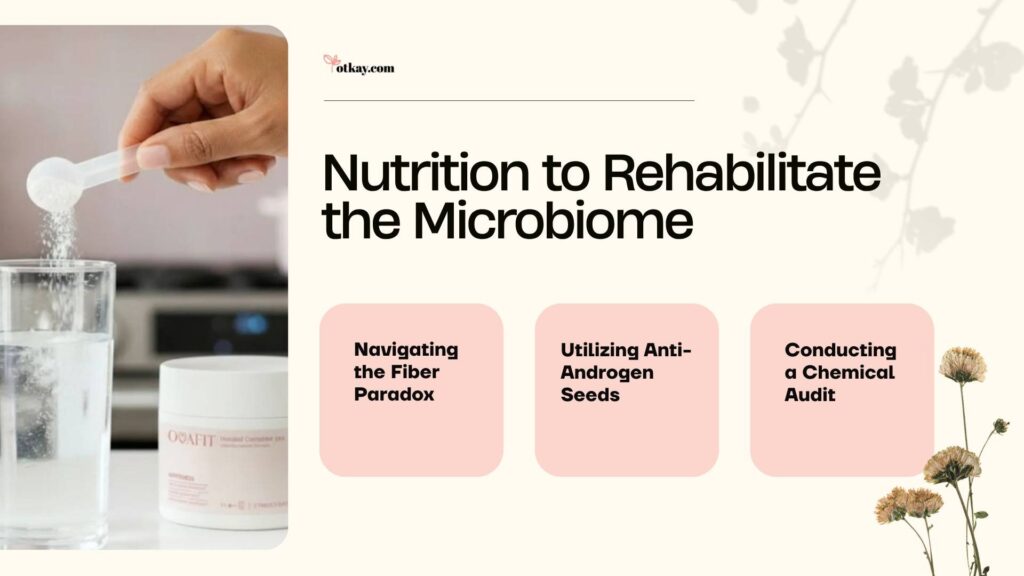
Navigating the Fiber Paradox
Overloading a sluggish digestive tract with dry fiber supplements creates a blockage. You must follow the mandatory rule of gradual titration. Start with small portions of cooked vegetables. Always ensure adequate hydration when increasing fiber intake to prevent digestive issues.
Utilizing Anti-Androgen Seeds
Specific seeds offer powerful hormonal benefits for women with PCOS. Infuse black seed and fennel into your daily routine. These infusions improve insulin resistance and reduce gut-derived ovarian inflammation.
Simultaneously, swap out industrial seed oils for extra virgin olive oil. This simple pure Mediterranean shift lowers the inflammatory baseline of your human gut.
Conducting a Chemical Audit
You must strictly eliminate artificial sweeteners. Clinical evidence proves these chemicals negatively affect gut bacteria and severely worsen metabolic syndrome. They disrupt glucose metabolism and increase your risk for chronic diseases. Replace them with small amounts of natural, whole-food options.
Mechanical Protocols for Hormone Clearance
Proper elimination prevents hormones from recirculating in your body. You can use simple biomechanical adjustments to assist your daily hormone clearance.
The Anatomy of Elimination
The puborectalis muscle controls your lower bowel. Sitting upright on modern toilets leaves the rectum kinked. This posture traps waste and allows the intestinal lining to reabsorb hormones.
Implement a 35-degree squatting posture to solve this issue. Use a low footstool to lift your knees above your hips. This simple adjustment unkinks the passage for effortless daily elimination.
Vagal Toning for Digestion
Your digestive system only operates optimally when your nervous system is calm. Mental health challenges directly impact physical digestion through the gut-brain axis. Stimulate the vagus nerve before meals to switch your body out of stress mode. Practice strong gargling or deep belly-breathing for two minutes before eating to activate optimal digestive function.
Your 8-Week Gut-PCOS Restoration Plan
Follow this structured protocol to rebuild your gut barrier and balance your endocrine system.
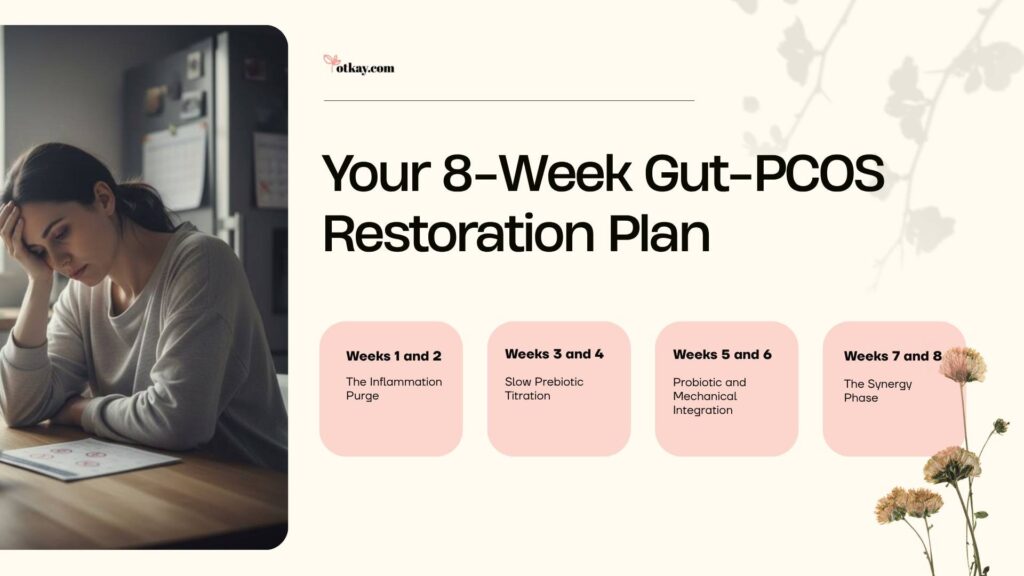
Weeks 1 and 2: The Inflammation Purge
Eliminate hydrogenated fats, commercial sweets, and artificial sweeteners. Introduce daily warm fennel water to soothe digestion and support metabolic health.
Weeks 3 and 4: Slow Prebiotic Titration
Gradually add resistant starches like cooled rice or potatoes. Include small portions of leeks, onions, and oats to stimulate short-chain fatty acid production. This supports a healthy gut.
Weeks 5 and 6: Probiotic and Mechanical Integration
Incorporate daily fresh, home-set yogurt to boost beneficial gut bacteria. Strictly practice the 35-degree squatting posture during bowel movements to enhance hormone elimination.
Weeks 7 and 8: The Synergy Phase
Align these lifestyle habits with any prescribed medical treatments. Track your menstrual regularity, skin clarity, and stool consistency. This helps you measure how well you are treating PCOS at the root level.
Testing and Specialist Care
Sometimes, foundational lifestyle shifts require additional medical support. Consider a comprehensive stool profile if symptoms persist. Advanced diagnostics evaluate functional enzyme activity and exact bacterial populations.
Know when to consult a specialist. See an endocrinologist if your fasting insulin continues to rise despite optimized nutrition. Consult a gastroenterologist immediately if you experience persistent, severe abdominal pain or bloody stools.
Taking Action for Lasting Hormonal Balance
The PCOS gut health connection is the key to unlocking hormonal balance and lasting relief from stubborn symptoms. By understanding how your gut microbiome influences inflammation, insulin resistance, and androgen levels, you gain the power to address PCOS at its root.
Nurturing a healthy gut through targeted nutrition, mindful elimination habits, and strategic lifestyle changes transforms both metabolic and reproductive health. You do not have to settle for temporary fixes or endless frustration.
Take charge of your well-being today, embrace the PCOS gut health connection, follow these actionable steps, and experience real, sustainable change. Ready to reclaim your hormone health? Start your journey now with Totkay!
Frequently Asked Questions
What is the connection between PCOS and gut health?
Polycystic ovary syndrome (PCOS) and gut health are closely linked through the gut-ovary-metabolism axis. A disrupted gut microbiome can lead to systemic inflammation, insulin resistance, and hormonal imbalances. Improving gut microbial diversity helps reduce inflammation, balance hormones, and alleviate PCOS symptoms like weight gain, acne, and irregular cycles.
How does gut dysbiosis affect PCOS symptoms?
Gut dysbiosis, or an imbalance in gut bacteria, worsens PCOS symptoms by increasing intestinal permeability and systemic inflammation. This leads to insulin resistance and hormonal imbalances, which can cause excessive hair growth, difficulty losing weight, and irregular periods. Restoring a healthy gut microbiome can improve metabolic and hormonal health.
Can improving gut health help with insulin resistance in PCOS?
Yes, improving gut health can enhance insulin sensitivity in women with PCOS. Beneficial gut bacteria produce short-chain fatty acids that regulate glucose metabolism. Consuming fermented foods, prebiotics, and polyphenol-rich foods supports a healthy gut microbiome, reducing insulin resistance and improving metabolic function.
What foods improve gut health for women with PCOS?
Foods like fresh yogurt, green tea, cruciferous vegetables, and polyphenol-rich berries improve gut health for women with PCOS. These foods support beneficial gut bacteria, reduce inflammation, and enhance hormone metabolism. Avoid artificial sweeteners and processed foods, as they negatively affect gut microbial diversity.
How does leaky gut contribute to PCOS?
Leaky gut occurs when the intestinal barrier weakens, allowing harmful bacteria to enter the bloodstream. This triggers chronic inflammation, which disrupts insulin receptors and hormonal balance. Healing the gut lining with bone broth, probiotics, and anti-inflammatory foods can reduce PCOS symptoms and improve overall health.

Hi, I’m a dedicated writer at Totkay.com, passionate about sharing practical tips and solutions to make your life easier. Explore my articles for helpful insights and valuable advice. Stay connected for more expert content!
Related posts:
 Severe Period Pain on First-Day Home Remedies
 Improve Endurance Naturally: 10 Proven Ways to Go Further
 Natural Carb Blockers: 10 Pantry Hacks to Stop Weight Gain
 Nature’s Chill Pill: 10 Herbal Stress Relief Tips (2026)
 What Causes Piles in Men? Expert Guide and Prevention Tips
 Pregnancy Hemorrhoids: Safe Relief and Natural Care