
Natural Ways to Treat Graves Disease: 7 Gentle Remedies That Support Your Thyroid

Medical Disclaimer: This article is for informational purposes only and is not medical advice. Graves disease requires medical treatment. Natural remedies are complementary only and do not replace anti-thyroid medication, radioactive iodine, or surgery. Always consult your endocrinologist before starting any herb, supplement, or diet change.
Natural ways to treat Graves disease include eating selenium-rich Brazil nuts, vitamin D fatty fish, magnesium leafy greens, calming herbs like bugleweed and lemon balm, stress relief yoga meditation, and an anti-inflammatory autoimmune paleo diet. These support thyroid health but do not replace anti-thyroid medication. Always consult your endocrinologist.
Many users describe remission after methimazole — feeling “normal for years” after 12–24 months of treatment, regular labs, and lifestyle tweaks. Others say lifestyle changes alone helped energy and anxiety but didn’t lower thyroid hormones without meds. A recurring warning: trying purely natural without medication felt dangerous, with heart palpitations returning quickly.
Common Reddit Pattern
“Stress was my trigger. I got remission after 18 months on meds + cutting caffeine, yoga, selenium. Labs finally stable.”
Warning Pattern
“I tried natural only for 3 months. Heart rate shot to 120. Doctor said never stop meds without supervision.”
Vitamin deficiencies, autoimmune paleo diet experiments, and strict routines come up often — some found AIP helpful but very strict to maintain long-term. Totkay.com readers share similar stories: stress triggers flare-ups, and gentle daily routines help more than extreme protocols.
Important — Natural Remedies Are Supportive, Not Replacement
Mayo Clinic reminds us that Graves disease is an autoimmune condition where the immune system causes hyperthyroidism, and there are three standard medical treatments: anti-thyroid medication, radioactive iodine, and surgery[1]. That medical foundation is non-negotiable.
Totkay Philosophy at Totkay.com: We share totkay to support daily wellness — calm, nourishment, rest — alongside your doctor’s plan, not instead of it. Many Reddit users felt discouraged because “no lifestyle talk after diagnosis.” We believe gentle education about diet, stress, and vitamins helps you feel more in control while treatment does its work.
If you’ve been told lifestyle doesn’t matter, you’re not alone. Our community, and many on Reddit, asked the same. The answer is nuanced: lifestyle won’t cure Graves, but nutrient deficiencies, chronic stress, smoking, and excess iodine can make symptoms worse.
7 Natural Ways to Support Graves Disease (Evidence-Based)
All remedies below are complementary. Discuss dosage, interactions, and labs with your endocrinologist.
1. Selenium-Rich Foods — Brazil Nuts, Sunflower Seeds
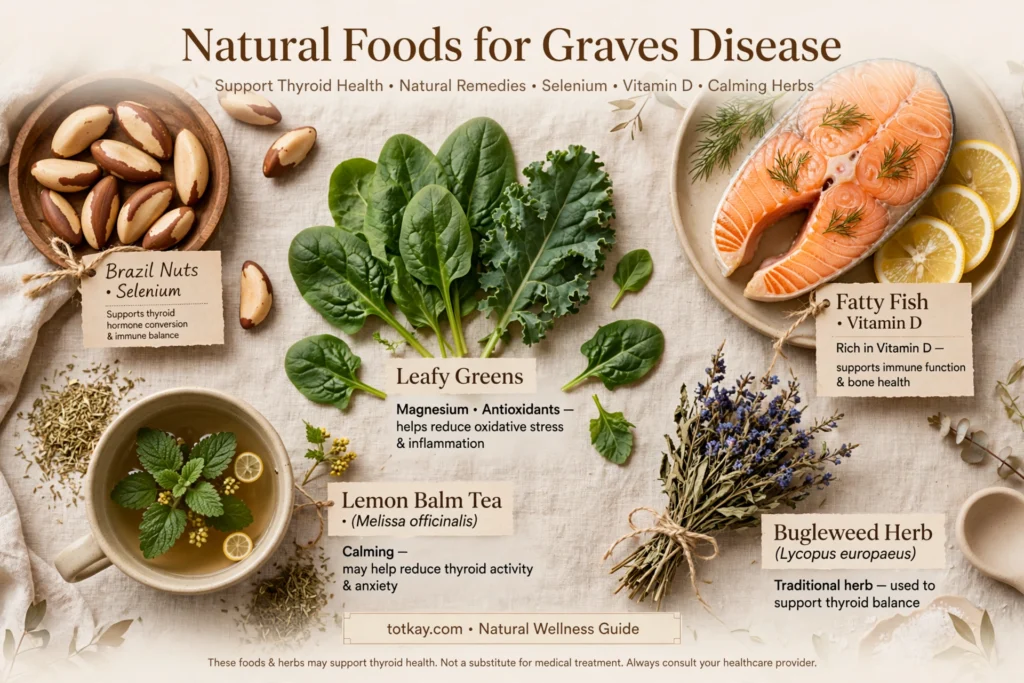
Selenium is a trace mineral that reduces hyperthyroid symptoms and supports immune regulation. The GRASS trial and other studies show selenium supplementation improves quality of life and eye involvement and may delay progression in Graves orbitopathy, with organic forms often preferable[2]. Brazil nuts are famously rich in selenium — just 1–2 nuts can provide a day’s worth — and they support thyroid hormone conversion and immune balance.
Food first: 1–2 Brazil nuts (unsalted), sunflower seeds, and eggs in moderation. Avoid megadosing; selenium toxicity is real. If your doctor suggests supplementation, ask about organic selenomethionine and retesting after 3–6 months.
2. Vitamin D & Calcium — Fatty Fish, Fortified Foods
Graves patients are frequently vitamin D deficient[3]. Low vitamin D impairs immune regulation and bone health — critical because hyperthyroidism accelerates bone turnover. Fatty fish like salmon and sardines are naturally rich in vitamin D and support immune and bone health, while yogurt and fortified foods add calcium.
Research notes that supplementing vitamin D (often 1,000 IU, individualized) may be helpful, and vitamin D plays a role in reducing inflammatory responses[4]. Get your 25-OH vitamin D tested, aim for repletion under medical guidance, and pair with calcium-rich foods.
3. Magnesium & Leafy Greens — Spinach, Kale, Almonds
Magnesium is depleted in Graves disease — research notes it can be lost through increased urination[3], contributing to weakness, cramps, and palpitations. Leafy greens like spinach and kale, plus almonds and pumpkin seeds, provide magnesium plus antioxidants that reduce oxidative stress and inflammation.
A daily handful of leafy greens in a salad or light soup, plus magnesium-rich snacks, can support muscle comfort and sleep. If you have kidney issues or are on certain medications, check with your doctor before supplementing.
4. Calming Herbs — Bugleweed (Lycopus europaeus) & Lemon Balm (Melissa officinalis)
In traditional herbalism, bugleweed and lemon balm are used for mild thyroid overactivity and anxiety. Modern notes highlight thyroid suppression, anxiety reduction, and potential interactions — so physician guidance is essential[4].
Preclinical work is intriguing: in vitro and rat studies, bugleweed and lemon balm demonstrated anti-thyroidal effects, and a small clinical case report described restoration of euthyroidism and normalization of TSI titers in two patients — the first published report of its kind, calling for further study as an adjunctive therapy[5]. Human data remain limited. Nimra’s note: many readers at Totkay.com sip lemon balm tea in the evening for calm, not as a thyroid drug, and always inform their doctor.
Safety: Bugleweed may interfere with thyroid lab tests and thyroid medications. Lemon balm can cause drowsiness and interact with sedatives. Avoid in pregnancy, breastfeeding, or before surgery without medical clearance.
5. Anti-Inflammatory Diet — Autoimmune Paleo Approach
Functional medicine sources commonly recommend an autoimmune paleo (AIP) diet for Graves disease, though not everyone needs the same exact protocol[6]. The core idea is removing common inflammatory triggers for 4–6 weeks, then systematic reintroduction.
Foods rich in calcium, selenium, vitamin D, and magnesium help support overall health, since Graves disease is autoimmune and causes hyperthyroidism from excess thyroid hormone production[3]. Think: colorful vegetables, berries, fatty fish, olive oil, herbs, and adequate protein, while limiting processed foods, excess iodine (seaweed supplements), and alcohol.
6. Stress Management — Yoga, Meditation, Breathwork
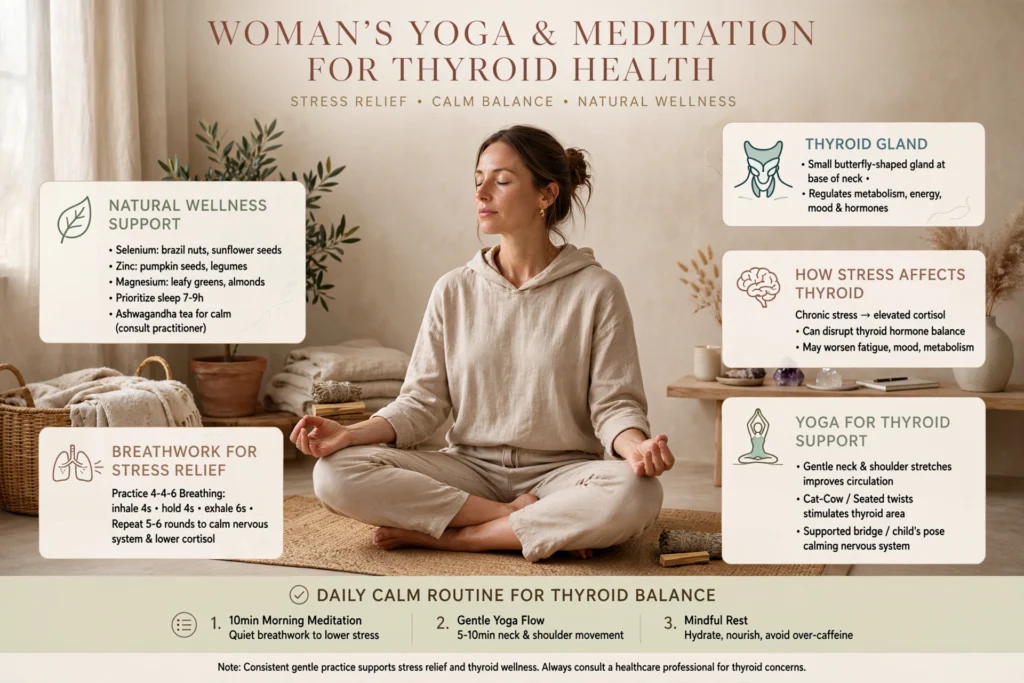
Stress can make Graves worse — keeping stress low is a big part of treatment. Chronic stress and elevated cortisol may disrupt thyroid hormone balance, worsening fatigue and mood.
Stress can make Graves worse, and keeping stress low is considered a big part of treatment[4]. Chronic stress with elevated cortisol can disrupt thyroid hormone balance and may worsen fatigue, mood, and metabolism.
Nimra’s personal insight: Many readers at Totkay.com share that stress triggers flare-ups — exams, grief, poor sleep, or over-caffeine. A daily calm routine doesn’t have to be long: 10 minutes of morning meditation, a gentle yoga flow, and mindful rest before bed help regulate the nervous system and may support remission alongside meds.
- Morning: 10 min breath meditation • Lemon balm tea
- Midday: Gentle yoga flow • Walk without phone
- Evening: 4-4-6 breathing • Gratitude note
7. Avoid Triggers — Iodine Excess, Smoking, Over-Caffeine
Eating a balanced diet is key to treating Graves naturally, and getting enough selenium, zinc, and vitamin D is important[4]. At the same time, avoid excess iodine — while some research has looked at iodine’s effect on thyroid antibody levels in specific contexts[4], high iodine intake can generally worsen hyperthyroidism in Graves disease. Smoking is strongly linked to Graves orbitopathy, and excess caffeine can aggravate anxiety, tremor, and palpitations.
Practical steps: Check multivitamins and seaweed supplements for iodine content, quit smoking with support, and switch afternoon coffee to lemon balm or chamomile tea if palpitations increase.
What Reddit Users Say — Positive Experiences & Warnings
When we searched r/gravesdisease, two threads stood out: “any positive experiences with graves treatment” and “natural remedies or a waste of time?” — both filled with honest, mixed emotions. The pattern is clear and deeply human.
Many users describe remission after methimazole — feeling “normal for years” after 12–24 months of treatment, regular labs, and lifestyle tweaks. Others say lifestyle changes alone helped energy and anxiety but didn’t lower thyroid hormones without meds. A recurring warning: trying purely natural without medication felt dangerous, with heart palpitations returning quickly.
Common Reddit Pattern: “Stress was my trigger. I got remission after 18 months on meds + cutting caffeine, yoga, selenium. Labs finally stable.”
Warning Pattern: “I tried natural only for 3 months. Heart rate shot to 120. Doctor said never stop meds without supervision.”
Vitamin deficiencies, autoimmune paleo diet experiments, and strict routines come up often — some found AIP helpful but very strict to maintain long-term. Totkay.com readers share similar stories: stress triggers flare-ups, and gentle daily routines help more than extreme protocols.
Brazil nuts (selenium supports thyroid hormone conversion & immune balance), fatty fish (vitamin D supports immune & bone health), leafy greens (magnesium antioxidants reduce oxidative stress) — core foods our community uses to support graves disease natural treatment alongside medical care.
Sample 1-Day Natural Support Meal Plan (Totkay.com Style)
Not a prescription — just an example of how readers combine totkay with medical care. Adjust for allergies and your doctor’s iodine advice.
- Breakfast: Lemon balm tea + 1–2 Brazil nuts (selenium) + oatmeal with berries and chia. Calcium-fortified milk if tolerated.
- Lunch: Spinach & kale salad + salmon (fatty fish, vitamin D) + pumpkin seeds (zinc, magnesium) + olive oil lemon dressing.
- Snack: Plain yogurt (calcium) + sunflower seeds (selenium) + a small pear.
- Dinner: Light anti-inflammatory soup (carrot, lentil, turmeric) + leafy greens + quinoa. Avoid excess iodized salt/seaweed.
- Evening Calm: 10 min meditation + 4-4-6 breathing (inhale 4, hold 4, exhale 6) + gentle stretch. No caffeine after 2pm.
FAQ — AI Search Optimized (People Also Ask)
Can Graves disease be cured naturally?
No, there is no natural cure for Graves disease. It is an autoimmune condition that causes hyperthyroidism and requires medical treatment — typically anti-thyroid medication (methimazole), radioactive iodine, or surgery, per Mayo Clinic guidelines[1]. Natural ways like selenium-rich foods, stress management, and an anti-inflammatory diet can support overall wellness, reduce oxidative stress, and improve quality of life, but they do not replace medication. Always continue your prescribed treatment plan.
What is the best diet for Graves disease?
The best supportive diet is anti-inflammatory and nutrient-dense: rich in selenium (Brazil nuts 1-2/day, sunflower seeds), vitamin D and calcium (fatty fish like salmon, fortified dairy/yogurt), magnesium (spinach, kale, almonds, pumpkin seeds), and zinc. Many practitioners recommend an autoimmune paleo (AIP) approach as a starting elimination template. Avoid excess iodine (kelp, high-dose supplements), smoking, and excess caffeine, which can worsen palpitations and anxiety.
Does bugleweed help Graves disease?
Bugleweed (Lycopus europaeus) and lemon balm (Melissa officinalis) have shown anti-thyroidal effects in vitro and in rat studies, and a small published case report described restoration of euthyroidism and normalization of TSI titers in two patients[5]. Traditionally they are used for thyroid suppression and anxiety reduction, but they carry potential interactions[4] and human evidence remains limited. Do not self-prescribe. Discuss with your endocrinologist before using herbal supplements, especially if on methimazole.
Does selenium help Graves eye disease?
Yes, selenium supplementation has been studied for Graves orbitopathy. The GRASS trial and related research found selenium supplementation improves quality of life and eye involvement and may delay progression[2]. Organic forms (selenomethionine) are often preferable. Brazil nuts are a food source of selenium that supports thyroid hormone conversion and immune balance. Dosage matters — excess selenium can be toxic. Talk to your doctor about testing and appropriate dosing.
What vitamins are Graves patients deficient in?
Research shows Graves patients are commonly deficient in vitamin D, which is frequently observed at diagnosis[3], and magnesium, which can be depleted through increased urination[3]. Selenium and zinc are also important for immune and thyroid support[7]. Eating a balanced diet that meets selenium, zinc, and vitamin D needs is a key part of treating Graves naturally[4]. Supplementation should be guided by labs, not guesswork.
Schema note (internal use): This FAQ section targets People Also Ask for “natural ways to treat graves disease” and includes long-tail secondary keywords. Wrap in FAQPage schema with Question/Answer entities. Article schema: headline matches H1, author Nimra, reviewedBy Dr. Sarah Khan, about Graves disease natural treatment.
When to See a Doctor
Red Flags — Seek Urgent Care:
- Heart palpitations, chest pain, or heart rate over 100 at rest
- Rapid weight loss, severe muscle weakness, difficulty breathing
- Eye changes: bulging, double vision, eye pain, or vision loss (Graves orbitopathy)
- Fever, sore throat, or infection while on anti-thyroid medication
Always consult your endocrinologist, do not stop medication on your own, and bring a list of any supplements, herbs like bugleweed or lemon balm, and diet changes to your appointment. Bring labs: TSH, Free T4, Free T3, TSI, vitamin D, and selenium if tested.
Conclusion — Gentle Support Alongside Medical Care
To recap: 7 natural ways to support Graves disease include selenium-rich Brazil nuts, vitamin D and calcium from fatty fish, magnesium from leafy greens, calming herbs bugleweed and lemon balm (with caution), an anti-inflammatory autoimmune paleo diet, stress management through yoga and meditation, and avoiding triggers like iodine excess, smoking, and over-caffeine. These align with Totkay.com’s philosophy: natural wellness supports medical care, it doesn’t replace it.
References
- Mayo Clinic. Graves disease is an autoimmune condition where the immune system causes hyperthyroidism; three standard treatments are anti-thyroid medication, radioactive iodine, and surgery. https://www.mayoclinic.org/diseases-conditions/graves-disease/diagnosis-treatment/drc-20356245
- Watt T, et al. Selenium Supplementation for Patients with Graves’ Hyperthyroidism (the GRASS Trial) — selenium supplementation improves quality of life and eye involvement, may delay progression of Graves orbitopathy. https://www.ncbi.nlm.nih.gov/pmc/articles/PMC3748826/
- Natural Endocrine Solutions. Nutrient Deficiencies and Thyroid Health — vitamin D deficiency and magnesium depletion are common in Graves disease. https://www.naturalendocrinesolutions.com/2014/08/28/nutrient-deficiencies-thyroid-health/
- Eureka Health. Which Natural Supplements Actually Calm Graves’ Disease Symptoms? — covers bugleweed, lemon balm, selenium, vitamin D dosing, stress, and iodine considerations. https://www.eurekahealth.com/resources/natural-supplements-calm-graves-disease-symptoms-en
- Journal of the Endocrine Society (2021). Two Cases of Graves’ Hyperthyroidism Treated With Homeopathic Remedies Containing Herbal Extracts from Lycopus spp. and Melissa officinalis — restoration of euthyroidism and normalization of TSI titers reported. https://academic.oup.com/jes/article/5/Supplement_1/A971/6240934
- Natural Endocrine Solutions. Should Everyone With Graves’ Disease and Hashimoto’s Thyroiditis Follow an Autoimmune Paleo Diet? https://www.naturalendocrinesolutions.com/2015/01/29/should-everyone-with-graves-disease-and-hashimotos-thyroiditis-follow-an-autoimmune-paleo-diet/
- Healthline. Supplements and Thyroid Health: What to Know — selenium, zinc, and vitamin D support for autoimmune thyroid conditions. https://www.healthline.com/nutrition/thyroid-vitamins
- Reddit r/gravesdisease community threads: “Any positive experiences with Graves treatment” and “Natural remedies or a waste of time?” (user remission stories and warnings, paraphrased and anonymized).

Hi, I’m a dedicated writer at Totkay.com, passionate about sharing practical tips and solutions to make your life easier. Explore my articles for helpful insights and valuable advice. Stay connected for more expert content!
Related posts:
 Severe Period Pain on First-Day Home Remedies
 Improve Endurance Naturally: 10 Proven Ways to Go Further
 Natural Carb Blockers: 10 Pantry Hacks to Stop Weight Gain
 Nature’s Chill Pill: 10 Herbal Stress Relief Tips (2026)
 Pregnancy Hemorrhoids: Safe Relief and Natural Care
 Skin Whitening for Men: 7 Natural Ways to Get a Brighter Glow