
Colon Cancer Prevention: Gut Health Totkay That Work
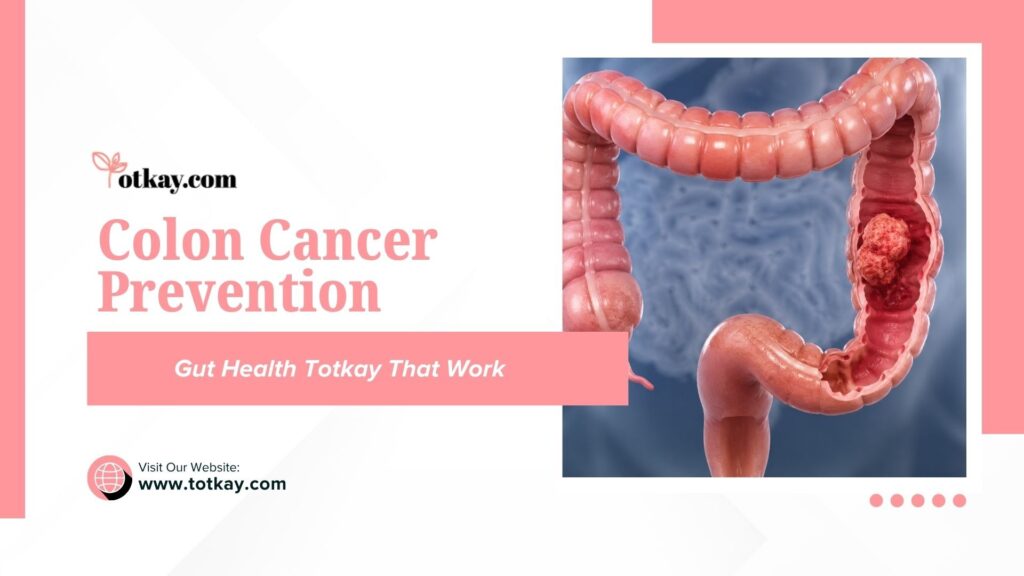
Colon cancer prevention starts with daily habits that support the colon, but no totka can guarantee protection. Safe colorectal cancer diet totkay include eating more fiber-rich foods, fruits, vegetables, daal, beans, and whole grains, while limiting processed meat and smoking.
For colon health in Pakistan, diet helps, but colon health screening remains essential because early colorectal cancer may cause no symptoms. See a doctor if you notice blood in stool.
What Is Colon Cancer?
Colon cancer is a cancer that starts in the large intestine, also called the colon. The colon is the final part of the digestive tract, where the body absorbs water and forms stool.
Cancer begins when cells in the colon lining grow out of control. Many cases start as small polyps that grow slowly. Some polyps stay harmless, while others can turn cancerous over the years.
Colon Cancer vs Colorectal Cancer
People often mix these terms, so a quick distinction helps you read health advice correctly. Knowing the difference also helps you understand screening reports.
- Colon cancer: Affects the colon, the longer part of the large intestine.
- Rectal cancer: Affects the rectum, the last few inches before the anus.
- Colorectal cancer: A combined term that includes both colon and rectal cancer.
- Prevention overlap: Most prevention advice applies to both, so the totkay below cover both.
Why Colon Cancer Can Be Silent Early
Colon cancer may not cause obvious symptoms at the beginning. Some people feel normal while polyps or early cancer changes develop inside the bowel.
The American Cancer Society explains that some early cancers may cause symptoms, but that is not always the case. This is why screening matters even when a person feels healthy.
Symptoms like blood in stool, black stool, ongoing bowel changes, unexplained weight loss, anemia, or persistent abdominal pain need medical care.
Can Totkay Prevent Colon Cancer?
No home remedy, herbal drink, seed, oil, detox powder, or desi totka can guarantee colon cancer prevention. This topic needs honest wording because cancer prevention involves risk reduction, not full control.
Gut health totkay may support digestion and daily bowel habits. They may help you eat more fiber, drink more water, reduce processed foods, and stay more active. These habits can support colon health, but they cannot diagnose cancer or remove dangerous growths.
What Gut Health Totkay Can Do
Good food habits and a simple lifestyle totkay support the body in real ways. They build the foundation that lowers long-term risk. Use them as daily support, not as a shield against all disease.
- Support digestion: Fiber and fluids help food move smoothly through the gut.
- Increase fiber intake: More daal, sabzi, and whole grains feed the colon well.
- Improve bowel regularity: Regular bowel movements reduce strain and irritation.
- Support healthy gut bacteria: Plant foods feed helpful bacteria in the gut.
- Reduce processed food: Home cooking lowers intake of harmful additives.
- Encourage better habits: Small daily wins make healthy living easier to keep.
What Totkay Cannot Do
Totkay cannot replace medical screening or diagnosis. You should stay careful when someone claims one natural remedy can “clean” the colon or remove cancer risk.
Totkay cannot:
- Remove polyps
- Diagnose cancer
- Replace colonoscopy or stool testing
- Treat bleeding
- Explain unexplained weight loss
- Fix persistent bowel changes
- Cancel genetic or family-history risk
- Replace a doctor’s advice
If symptoms continue, book a medical checkup instead of trying stronger remedies.
Colorectal Cancer Diet Totkay: What to Eat More Often
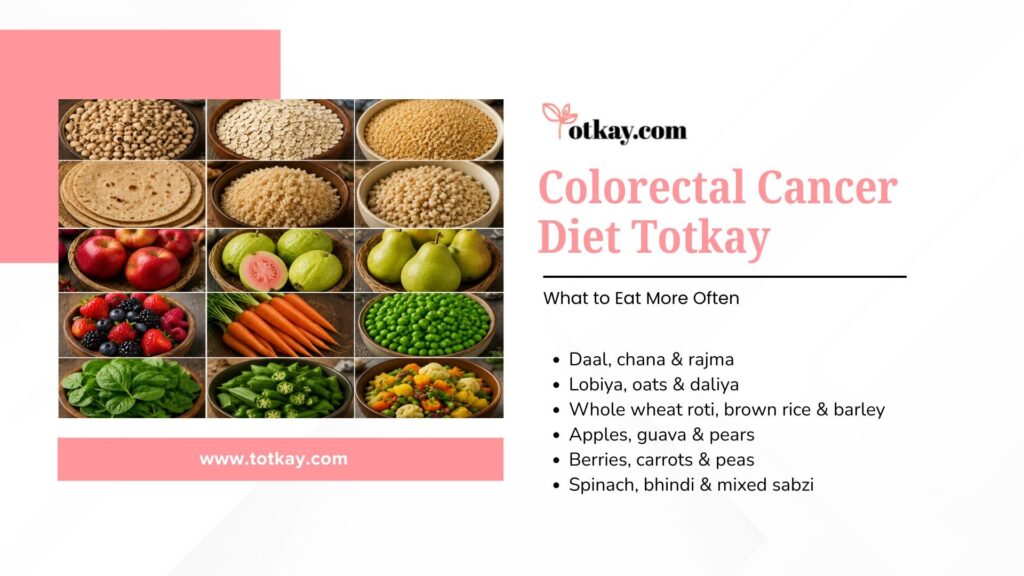
Food-based prevention works best as a long-term habit, not a short detox plan. Quick cleanses do little, while years of good eating change your risk in a real way. The best colorectal cancer diet totkay focus on what fills your plate every day.
Fiber-Rich Pakistani Foods
Fiber supports bowel regularity and feeds the beneficial bacteria that protect the colon lining. Increase fiber slowly, since a sudden jump can cause gas and bloating. Pair every fiber boost with more water.
These local, affordable foods make fiber easy to add:
- Daal: A cheap, daily source of fiber and plant protein.
- Chana and rajma: Beans that fill you up and feed gut bacteria.
- Lobiya: Another legume that adds variety and fiber.
- Oats and daliya: Gentle whole grains that ease digestion.
- Whole wheat roti: A simple swap for refined white bread.
- Brown rice and barley: Whole grains with more fiber than white rice.
- Fruits with skin: Apples, guava, and pears, if your gut tolerates them.
- Berries and carrots: Color-rich options packed with fiber and nutrients.
- Green sabzi: Spinach, bhindi, peas, and mixed sabzi for daily fiber.
Simple Pakistani Meal Ideas
You do not need expensive foreign foods to protect your colon. A normal desi plate, planned well, gives most of what your gut needs. This table shows how easy a colon-friendly day can look.
| Meal | Colon-Friendly Option |
| Breakfast | Daliya with fruit |
| Lunch | Daal, sabzi, whole wheat roti, salad if tolerated |
| Snack | Fruit, roasted chana, or plain yogurt if tolerated |
| Dinner | Brown rice or roti with vegetables and lean protein |
| Hydration | Water, lemon water without excess sugar, or unsweetened fluids |
Fiber Colon Cancer Prevention: Why It Matters
Fiber does heavy lifting for colon health. It moves waste through the bowel, supports stool regularity, and feeds the bacteria that keep the colon lining healthy. This is why fiber colon cancer prevention sits at the center of any good diet plan.
The European cancer prevention factsheet states that whole grains and foods containing dietary fiber show strong evidence for lowering colorectal cancer risk.
How to Increase Fiber Safely
Adding fiber the wrong way can leave you bloated and uncomfortable. A slow, steady approach keeps your gut happy and helps you stick with the change. Treat fiber like a habit you build, not a switch you flip.
- Add fiber slowly: Increase over weeks, not in a single day.
- Drink enough water: Fiber needs fluid to move smoothly through the gut.
- Start small: Add one high-fiber food per meal at first.
- Avoid sudden heavy intake: Go gentle if you already feel very bloated.
- Ask a doctor first: People with bowel narrowing, IBD flares, or medical restrictions need medical advice before big diet changes.
Gut Bacteria and Colon Cancer: What Is the Connection?
Your gut holds trillions of bacteria, together called the gut microbiome. Good bacteria break down fiber and produce helpful compounds that support the colon lining. This link is why gut bacteria colon cancer research draws so much attention.
Research on diet and gut microbiota shows that higher fiber intake can enrich butyrate-producing bacteria in the gut. Butyrate is a compound that helps keep colon cells healthy.
Foods That Support Better Gut Bacteria
Your bacteria eat what you eat. Feed them well, and they reward you with a healthier gut environment. These foods give them the fuel they prefer.
- Fiber-rich foods: The main food source for helpful bacteria.
- Legumes: Daal, chana, and beans feed gut microbes strongly.
- Whole grains: Oats, daliya, and barley support bacterial variety.
- Fruits and vegetables: Add fiber plus protective plant compounds.
- Fermented foods if tolerated: Plain yogurt can add helpful bacteria.
- Homemade simple meals: Fewer additives mean a calmer gut.
What Can Harm Gut Bacteria Balance
Some habits quietly damage the helpful bacteria you work hard to grow. Spotting these problems helps you protect your progress. Cutting them back matters as much as adding good foods.
- A low-fiber diet that starves good bacteria.
- Too much processed meat and frequent fast food.
- Excess sugar and sugary drinks.
- Smoking and heavy alcohol use.
- Unnecessary antibiotics taken without medical need.
- Poor sleep and constant stress.
Foods to Limit for Colon Cancer Prevention
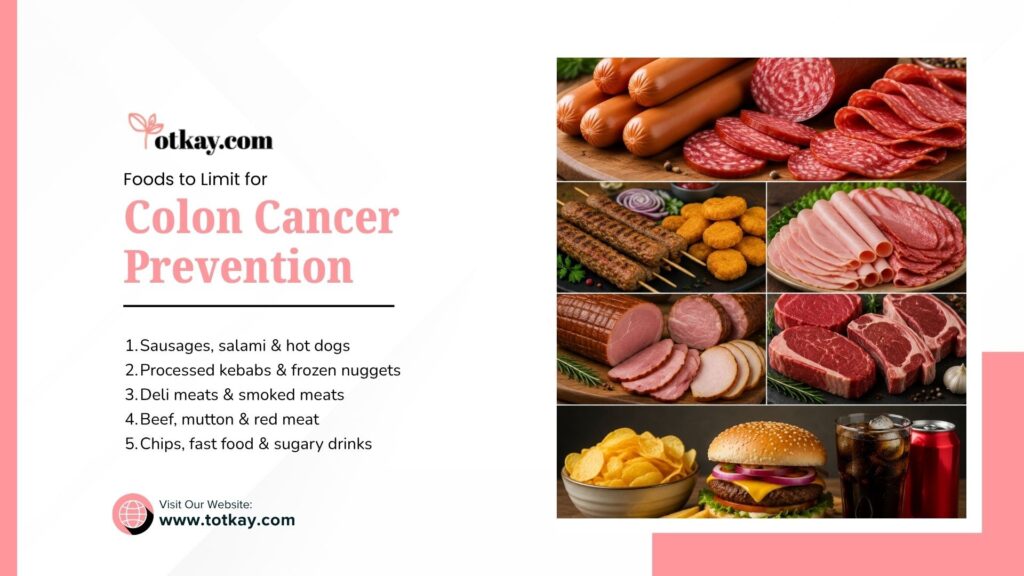
Prevention is not only about what you add. It also means cutting foods that raise risk. A few common items deserve special caution.
Processed Meat and Red Meat
The World Cancer Research Fund (WCRF) reports strong evidence that eating too much red meat, and any amount of processed meat, increases bowel cancer risk. This makes processed meat one of the clearest foods to limit.
- Sausages, salami, and hot dogs.
- Processed kebabs and frozen nuggets.
- Deli meats and smoked or preserved meats.
- Large, frequent portions of beef or mutton.
Fried and Ultra-Processed Foods
Heavily processed and fried foods crowd out colon-friendly choices and add little value. Cutting them back leaves more room for fiber and protective foods.
- Chips and deep-fried snacks.
- Sugary biscuits and packaged desserts.
- Fast food and sugary drinks.
- Processed bakery items.
Colon Health Screening: Why Diet Is Not Enough
Even a perfect diet cannot show what is happening inside your colon right now. Colon health screening can detect polyps before they turn into cancer. Diet may lower your risk, but only screening can look inside.
What Is Colon Health Screening?
Screening checks for early signs of trouble before any symptoms appear. The right test depends on your age, symptoms, and family history.
- Screening looks for early changes before you feel sick.
- It may include stool tests or a colonoscopy.
- A doctor selects the right test based on your personal risk.
Who Should Ask a Doctor About Screening?
Some people carry higher risk and should not wait. If you fall into any group below, raise the topic of screening with your doctor soon.
- Adults reaching screening age.
- People who see blood in their stool.
- People with unexplained weight loss.
- People with persistent bowel changes.
- People with inflammatory bowel disease.
- People with repeated abdominal pain or anemia.
Symptoms That Need Medical Care
Certain signs should never wait for a totka. These symptoms call for a doctor, even if you feel they may be minor.
- Blood in stool or black stool.
- Persistent constipation or diarrhea.
- Narrow, pencil-thin stools.
- Unexplained weight loss.
- Ongoing abdominal pain.
- Weakness or anemia.
- A feeling that the bowel does not empty fully.
Colon Health Pakistan: Practical Prevention Habits
Good prevention should fit your budget and daily routine. For colon health Pakistan, the best plan uses affordable local foods, simple movement, and steady habits.
Daily Habits for Pakistani Readers
Small, repeatable actions beat dramatic one-time efforts. Build these habits into normal life, and they protect you for years.
- Walk for 30 minutes most days, if your health allows.
- Eat at least one cooked sabzi every day.
- Add daal or beans several times a week.
- Replace fried snacks with fruit or roasted chana.
- Drink enough water through the day.
- Limit processed meats and fast food.
- Avoid smoking, paan tobacco, and gutka.
- Avoid heavy alcohol use.
- Keep a healthy weight.
- Never ignore rectal bleeding.
Affordable Colon-Friendly Grocery List
A colon-friendly kitchen does not need costly items. This simple list keeps your shopping cheap and your fiber high.
- Daal, chana, and lobiya.
- Oats, daliya, and whole wheat flour.
- Seasonal fruits and leafy vegetables.
- Carrots and bhindi.
- Plain yogurt, if tolerated.
- Fish or lean chicken, if affordable.
- A small amount of seeds, if tolerated.
Colon Cancer Prevention Comparison Table
Each prevention step carries a different role, benefit, and level of risk. This table helps you compare them at a glance and choose where to focus first. Use it to plan realistic, safe changes.
| Prevention Step | May Help With | Best Pakistani Example | Risk Level | Expert Recommendation |
| Fiber-rich foods | Bowel regularity and gut bacteria | Daal, chana, sabzi, whole wheat roti | Low if increased slowly | Add fiber daily with enough water |
| Colon health screening | Early detection of polyps or cancer | Stool test or colonoscopy through a doctor | Low medical risk, high benefit | Ask a doctor based on age, symptoms, family history |
| Less processed meat | Lower diet-related risk | Reduce sausages, nuggets, salami | Low | Replace with daal, eggs, fish, or lean chicken |
| Physical activity | Weight and bowel health | A daily walk | Low | Aim for regular movement |
| Gut bacteria support | Microbiome balance | Fiber foods, plain yogurt if tolerated | Low to moderate | Use food-first habits, avoid overclaiming probiotics |
Conclusion
Colon cancer prevention depends on long-term habits, not a single magic totka. Smart colorectal cancer diet totkay focus on fiber, fruits, vegetables, legumes, and whole grains, while cutting processed meat and tobacco.
Fiber colon cancer prevention supports bowel health and feeds helpful bacteria, and current gut bacteria colon cancer research backs a fiber-rich plate. Even so, food cannot replace colon health screening, which remains the only way to catch polyps early.
For more proven and safe natural remedies, visit Totkay.com.
Frequently Asked Questions
What is the best way for colon cancer prevention?
The best colon cancer prevention combines several habits. Eat a fiber-rich diet with daal, sabzi, fruits, and whole grains. Stay physically active and keep a healthy weight. Avoid smoking and limit processed meat and alcohol. Most importantly, follow colon health screening advice from your doctor, since screening can catch polyps before they turn into cancer.
Can colorectal cancer diet totkay prevent cancer?
Colorectal cancer diet totkay can lower your risk, but they cannot guarantee prevention. A diet rich in fiber, fruits, vegetables, daal, and beans supports a healthy colon and good gut bacteria. However, food cannot remove polyps or replace medical care. Combine these diet habits with regular colon health screening and a doctor’s guidance for the safest results.
How does fiber help colon cancer prevention?
Fiber supports colon cancer prevention in two main ways. First, it improves bowel regularity, so waste moves out faster. Second, fiber feeds helpful gut bacteria that produce butyrate, a compound that keeps colon cells healthy. Plant foods like daal, oats, fruits, and vegetables provide this fiber. Increase fiber slowly and drink water to avoid gas and bloating.
What is the link between gut bacteria and colon cancer?
The gut bacteria colon cancer link sits in the microbiome. Helpful bacteria break down fiber and create protective compounds for the colon lining. A fiber-rich diet enriches these good bacteria, which may lower the risk. Still, gut bacteria research does not replace screening or medical advice. Use food-first habits and avoid overclaiming benefits from random probiotic products.
When should I get a colon health screening?
Ask your doctor about colon health screening as you reach screening age, or sooner if you have a higher risk. Warning signs include blood in stool, persistent bowel changes, unexplained weight loss, and anemia. A family history of colorectal cancer or inflammatory bowel disease also raises risk. Your doctor will choose the right test based on your age, symptoms, and history.

Hi, I’m a dedicated writer at Totkay.com, passionate about sharing practical tips and solutions to make your life easier. Explore my articles for helpful insights and valuable advice. Stay connected for more expert content!
Related posts:
 Severe Period Pain on First-Day Home Remedies
 Improve Endurance Naturally: 10 Proven Ways to Go Further
 Natural Carb Blockers: 10 Pantry Hacks to Stop Weight Gain
 Nature’s Chill Pill: 10 Herbal Stress Relief Tips (2026)
 What Causes Piles in Men? Expert Guide and Prevention Tips
 Pregnancy Hemorrhoids: Safe Relief and Natural Care