
Fiber-Rich Foods for Gut Health: Desi Totkay Guide for Better Digestion

The best fiber-rich foods for gut health include natural staples like oats, daal, fresh vegetables, and seeds. Many digestive problems start because modern diets lack sufficient fiber. Adding psyllium husk fiber safely relieves constipation, while a balanced high fiber desi diet feeds good gut bacteria.
People seeking to increase dietary fiber in Pakistan should combine these whole foods with plenty of water. Improving fiber intake naturally supports digestion, softens stool, and prevents sluggishness.
Why Fiber Is One of the Most Important Nutrients for Gut Health
Fiber does more than help with constipation. It feeds gut bacteria, supports stool movement, improves fullness, and helps the digestive system work with a better rhythm.
Research links dietary fiber with gut microbiota modulation and human health, which means fiber can influence the balance and activity of helpful gut bacteria.
Fiber Helps Feed Healthy Gut Bacteria
Your gut contains helpful bacteria that live on the food you eat. Fiber acts like food for many of these bacteria, especially when it comes from fruits, vegetables, oats, lentils, beans, and seeds.
When gut bacteria break down some fibers, they produce short-chain fatty acids. These compounds help support gut lining health and overall digestive balance.
A fiber-rich diet can support the gut in several ways:
- Feeds helpful bacteria: Fiber gives good bacteria the material they need to grow.
- Supports microbiome diversity: Different plant foods feed different bacteria.
- Improves stool movement: Fiber helps waste move through the gut more smoothly.
- Supports fullness: Fiber keeps meals satisfying for longer.
- Improves daily routine: Regular fiber intake can help bowel habits feel more predictable.
These benefits work best when you add fiber consistently, not only when constipation becomes painful.
Why Fiber Supports Easier Bowel Movement
Fiber supports bowel movement by improving stool texture and movement through the intestine. Soluble fiber holds water, while insoluble fiber adds bulk.
This combination can make stool easier to pass for many people.
A clinical review found that fiber supplementation can improve chronic constipation, with psyllium showing especially useful results in several studies.
How Fiber May Help Reduce Bloating & Digestive Sluggishness
A sluggish digestive system traps gas and causes severe bloating. Fiber keeps food moving steadily through your intestines.
Research shows regular bowel movements prevent the buildup of gas-producing bacteria. Consistent digestion eliminates that heavy, uncomfortable feeling after meals.
Understanding Soluble vs Insoluble Fiber in Simple Language
You must understand the difference between soluble insoluble fiber to improve your gut health. Both types play distinct roles in keeping your digestive system active.
What Soluble Fiber Does Inside the Gut
Soluble fiber dissolves in water and creates a gel-like substance in your stomach. This thick gel slows down digestion and keeps you full for longer periods.
It also feeds your good gut bacteria effectively.
Understanding how soluble fiber works helps you pick the right foods. Here are the main benefits:
- Slows digestion: Keeps your blood sugar steady after meals.
- Feeds gut flora: Provides direct energy for healthy bacteria.
- Improves stool texture: Binds loose stool together naturally.
Examples include oats, apples, beans, and carrots.
What Insoluble Fiber Does for Digestion
Insoluble fiber doesn’t dissolve in water and is found in many fiber-rich foods for gut health. It acts like a sponge, absorbing water and adding bulk to your stool. This extra bulk helps stimulate your gut muscles to contract and push waste out quickly.
To get the most out of insoluble fiber, you need to know how it helps. The most useful points include:
- Adds stool bulk: Makes waste heavy enough to trigger bowel movements.
- Speeds up transit: Pushes food through your intestines faster.
- Cleans the colon: Sweeps trapped waste from the gut lining.
Examples include whole wheat bran, green vegetables, and seeds.
Why Your Gut Actually Needs Both Types Together
Your gut needs a natural balance of both fiber types to function perfectly. Soluble fiber feeds the bacteria, while insoluble fiber handles the physical waste removal.
Eating a variety of plant foods ensures you get both types naturally. Research confirms both fiber types support digestion differently and work best when combined.
Signs Your Diet May Be Too Low in Fiber
Your body gives clear warning signals when it’s not getting enough fiber. Ignoring these signs and not incorporating fiber-rich foods for gut health can lead to chronic digestive issues.

Constipation Becoming Frequent
Infrequent bowel movements directly point to a lack of fiber. Hard, dry stool requires immediate dietary adjustments.
Feeling Bloated After Meals
Food sitting in your stomach for too long ferments and creates gas. A low-fiber diet causes this sluggish movement and painful bloating.
Low Energy & Digestive Heaviness
A heavy stomach drains your daily energy. Without fiber to push waste out, you feel tired and sluggish all day.
Hunger Returning Too Quickly
Fiber keeps your stomach full by slowing down emptying. If you feel hungry right after eating, your meal lacked fiber.
Irregular Bowel Movement
Healthy digestion requires consistency. Unpredictable bathroom habits indicate an imbalance in your daily fiber intake.
Are These 4 Habits Secretly Destroying Your Fiber Intake?
Many of our modern dietary habits can get in the way of consuming enough fiber-rich foods for gut health. We often choose convenience over traditional whole foods, which can reduce our overall fiber intake.
Too Much White Flour and Refined Roti
White flour products often contain less fiber than whole-grain options. Refined naan, paratha, bakery bread, and biscuits can replace better fiber sources.
You do not need to remove roti completely. You can improve the meal by adding sabzi, daal, salad, or fruit.
Low Vegetable Intake During Meals
Many people eat roti and salan but skip enough vegetables. Even when sabzi appears on the table, the portion may stay too small.
Vegetables add fiber, water, minerals, and gut-friendly variety.
Depending Too Much on Bakery Snacks
Bakery snacks often contain refined flour, sugar, and fats. They taste light but usually provide little fiber.
Daily biscuits, patties, cakes, and rusks can quietly replace fruit, nuts, roasted chana, or yogurt.
Eating Processed Foods Instead of Whole Foods
Instant noodles, chips, packaged snacks, and fast food often reduce fiber intake. They also increase salt, refined carbs, and additives.
Whole foods give the gut more useful material to work with.
Drinking Very Little Water With Fiber Intake
Fiber needs water. If you increase fiber but keep water low, constipation and bloating may worsen.
The Academy of Nutrition and Dietetics says most people should aim for about 14 grams of fiber per 1,000 calories, and it also emphasizes adding fiber-rich foods gradually.
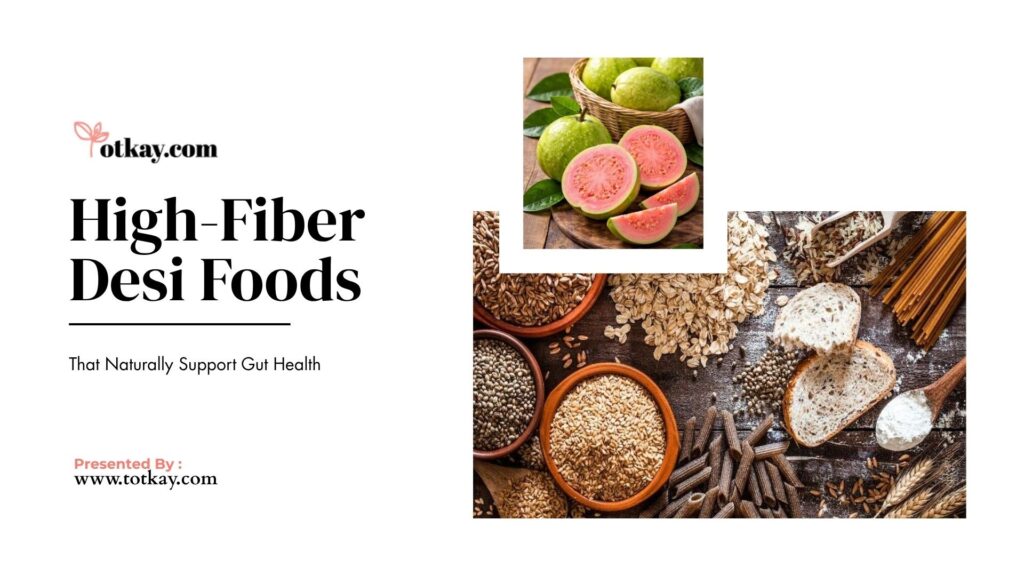
High-Fiber Desi Foods That Naturally Support Gut Health
Adding the right foods to your routine transforms your digestion. A high fiber desi diet uses simple, local ingredients to heal the gut.
Isabgol (Psyllium Husk) for Constipation Support
Isabgol, also called psyllium husk, is one of the most common desi remedies for constipation. Psyllium husk fiber absorbs water and forms a gel-like texture that can support softer stool.
A randomized trial in people with type 2 diabetes and chronic constipation found that psyllium improved constipation symptoms compared with placebo.
Use isabgol carefully:
- Take it with enough water: Dry intake can worsen discomfort.
- Start with a small amount: Let your gut adjust slowly.
- Avoid overuse: Do not depend only on supplements.
- Keep meals fiber-rich: Add fruits, daal, and vegetables too.
- Ask a doctor: Get advice if you have bowel disease, swallowing issues, or severe constipation.
This fiber constipation totkay works best when hydration stays strong.
Oats & Barley for Gentle Soluble Fiber
Oats and barley provide excellent soluble fiber for breakfast. They coat your stomach lining and feed your beneficial bacteria. Eating oats keeps your digestion smooth and prevents midday hunger.
Daal & Chana for Daily Fiber Intake
Lentils and chickpeas offer affordable, high-quality fiber. They combine both protein and complex carbohydrates for gut health. Eating daal regularly keeps your bowel movements predictable.
Guava, Apples & Pears for Digestive Support
Fruits with edible skins contain high amounts of natural fiber. Guava seeds specifically help push waste through the intestines. Eating fresh fruit provides hydration and roughage together.
Sabzi & Leafy Greens for Insoluble Fiber
Green vegetables provide the bulk your colon needs. Spinach, cabbage, and bhindi sweep your digestive tract clean.
Include these vegetables daily to maintain gut momentum:
- Spinach (Palak): Provides essential bulk and magnesium for muscle contractions.
- Okra (Bhindi): Offers mucilage that coats and soothes the gut lining.
- Carrots (Gajar): Deliver strong insoluble fiber for waste removal.
Flaxseeds & Chia Seeds for Gut Balance
Seeds pack a massive fiber punch in tiny servings. They form a soothing gel when soaked in water. Adding seeds to your meals improves hydration and digestion simultaneously.
One Important Table: High-Fiber Desi Foods & Their Gut Benefits
Choosing the right foods requires understanding how they impact your body. This table breaks down everyday desi foods, their fiber types, and how to use them effectively.
Use this guide to plan your daily meals for optimal gut function.
| High-Fiber Food | Fiber Type | How It Supports Digestion | Best Time to Eat | Ideal Portion Size |
| Isabgol | Mostly soluble fiber | Supports constipation relief | Nighttime | 1-2 teaspoons |
| Oats | Soluble fiber | Supports gut bacteria | Breakfast | 1 small bowl |
| Chana | Mixed fiber | Improves fullness & bowel movement | Lunch | 1 small bowl |
| Guava | Mixed fiber | Helps stool movement | Evening snack | 1 medium fruit |
| Leafy vegetables | Insoluble fiber | Adds stool bulk | Lunch & dinner | 1 cup cooked |
Fiber works best when combined with enough water and gradual dietary changes.
Desi Fiber Totkay That May Help Constipation Naturally
Constipation relief often needs a routine, not one magic remedy. The gut responds best when fiber, water, movement, and meal timing work together.
These totkay use familiar ingredients but still need moderation.
Warm Water With Isabgol Before Bed
Mix one spoon of isabgol into warm water and drink it immediately. This remedy softens stool overnight and ensures a smooth morning routine.
Soaked Munakka & Figs in the Morning
Soak two figs and a few munakka in water overnight. Eat them on an empty stomach to stimulate your digestive muscles.
Fiber-Rich Vegetable Soup for Dinner
Boil carrots, cabbage, and lentils into a light soup. This warm meal provides easy-to-digest fiber before sleep.
Chia Seed Water for Better Hydration
Soak one spoon of chia seeds in a water bottle. Drink this throughout the day to keep your colon hydrated and active.
Fruit & Yogurt Combination for Gut Bacteria Support
Mix chopped apples and guava into fresh yogurt. The probiotics in yogurt work perfectly with the fruit fiber to heal your gut.
When to See a Doctor About Your Gut Health
Mild constipation can improve with food and lifestyle changes. Severe or ongoing symptoms need medical care because they may signal a deeper issue.
Do not depend only on totkay when symptoms become painful or persistent.
Consult a doctor if you notice:
- Blood in stool: This needs medical evaluation.
- Severe constipation: Painful or prolonged constipation needs guidance.
- Sudden weight loss: Unexplained weight loss needs testing.
- Persistent stomach pain: Ongoing pain should not be ignored.
- Vomiting: Repeated vomiting can cause dehydration.
- Ongoing digestive problems: Long-term symptoms need a proper diagnosis.
Conclusion
Fiber-rich foods for gut health support bowel movement, gut bacteria, fullness, and daily digestive comfort when you add them gradually with enough water. Many common problems, like constipation, bloating, sluggish digestion, and heaviness after meals, can worsen when the diet depends too much on refined flour, bakery snacks, processed foods, and low vegetable intake.
A better desi routine can include oats, daal, chana, guava, apples, leafy vegetables, chia, flaxseeds, and psyllium husk fiber when needed. The best fiber constipation totkay work with hydration, walking, and consistent meals.
For more targeted advice on gut health after 40, during pregnancy, or learning about good and bad foods for your gut, visit our website.
Frequently Asked Questions
What are the best fiber-rich foods for gut health?
The best fiber-rich foods for gut health include everyday whole foods. You should eat oats, lentils (daal), chickpeas (chana), guava, apples, and leafy green vegetables. These natural foods provide the perfect mix of roughage and nutrients to keep your digestive system moving smoothly.
What is the difference between soluble and insoluble fiber?
Understanding soluble insoluble fiber helps you balance your meals. Soluble fiber dissolves in water to form a gel, feeding gut bacteria and slowing digestion. Insoluble fiber does not dissolve; it adds bulk to your stool and pushes waste out of your body quickly.
Is psyllium husk helpful for constipation?
Yes, psyllium husk fiber works exceptionally well for constipation. It absorbs massive amounts of water in your gut to soften hard stool. You must mix it with a large glass of water and drink it immediately for it to work safely and effectively.
Which Pakistani foods are naturally high in fiber?
A proper high-fiber desi diet utilizes local, affordable ingredients. Whole wheat flour (desi atta), daal moong, chana, spinach (palak), bhindi, and fresh fruits like guava and apples contain excellent fiber. Eating these daily ensures you hit your required nutritional targets.
Can too much fiber cause bloating?
Yes, increasing your fiber intake too quickly overwhelms your digestive system. Your gut bacteria ferment the sudden influx of fiber, creating trapped gas and severe bloating. You must increase your fiber intake slowly over several weeks and drink plenty of water.
How much fiber does the body need daily?
Adults generally need between 25 to 30 grams of fiber every day for optimal digestion. Most people fail to reach this goal. Following reliable fiber constipation totkay, like eating soaked chia seeds or whole fruits, helps you hit this target naturally and safely.

Hi, I’m a dedicated writer at Totkay.com, passionate about sharing practical tips and solutions to make your life easier. Explore my articles for helpful insights and valuable advice. Stay connected for more expert content!
Related posts:
 Sugar Cravings Remedies: 10 Natural Ways to Stop Sweet Urges
 Natural Appetite Suppressants: 7 Safe Ways to Stop Hunger
 Weight Loss Smoothie Recipes: Tasty Blends for Slimming Down
 Piles Diet Plan: Best Foods for Fast Relief
 DIY Herbal Tea Recipes: Master The Botanical Brew
 Bad Food for Gut Health: Foods That Destroy Digestion