
Gut Health After 40: Anti-Aging Digestive Totkay for Better Energy & Metabolism

Gut health after 40 often changes because metabolism, gut movement, sleep quality, and hormone balance shift with age. Many adults start noticing bloating, constipation, acidity, heaviness after meals, low energy, and belly weight, even when their food routine has not changed much.
This guide explains gut motility aging, aging gut health totkay, digestion decline with age, and gentle desi habits that support lighter digestion, better comfort, and daily energy through practical food choices, movement, hydration, and safe home remedies.
Why Digestion Starts Feeling Slower After 40
Many adults notice that foods they once ate easily suddenly cause heaviness, bloating, or fatigue. Small daily habits can often help digestion feel lighter and more active again.
The Gut Naturally Slows Down With Age
The digestive system can move food more slowly as people age. This change can increase constipation, gas, and abdominal heaviness in some adults.
The National Institute on Aging explains that constipation can affect older adults for several reasons, including less physical activity, not drinking enough fluids, and certain medicines.
This is where gut motility aging becomes important. Gut motility means how well food and waste move through the digestive tract.
Slower movement may lead to:
- Harder stool: Waste stays longer in the colon and loses more water.
- More bloating: Delayed movement gives gas more time to build.
- Heaviness after meals: Food may feel like it sits longer in the stomach.
- Low energy: Heavy digestion can make the body feel tired.
- Irregular bowel habits: Some people stop having a predictable routine.
These signs do not always mean disease, but they do show that the gut needs more daily support.
Why Heavy Foods Suddenly Feel More Difficult to Digest
Your stomach produces fewer digestive enzymes as you reach middle age. These enzymes break down proteins, fats, and complex carbohydrates into usable energy.
When enzyme activity drops, heavy and oily foods sit in your stomach much longer. This reduced movement creates a feeling of intense heaviness after lunch or dinner.
Your metabolism also declines naturally, making it harder for your body to process large meals quickly. Eating lighter, well-portioned meals helps your stomach handle food more efficiently.
How Aging Affects Nutrient Absorption & Energy Levels
Digestion affects how the body absorbs nutrients from food. When meals feel too heavy or bowel movements stay irregular, many adults also feel tired after eating.
Good digestion supports energy, immunity, and metabolism. It also helps the body use protein, vitamins, minerals, and fiber more efficiently.
The Hidden Link Between Aging, Inflammation & Gut Health
Your digestive system controls much more than just processing food. It actively manages your immune responses and total body inflammation.
Your Gut Bacteria Also Change as You Age
The balance of good and bad bacteria in your stomach shifts as you get older. Good bacteria decrease, allowing harmful bacteria to multiply and cause internal stress.
This imbalance makes your stomach more sensitive to foods that never bothered you before. Supporting your microbiome helps restore harmony and improves your overall comfort.
Why Poor Digestion Can Increase Inflammation in the Body
Poor digestion can make the body feel sluggish and uncomfortable. Bloating, constipation, and acidity may also affect mood and daily energy.
A gut-supportive diet can help overall health because fiber supports digestion and helps stool pass more easily. NIDDK advises drinking water and other liquids to help fiber work better and make stool softer.
How Stress & Poor Sleep Quietly Damage Digestion After 40
Emotional stress forces your body to release high amounts of cortisol. High cortisol levels completely shut down your digestive system to handle the perceived threat.
Poor sleep prevents your stomach from repairing its lining during the night. These two factors combined cause severe digestive slowdowns and daily fatigue.
This is why aging gut health totkay should include lifestyle habits, not only kitchen remedies.
Small Digestive Changes Many Adults Notice
Your body sends clear warning signs when your digestive system needs extra help. Recognizing these symptoms early allows you to make quick lifestyle adjustments.
Understanding your symptoms helps you choose the right remedies for your body. The most common signs include:
- Feeling Bloated After Normal Meals: Your stomach feels tight and full of gas even when you eat small portions.
- Constipation Becoming More Frequent: Slower bowel movements make it difficult to clear your stomach naturally every day.
- Acidity Increasing During the Evening: Stomach acid flows upward because digestion takes too long during the late hours.
- Feeling Sleepy or Heavy After Eating: Your body drains all your energy just to break down the food you ate.
- Weight Gain Around the Belly Despite Eating Normally: A slow metabolism causes your body to store fat instead of burning it for energy.
Common Habits That Quietly Make Aging Digestion Worse
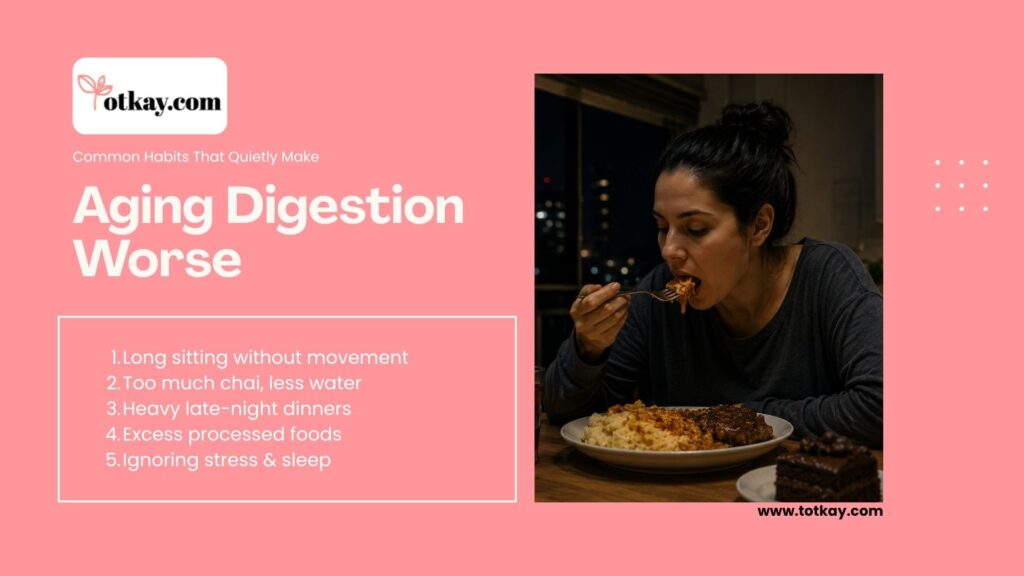
Modern daily routines often include habits that harm our digestive systems. We adopt these habits out of convenience without realizing the long-term damage they cause.
Identifying and removing these triggers provides immediate relief for your stomach. You should carefully evaluate these common lifestyle mistakes:
- Sitting for Long Hours Without Physical Movement: Lack of physical activity stops your digestive muscles from pushing food forward efficiently.
- Drinking Too Much Chai & Very Little Water: Excessive tea dehydrates your intestines, while low water intake causes severe constipation.
- Eating Heavy Dinners Late at Night: Your stomach cannot process heavy meals while you sleep, leading to severe morning acidity.
- Depending Too Much on Processed Convenience Foods: Artificial ingredients destroy healthy gut bacteria and trigger painful stomach inflammation.
- Ignoring Stress & Sleep Quality: High stress and poor sleep prevent your digestive system from resting and repairing itself.
Anti-Aging Desi Totkay That May Support Gut Health After 40
Traditional remedies can be a powerful way to support your gut health after 40 years. These natural solutions work with your body’s aging digestive system to restore comfort without harsh side effects.
Isabgol With Warm Water for Gentle Morning Gut Movement
Isabgol provides soluble fiber and may support softer bowel movements. It works best when you drink enough water with it.
This remedy fits adults dealing with gut motility aging because it supports regular bowel movement gently.
Use it carefully:
- Start small: Begin with a small amount and observe comfort.
- Drink enough water: Fiber needs liquid to work properly.
- Avoid dry intake: Dry fiber can worsen discomfort.
- Use at the right time: Many people prefer morning or bedtime.
- Ask a doctor: Seek advice if you take medicines or have bowel disease.
This elderly gut remedy can help some people, but hydration matters most.
Soaked Munakka & Figs for Sluggish Digestion
Dried fruits like munakka and figs are packed with nutrients and natural fiber, which can help support smooth bowel movements and prevent discomfort. Soaking them overnight makes them easier to digest.
Eating them in the morning is a great way to support gut health after 40 years, giving you a natural energy boost as well.
Bone Broth & Yakhni for Gut Comfort & Recovery
Yakhni feels light, warm, and easy to digest for many adults. It can support comfort when heavy meals feel difficult.
Use simple spices and avoid too much oil. A light soup at night can reduce belly heaviness and support better sleep.
Jeera & Saunf Digestive Water After Heavy Meals
Jeera and saunf water may support comfort after oily or heavy foods. Many families use these seeds for bloating and heaviness. Keep the drink mild. Strong mixtures can irritate some people, especially those with acidity.
Homemade Fermented Foods for Aging Gut Bacteria
Fermented foods can support gut bacteria when your body tolerates them well. Homemade yogurt, kanji, and fermented vegetables can fit local eating habits.
Good options include:
- Homemade yogurt: Easy to add with lunch or dinner.
- Kanji: Use clean preparation and moderate portions.
- Fermented vegetables: Keep salt intake in mind.
- Plain lassi: Choose unsweetened versions.
- Kefir: Use only if it suits your digestion.
Stop any fermented food that worsens gas or acidity.
Haldi Milk at Night for Digestive Calmness & Inflammation Support
Turmeric contains curcumin, which fights inflammation throughout the body. Drinking warm haldi milk before bed can soothe an irritated digestive tract, offering powerful anti-inflammatory support that helps your stomach heal overnight.
This nighttime drink aids digestion, promotes restful sleep, and is a simple yet effective way to manage gut health after 40 years. Better sleep also directly supports a healthier digestive system the next day.
Digestive Changes After 40 & Helpful Daily Habits
Understanding how your body changes is key to improving gut health after 40 years. Matching your symptoms to the right habits can provide fast relief and support long-term digestive wellness.
| Digestive Issue | Why It Happens More After 40 | What Many Adults Experience | Helpful Daily Habit | Action Required |
| Constipation | Slower gut movement | Hard stool & heaviness | Isabgol + hydration | Drink 8 glasses of water |
| Bloating | Delayed digestion | Tight stomach after meals | Smaller portions | Eat 4 small meals daily |
| Acidity | Slow stomach emptying | Burning sensation | Earlier lighter dinners | Eat 3 hours before sleep |
| Fatigue after eating | Weak digestion efficiency | Sleepiness after meals | Balanced meals | Add lean protein to meals |
| Belly heaviness | Slower metabolism | Weight gain & sluggishness | Daily walking | Walk 20 minutes post-meal |
Foods That Help the Gut Feel Lighter & More Active After 40
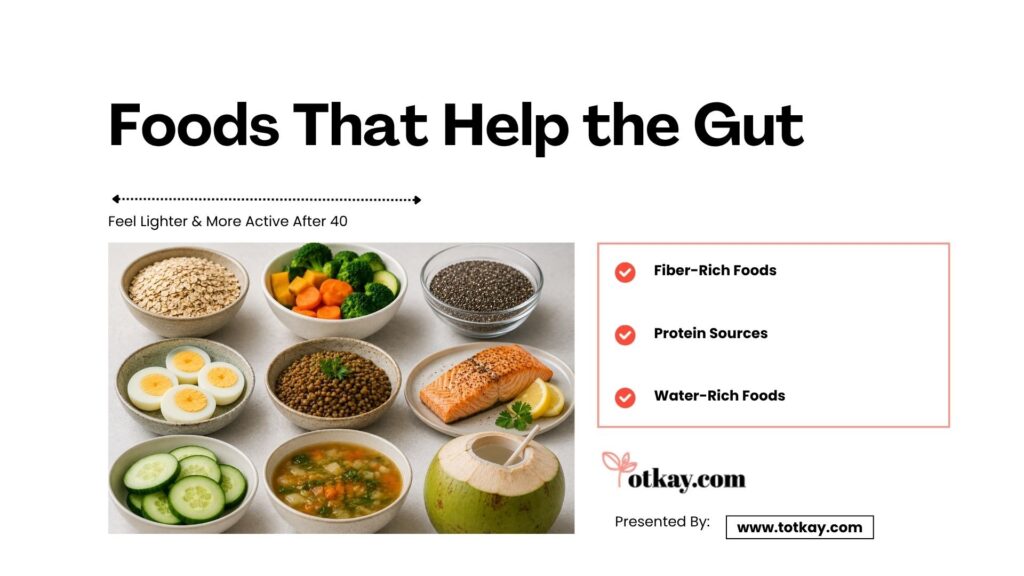
Selecting the right ingredients heavily influences how your stomach feels each day. The foods you choose dictate whether your digestion struggles or succeeds.
Fiber-Rich Foods That Support Better Gut Movement
Fiber acts as the primary fuel for healthy bowel movements. It adds bulk to your stool and pushes it through your intestines smoothly.
You should eat these items daily for optimal results:
- Oats: Provides soluble fiber that coats the stomach and moves waste gently.
- Vegetables: Offers essential roughage that physically sweeps the digestive tract clean.
- Chia seeds: Absorb excess water and create a soft gel that prevents constipation.
Protein Sources That Feel Easier on Digestion
Aging stomachs struggle to break down heavy, fatty meats efficiently. You must select proteins that provide energy without exhausting your digestive organs.
You will find these proteins much easier to digest:
- Eggs: Provide complete amino acids that digest quickly and smoothly.
- Lentils: Offers plant-based protein combined with excellent digestive fiber.
- Fish: Delivers omega-3 fats that reduce inflammation while digesting rapidly.
Water-Rich Foods That Help Reduce Digestive Sluggishness
Your intestines need massive amounts of water to keep food moving forward. Eating foods with high water content prevents your digestive system from drying out and stopping.
You should consume these hydrating foods regularly:
- Cucumber: Delivers pure hydration mixed with gentle, cooling fiber.
- Soups: Provide warm, nutrient-dense liquid that requires zero digestive effort.
- Coconut water: Offers natural electrolytes that stimulate sluggish bowel movements safely.
Anti-Aging Habits That Help Digestion Feel More Comfortable Daily
Your daily routine dictates the success of your digestive system. Building supportive habits ensures your stomach functions smoothly without constant medical intervention.
You can create a powerful routine by adopting these simple practices:
- Walking After Meals Instead of Sitting Immediately: Light movement forces your digestive muscles to contract and process food faster.
- Eating Slower to Reduce Digestive Stress: Chewing thoroughly mixes food with saliva, which begins the digestion process in your mouth.
- Improving Sleep to Support Gut Recovery: Deep sleep allows your body to repair the cellular lining of your stomach.
Conclusion
Gut health after 40 needs more attention because digestion, metabolism, gut movement, hormones, sleep, and stress patterns can change with age. Many adults notice bloating, constipation, acidity, belly heaviness, and low energy after meals. Gentle daily habits can support comfort naturally.
Focus on hydration, fiber-rich foods, fermented foods, lighter dinners, walking, and consistent meal timing. Safe desi support, like isabgol, soaked figs, yakhni, jeera-saunf water, and homemade yogurt, can help when used wisely.
While home remedies can offer relief, it’s important to consult a healthcare professional if digestive issues like bloating, constipation, or acidity feel severe or persistent. For more tips on maintaining gut health as you age, visit Totkay.com.
Frequently Asked Questions
Why does digestion slow down after 40?
Digestion slows down because your body produces fewer digestive enzymes as you age. The muscles in your digestive tract also lose their strength, leading to gut motility aging. This natural decline causes food to move slower, creating bloating and heaviness.
What foods support gut health after 40?
Foods rich in natural fiber and probiotics offer the best support for aging stomachs. You should eat oats, homemade yogurt, soaked figs, and light soups. These foods digest easily and provide excellent nourishment for gut health after 40.
Can menopause affect digestion & bloating?
Yes, menopause drastically lowers estrogen levels, which slows down the digestive tract. This hormonal shift causes water retention and makes the stomach feel tight and bloated. Focusing on menopause gut health through hydration and light movement provides significant relief.
Which desi totkay may support aging digestion naturally?
Traditional remedies provide excellent natural support for a sluggish stomach. You can use Isabgol with warm water, or drink Jeera and Saunf water after heavy meals. These act as powerful aging gut health totkay that reduce bloating and improve daily comfort.
Why does belly bloating increase with age?
Belly bloating increases because a slower metabolism allows food to sit in the stomach longer. The aging digestive system struggles to break down heavy proteins and fats quickly. This delayed process produces excess gas, which expands the stomach and causes painful tightness.

Hi, I’m a dedicated writer at Totkay.com, passionate about sharing practical tips and solutions to make your life easier. Explore my articles for helpful insights and valuable advice. Stay connected for more expert content!
Related posts:
 Severe Period Pain on First-Day Home Remedies
 Improve Endurance Naturally: 10 Proven Ways to Go Further
 Natural Carb Blockers: 10 Pantry Hacks to Stop Weight Gain
 Nature’s Chill Pill: 10 Herbal Stress Relief Tips (2026)
 What Causes Piles in Men? Expert Guide and Prevention Tips
 Pregnancy Hemorrhoids: Safe Relief and Natural Care