
Home Remedies for Tooth Infection: Natural Relief Until You See a Dentist
Home remedies for tooth infection can ease tooth infection pain and swelling while you wait for a dental appointment, but they cannot cure the infection itself. Bacteria trapped inside a tooth can form pus, known as an abscess, and only a dentist can remove that infection at its source.
This guide covers the symptoms to watch for, the home remedies for tooth infection that offer real temporary relief, and the warning signs that mean you need to see a dentist immediately rather than wait.
Common Symptoms of a Tooth Infection
Recognizing a tooth infection early helps you act before it worsens. Watch for these common signs:
- Persistent toothache: Ranges from mild to severe and often worsens with pressure or chewing.
- Sensitivity to temperature: Sharp pain or throbbing when exposed to hot or cold foods and drinks.
- Gum swelling: The gum tissue around the affected tooth may become red, swollen, and tender.
- Painful chewing: Pain or difficulty when eating or biting down.
- Fever: A slight fever can occur as the body’s immune system responds to the infection.
- Bad breath or foul taste: Pus buildup often causes a noticeable bad breath or unpleasant taste in the mouth.
- Tooth discoloration: The affected tooth may shift from yellowish to greyish-black, signaling a deeper infection.
- Swollen lymph nodes: Tender, swollen lymph nodes in the neck or jaw indicate the body is actively fighting the infection.
- Facial swelling: In severe cases, swelling can spread to the lips or cheek.
- Gum boil: A pimple-like bump near the abscessed tooth, sometimes called a tooth abscess, which may contain pus and rupture under pressure.
Indications of an Oral Infection
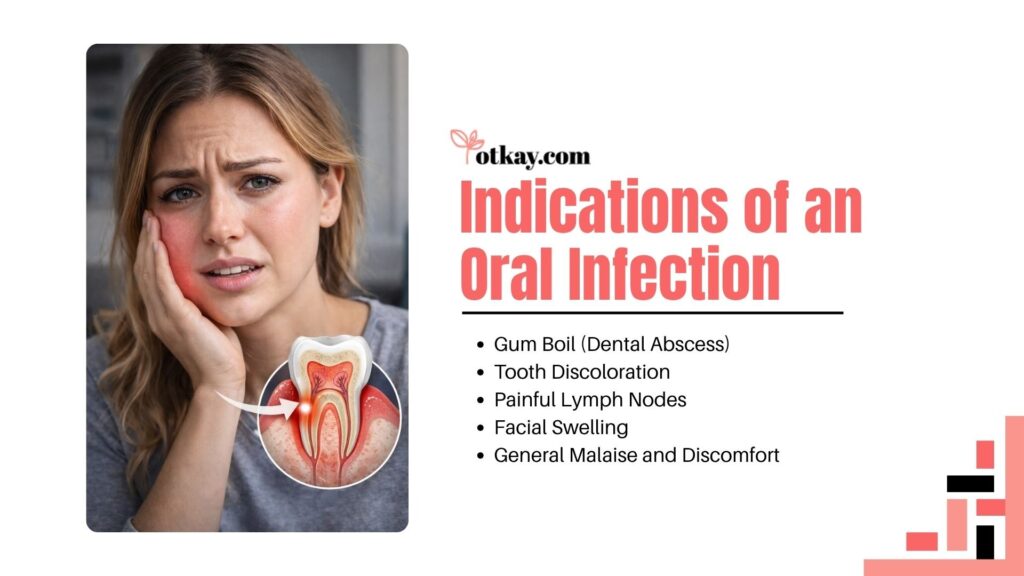
Apart from the general signs and symptoms mentioned earlier, specific symptoms may indicate a tooth infection:
Gum Boil:
An example of a gum boil, commonly called a dental abscess, is a blemish-like, balloon-like swelling on the gums that is close to the infected teeth. Disclosing bubbles or especially pus is similar to diagnosing by pressing it.
Tooth Discoloration:
Discoloration of the affected tooth can take place, ranging from yellow to greyish black, and so this means that the decay and infection must have reached in depth.
Painful Lymph Nodes:
Inflamed and painful swollen lymph nodes in the neck or jaw region are the next commonly observed elements in the body’s immune response to the infection.
Facial Swelling:
Sometimes, the lips and cheeks may be swollen in the toughest cases when the infection spreads to the adjacent tissues and structures.
General Malaise:
The onset of a tooth infection might include symptoms such as tiredness, discomfort, or general malaise. These symptoms may be more noticeable if the tooth infection itself is left untreated or delayed for a long duration.
Home Remedies for Tooth Infection: What Actually Helps
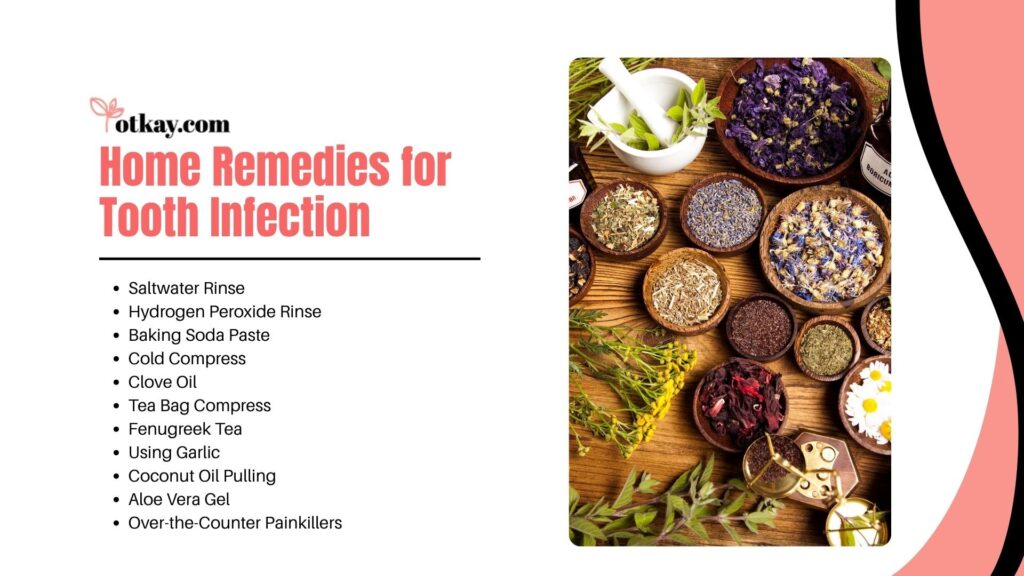
The following home remedies for tooth infection can help manage pain and relieve pain temporarily, but none of them clear the underlying bacterial infection. Use them for comfort while you arrange to see a dentist.
Saltwater Rinse:
Salt water is one of the simplest and most effective rinses for an infected tooth. Salt carries natural antibacterial properties that help reduce the bacterial load inside the mouth and limit further spread.
- Dissolve a teaspoon of salt in a glass of warm water.
- Swish the rinse around your mouth for about 30 seconds, then spit it out.
- Repeat several times a day for ongoing pain and swelling relief.
Hydrogen Peroxide Rinse
A diluted hydrogen peroxide rinse can reduce bacteria on the surface of the gums and help with bad breath caused by infection. This remedy carries real antimicrobial properties, but it must be used carefully.
- Mix half a teaspoon of 3% hydrogen peroxide with an equal amount of water; never use it undiluted.
- Swish gently for about 30 seconds, then spit it out completely.
- Do not swallow the rinse, and avoid using it more than once or twice a day.
Baking Soda Paste
Baking soda is alkaline and neutralizes the acids that feed bacteria, which helps reduce inflammation and discomfort in the surrounding gum tissue.
- Mix a small amount of baking soda with a few drops of water to form a thick paste.
- Apply the paste to the affected tooth and gums, leave it for a few minutes, then rinse with water.
Cold Compress
A cold compress helps numb the area and reduce facial swelling associated with a tooth infection.
- Wrap an ice cube in a clean cloth or towel.
- Hold it against your cheek near the affected tooth for 10 to 15 minutes at a time.
- Repeat as needed for ongoing swelling.
Clove Oil
Clove oil has been used for centuries as a natural pain reliever for dental discomfort, thanks to its medicinal properties and mild numbing effect.
- Dilute a few drops of clove oil, one of the more concentrated essential oils, in a carrier oil such as olive or coconut oil before applying it to the gums.
- Apply a small amount with a cotton swab directly to the painful area.
- Avoid applying clove oil undiluted, since it can irritate sensitive gum tissue.
Tea Bag Compress
A used, slightly cooled tea bag placed against the gums can ease discomfort, since the tannins in black tea have mild astringent properties that may reduce swelling.
- Steep a tea bag as usual, then let it cool until comfortably warm.
- Press it gently against the affected area for 5 to 10 minutes.
Fenugreek Tea
Fenugreek has been used for centuries to support oral comfort and general dental health.
- Steep a small amount of crushed fenugreek seeds in hot water for about 10 minutes.
- Strain and drink the tea while warm.
Using Garlic
Garlic contains allicin, a compound recognized for antibacterial activity that may help fight tooth infections symptoms temporarily.
- Chew a small piece of garlic, or crush raw garlic and apply it directly to the affected tooth.
- Expect a strong taste and odor with this remedy.
Coconut Oil Pulling
Oil pulling, an ancient practice, involves swishing coconut oil in the mouth. Lauric acid in coconut oil carries antimicrobial properties that may help reduce bacteria linked to oral infections.
- Swish one teaspoon of coconut oil in your mouth for 15 to 20 minutes.
- Spit it out (never swallow it) and rinse thoroughly with water.
Aloe Vera Gel
Aloe vera is known for pain-relieving and healing properties, including antibacterial and anti-inflammatory action.
- Apply a small amount of fresh aloe vera gel directly to the affected area to help ease pain and support healing.
Over-the-Counter Painkillers:
Over-the-counter (OTC) painkillers like Acetaminophen (Tylenol) or Ibuprofen (Advil, Motrin) can be used to manage toothache and associated pain.
Caution: Always adhere to the recommended dosage. If you have any other medical conditions or are pregnant/breastfeeding, consult your doctor or dentist before taking these medications.
Why Home Remedies Cannot Replace Professional Dental Treatment
Home remedies can manage symptoms for a short period, but they cannot remove the bacterial source of a tooth infection. Only proper treatment from a dentist addresses the actual cause.
- They do not clear the infection: Rinses and natural remedies reduce surface bacteria and discomfort, but bacteria trapped deep inside a tooth or abscess require professional intervention.
- Delaying dental treatment increases risk: The longer an infection goes untreated, the more likely it is to spread to surrounding tissue, bone, or the bloodstream.
- A dentist may prescribe antibiotics: Antibiotics address the bacterial infection systemically, something no home remedy can replicate.
- Root canal treatment may be necessary: For infections that have reached the tooth’s inner pulp, a root canal treatment removes the infected tissue and preserves the tooth structure.
No home remedies for tooth infection, regardless of how consistently they are used, should replace professional dental treatment. Think of them as a bridge to your appointment, not a substitute for it.
When Is It Necessary to Consult a Dentist?
While home remedies offer short-term comfort, certain symptoms mean you should see a dentist immediately rather than continue managing the issue at home.
- Tooth pain that worsens or persists: Pain that home remedies no longer control, or that continues to intensify.
- Severe swelling of gums or face: Especially swelling that spreads rapidly, which can indicate a severe infection.
- High fever: A fever accompanying severe pain suggests the infection is affecting the whole body.
- Trouble breathing or difficulty swallowing: Trouble breathing or difficulty breathing is a medical emergency and requires immediate care, since it can signal the infection spreading toward the airway.
- Foul taste or pus discharge: Ongoing pus discharge means active infection that home care will not resolve.
- General malaise or weakness: These symptoms can indicate the infection is spreading beyond the tooth itself.
If you experience trouble breathing, difficulty swallowing, or facial swelling that is spreading quickly, seek emergency medical or dental care right away rather than waiting for a scheduled appointment. For all other concerning symptoms, book your dental visits as soon as possible; your dentist may take X-rays and recommend antibiotics, root canal treatment, or extraction depending on the severity.
Preventing Future Tooth Infections
Good dental hygiene habits significantly lower the risk of developing another tooth infection or abscess down the line.
- Brush and floss consistently: Daily brushing and flossing prevent plaque buildup, one of the leading causes of decay and gum disease.
- Limit sugary foods: Bacteria feed on sugary foods, so reducing sugar intake helps reduce plaque buildup and protect enamel over time.
- Schedule regular dental visits: Routine checkups catch small issues before they progress into painful infections.
- Treat cavities early: Small cavities are far easier and less expensive to address than an infection that has already reached the tooth’s pulp.
Conclusion
Home remedies for tooth infection, from salt water rinses to clove oil and cold compresses, can genuinely ease pain and swelling while you arrange care. What they cannot do is replace proper treatment from a licensed dentist, since only professional dental treatment removes the infection at its source.
Use these remedies for short-term comfort, watch closely for warning signs like fever or difficulty breathing, and schedule a dental visit as soon as symptoms appear. Consistent dental hygiene remains the most reliable way to prevent the next infection before it starts.
Frequently Asked Questions
What are the best immediate natural remedies to relieve a toothache?
For immediate temporary relief, gargling with warm saltwater, applying a baking soda paste to the affected tooth and gums, or using a cold compress on your cheek are highly effective methods to reduce pain and swelling.
Can a tooth infection heal on its own?
No, a tooth infection does not resolve spontaneously. While natural approaches can offer temporary relief from symptoms, professional dental care is indispensable for eradicating the infection permanently and averting severe complications.
Can a tooth infection spread?
Yes, if untreated, a tooth infection can spread to your jaw, neck, or other body parts. This can lead to serious, even life-threatening, complications, making prompt professional treatment crucial.
What are common signs of a tooth infection?
Common signs, besides pain, include:
- Hot/cold sensitivity.
- Gum swelling or a “gum boil.”
- Pain when chewing.
- Foul taste/odor, tooth discoloration, or swollen neck glands.
Is coconut oil pulling effective for tooth infections?
Coconut oil pulling, an ancient practice, may aid in bacterial reduction and enhance oral health due to its antimicrobial attributes. Swishing a teaspoon of coconut oil in your mouth for 15-20 minutes daily might offer potential benefits.
Can garlic help with a tooth infection?
Yes, garlic possesses potent antibacterial and anti-inflammatory properties, attributed to compounds like allicin. Applying crushed raw garlic to the compromised tooth might temporarily ease pain and support the body in combating the infection.

Hi, I’m a dedicated writer at Totkay.com, passionate about sharing practical tips and solutions to make your life easier. Explore my articles for helpful insights and valuable advice. Stay connected for more expert content!
Related posts:
 Proven Home Remedies for Wisdom Tooth Pain Relief in Minutes
 Exclusive Insights: Do Natural Remedies Work?
 Eyelashes Ko Kaise Grow Karein: 10 Gharelu Totkay
 Tonsils kya hy aur tonsil ka gharelu ilaj
 Aankhon Ke Halke Khatam Karne Ka Totka
 Homemade Toothpaste: Safe DIY Natural Toothpaste Recipes & Benefits