Pregnancy Piles Treatment: Safe Home Remedies & Medical Tips
The most effective pregnancy piles treatment involves a combination of dietary adjustments and gentle topical remedies. To relieve swollen veins, increase your daily intake of high-fiber foods and drink plenty of water to soften stools and prevent constipation. You can safely apply chilled witch hazel pads or take warm sitz baths for ten to fifteen minutes to soothe the affected anal area.
If these natural methods do not provide relief, consult your healthcare provider about using pregnancy-safe stool softeners or medicated creams to manage the discomfort safely. We will guide you through managing this condition using kitchen staples, traditional home remedies, and maternity care tips that midwives trust.
Why the Third Trimester is the Peak for Piles
Many pregnant women develop haemorrhoids as they progress through their pregnancy. The third trimester presents a unique set of risk factors that make piles worse.
- Uterine Pressure: Your growing unborn child presses heavily on the inferior vena cava. This pressure slows down blood flow from your lower body, causing blood to pool in your pelvic veins.
- Hormonal Changes: Your body produces higher levels of progesterone. This hormone relaxes your blood vessels, making them expand and swell easily.
- The Constipation Connection: The digestion process slows down during pregnancy. Iron supplements often compound this issue, leading to severe constipation. Straining during bowel movements is the primary trigger for swollen veins.
Safe Home Treatments: The Kitchen Cure
You do not need to rely immediately on medical treatments. Several effective home treatments provide instant soothing and cooling for the affected area.
The Fig Ritual
Soak three dried figs in water overnight. Eat them first thing in the morning. This gentle, traditional dietary change ensures a strain-free daily routine. Figs add natural fiber, helping to keep stools soft and prevent constipation.
Witch Hazel Pads
Witch hazel is a natural astringent. Apply chilled witch hazel to a cotton pad and place it on the anal area. This application helps shrink external swelling instantly and reduce itching.
The Warm Sitz Bath
Taking warm sitz baths is highly effective. Soak your pelvic area in plain warm water for ten to fifteen minutes. A standard sitz bath fits directly over your toilet bowl. This method relieves pain and improves blood flow better than many expensive treatments. Avoid adding soap or creating a bubble bath, as chemicals can irritate the area.
Baking Soda Paste
If you experience intense pregnancy itching, mix a small amount of baking soda with water to create a paste. Apply this directly to the skin to calm irritation safely.
Maternity Care Tips: Lifestyle Shifts for Relief
Small adjustments to your daily routine can prevent piles from forming or worsening.
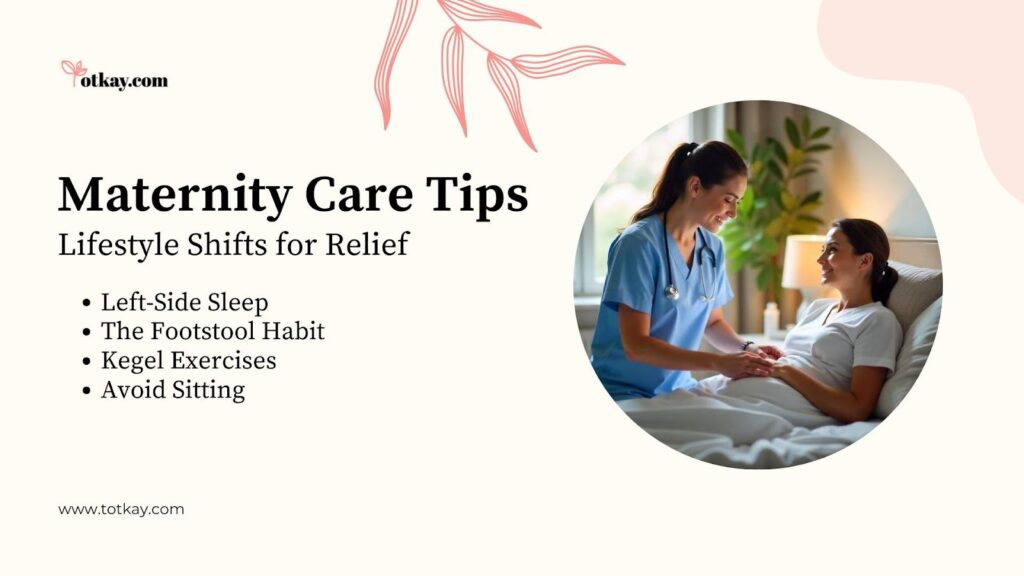
- Left-Side Sleep: Sleeping on your left side unblocks the main vein returning blood from your lower half. This simple shift is an excellent pregnancy piles treatment.
- The Footstool Habit: Place a small footstool under your feet while using the toilet. Elevating your knees aligns your colon, reducing the need to strain.
- Kegel Exercises: Regular exercise, specifically pelvic floor pulses, pushes trapped blood out of swollen veins. This physical activity strengthens the pelvic area and improves circulation.
- Avoid Sitting: Do not sit or stand for extended periods. If you must sit for long periods, use a ring cushion to relieve pressure on the rectum.
Medical Guide: What is Actually Safe for the Baby?
When home remedies do not provide enough relief, you might need to explore medical options. Always consult your healthcare provider before using any over-the-counter remedy.
Safe Stool Softeners
Using a safe stool softener helps relieve constipation without harming your baby. Medications like Docusate sodium draw water into the bowel. The body does not absorb this medication into the bloodstream, making it a safe choice.
Prenatal Fiber Supplements
Bulk-forming fiber supplements are the gold standard for improving symptoms. Products containing Psyllium husk or methylcellulose add water to your stool. Remember to drink lots of water when taking fiber, as drinking plenty of fluids ensures the digestion process works smoothly.
Doctor-Approved Creams
If you experience anus pain, your doctor may recommend a hemorrhoid cream. Creams containing mild hydrocortisone or local anaesthetics like Lidocaine can numb the area. Doctors generally consider these safe to use after the first trimester. A rectal suppository is another option for internal discomfort.
The Iron Supplement Pivot
If your prenatal vitamins cause hard stools, speak to your healthcare provider. Request a slow-release iron supplement to avoid the constipation trap and keep your bowel movements comfortable. More invasive procedures, like rubber band ligation, are rarely performed during pregnancy.
Home Care vs. Over-the-Counter Treatments
| Treatment Type | Home “Totkay” | Medical / Over-the-Counter |
| Primary Goal | Instant soothing & cooling | Softening stool & numbing pain |
| Safe For | All trimesters | Best after 1st trimester |
| Key Examples | Sitz baths, cold packs, figs | Stool softeners, Lidocaine cream |
| Risk Level | Zero (Natural) | Low (Consult your OB-GYN) |
Understanding your options helps you make informed decisions about treating piles.
- Home Remedies: The primary goal is instant soothing. Options like sitz baths, cold packs, and dietary changes carry zero risk. They are safe for all trimesters.
- Medical Treatments: The primary goal is softening stool and numbing pain. Options include a stool softener or Lidocaine cream. The risk level remains low, but you must consult your OB-GYN before starting.
Addressing the Labor Day Fear
Many pregnant women worry that pushing during labor will make pregnancy piles significantly worse. While the intense pressure of childbirth can exacerbate symptoms of piles temporarily, the condition usually improves rapidly after delivery. Once the baby is born, blood volume normalizes, and pelvic pressure decreases.
For postpartum care, use a peri-bottle filled with warm water to cleanse the area gently. Avoid dry toilet paper. Instead, pat the area dry or use unscented baby wipes to minimize discomfort. Cooling pads placed in your underwear will also relieve pain quickly.
When to Stop Home Remedies and See a Specialist

While most common symptoms resolve with simple care, some signs require professional medical attention. Contact your healthcare provider immediately if:
- You experience fainting or lightheadedness, which may indicate anemia from excessive bleeding.
- The pain becomes sharp, severe, and feels like a hard marble near the anus. This could signal a thrombosed hemorrhoid.
- Your symptoms do not improve after seven days of consistent home care.
Conclusion: Practical Takeaways for Lasting Comfort
Pregnancy piles treatment does not have to be overwhelming. By understanding the risk factors, adopting proven home remedies, and choosing safe medical solutions, you can manage discomfort with confidence.
From dietary adjustments like the fig ritual and staying hydrated to using sitz baths and approved creams, each step you take supports your well-being and your baby’s health. Remember, you are not alone many pregnant women experience this challenge and overcome it with the right strategies.
Take charge today: implement these pregnancy piles treatment tips and reclaim your comfort. Your journey can be smoother and more joyful start your action plan now with Totkay!
Frequently Asked Questions
What is the most effective pregnancy piles treatment?
The most effective pregnancy piles treatment combines lifestyle changes and gentle care. Start by increasing your water and fiber intake to keep your bowel movements soft. You can also try taking warm sitz baths for ten to fifteen minutes daily to soothe the area. If discomfort continues, consult your doctor about using a safe medicated cream designed for expectant mothers.
Why do I get swollen veins down there during pregnancy?
As your baby grows, the expanding uterus puts heavy pressure on your pelvic area. This pressure slows down blood circulation, causing blood to pool and create swollen veins in your lower rectum. Hormonal changes also relax your blood vessels, making them expand more easily. Managing your weight and avoiding standing for long periods can help reduce this uncomfortable swelling.
How can I relieve constipation to prevent piles?
To relieve constipation naturally, add plenty of fiber-rich foods like fruits, vegetables, and whole grains to your daily meals. Staying hydrated by drinking at least eight glasses of water a day is equally important. Gentle daily exercises, like walking or prenatal yoga, also encourage regular bowel movements. If you take iron supplements, ask your doctor if they might be slowing your digestion.
Is it okay to use a safe stool softener while pregnant?
Yes, using a safe stool softener is generally fine during pregnancy if dietary changes are not enough. Medications like Docusate sodium help draw water into your bowels to make passing stool much easier. Because these medications are not absorbed into your bloodstream, they do not harm your baby. However, always check with your healthcare provider before taking any new over-the-counter medicine.
What home remedies work best for hemorrhoids before giving birth?
Several simple home remedies offer fast and natural relief. Applying chilled witch hazel pads directly to the area helps shrink the swelling and stops intense itching. You can also soak dried figs in water overnight and eat them in the morning to promote healthy digestion. Elevating your feet on a small stool while using the toilet also makes a big difference.

Hi, I’m a dedicated writer at Totkay.com, passionate about sharing practical tips and solutions to make your life easier. Explore my articles for helpful insights and valuable advice. Stay connected for more expert content!