
Fatty Liver Gut Health Guide: Natural Toolkit for the Liver-Gut Axis
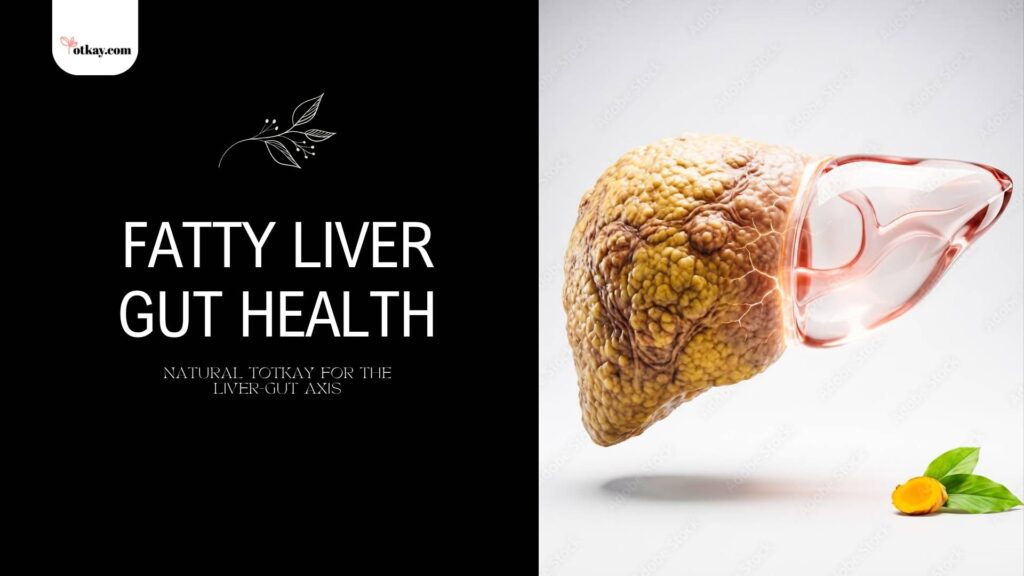
Fatty liver gut health depends on the gut-liver axis, a direct pathway where gut bacteria, bile acids, and inflammatory toxins influence liver function. When gut dysbiosis and leaky gut develop, harmful compounds reach the liver through the portal vein, driving liver inflammation, liver fat accumulation, and nonalcoholic fatty liver disease.
Improving fatty liver gut health requires reducing processed foods, supporting beneficial gut bacteria, improving bile acid metabolism, and using targeted strategies such as fiber, walking, and evidence-based supplements like milk thistle under medical guidance.
The Science of the Gut-Liver Axis: Why Your Liver Depends on Your Gut
The Portal Vein: Your Liver’s Direct Feed
Approximately 70% of all blood reaching the liver arrives through one channel, the portal vein. This vessel carries the full output of intestinal absorption: nutrients, microbial metabolites, hormonal signals, and everything the gastrointestinal tract processes after a meal.
The liver acts as a frontline filter for all of it. When the gut sends clean, well-regulated signals, the liver processes them efficiently. When gut integrity breaks down, the liver absorbs the consequences directly and immediately.
This is why gut health and liver health are inseparable. They share a highway, and what travels that highway determines whether your liver stays healthy or begins storing fat.
Gut Dysbiosis and the Road to NAFLD
A healthy gut microbiome maintains a precise balance between beneficial and harmful bacterial strains. When harmful bacteria dominate a state called gut dysbiosis, two damaging processes begin.
First: the tight junctions break down.
The intestinal wall is held together by proteins called tight junctions. Dysbiosis weakens these proteins, creating microscopic gaps in the gut lining. This is what clinicians call increased intestinal permeability, commonly referred to as leaky gut.
Second: LPS endotoxins enter the portal vein.
Through those gaps, toxic molecules called lipopolysaccharides (LPS) found on the outer membranes of gram-negative gut bacteria escape into the bloodstream. They travel directly through the portal vein to the liver.
Once inside, LPS activates inflammatory pathways in liver cells (hepatocytes). Instead of metabolizing fat normally, these cells begin storing it. The result is hepatic steatosis the defining feature of nonalcoholic fatty liver disease (NAFLD), now also classified as metabolic dysfunction-associated steatohepatitis (MASH) in more advanced stages.
Gut dysbiosis does not just upset digestion. It reprograms how your liver handles fat at the cellular level.
Bile Acid Metabolism: The Liver-Gut Feedback Loop
The liver produces primary bile acids to emulsify and break down dietary fats. These bile acids flow into the small intestine to do their work. Healthy gut microbiota then convert them into secondary bile acids through a process called biotransformation.
These secondary bile acids are not waste products. They function as metabolic signaling molecules that regulate:
- Systemic fat metabolism and lipid metabolism
- Insulin sensitivity and glucose homeostasis
- Gut microbiome composition and immune cell behavior
When gut dysbiosis disrupts this recycling process, the entire bile acid metabolism loop breaks down. Fat metabolism slows across the whole body, not just in the gut. Short chain fatty acids production also drops, reducing the fuel supply to colon cells that maintain the intestinal barrier.
The gut-liver axis shifts from a functional system into a source of sustained systemic inflammation.
The Gut-Liver Axis Recovery Matrix
This matrix maps the most common conditions driving fatty liver gut health problems to their root metabolic drivers and targeted natural remedies (totkay). Use it as a practical starting reference.
| Condition | Root Metabolic Driver | Impact on Gut Bacteria and Liver | Actionable Totkay and Natural Remedy |
| Intestinal Dysbiosis and Sluggish Bile Flow | High refined sugar intake, bakery products, and high-fructose corn syrup | Elevates the Firmicutes-to-Bacteroidetes ratio; maximizes caloric extraction and forces hepatic fat storage | The Bitter Bile Flush: 2 tbsp fresh raw Karela (bitter gourd) juice + ½ tsp Haldi (turmeric) — twice weekly on an empty stomach to stimulate stagnant bile and ease liver congestion |
| Leaky Gut and Endotoxemia | Industrial seed oils (canola, soybean, vanaspati), frequent snacking | Destroys the mucosal lining; allows LPS endotoxins to pass into the portal vein and inflame the liver | The Butyrate Lining Seal: 1 tsp warm organic desi ghee stirred into warm water — sipped every morning to supply short chain fatty acids to colon cells and begin repairing the gut wall |
| Hepatic Inflammation and Oxidative Stress | Processed foods, accumulated free radicals, metabolic slowdown | Elevates ALT/AST liver enzymes; triggers cellular damage in liver tissue | The Herbal Shield: Standardized milk thistle extract (250–500 mg, 80% silymarin) daily — silymarin stabilizes liver cell membranes against gut-derived toxin entry and supports tissue repair |
| Sluggish Motility and Small Intestinal Bacterial Overgrowth | Low soluble fiber intake, heavy late-night meals | Allows waste fermentation in the small intestine; raises the toxic load on the liver-gut axis | The Probiotic Crowd-Out: 3 tbsp home-set curd (dahi) whisked into water with a pinch of roasted cumin (zeera) — drink as lassi at lunch to introduce protective Lactobacillus strains and crowd out harmful bacteria |
Milk Thistle: The Clinical Truth About Silymarin
What Silymarin Actually Does
Milk thistle carries a common and damaging misconception that it performs an overnight liver cleanse. It does not work that way, and expecting it to will lead to disappointment and misuse.
The active compound in milk thistle is silymarin a group of flavonolignans that work as a molecular gatekeeper at the liver cell membrane. Silymarin stabilizes the outer membranes of hepatocytes, creating a structural barrier that makes it significantly harder for LPS toxins arriving through the portal vein from a leaky gut to enter and injure liver tissue.
This is a sustained, protective mechanism. It requires consistent daily use over weeks to produce a measurable clinical benefit.
Antioxidant and Antifibrotic Effects
In more advanced stages of fatty liver disease, the liver begins depositing scar tissue. This process, called liver fibrosis,s is driven by activated hepatic stellate cells. If fibrosis progresses unchecked, it can develop into liver cirrhosis.
Silymarin addresses this through two pathways:
- Anti-inflammatory action: It down-regulates NF-κB, one of the primary inflammatory pathways activated by gut-derived LPS toxins and oxidative stress. Reducing NF-κB activity lowers liver inflammation and slows the fibrotic cascade.
- Antifibrotic action: Silymarin inhibits hepatic stellate cell activation — directly limiting scar tissue formation in patients with early to moderate liver fibrosis.
Silymarin also neutralizes free radicals generated by metabolic dysfunction and processed foods, reducing the oxidative damage that accelerates liver disease progression at the cellular level.
How to Use Milk Thistle Safely
| Parameter | Guidance |
| Daily dosage range | 250–750 mg in split doses (morning and evening) |
| Product standard | Choose extracts standardized to at least 70–80% silymarin |
| Timeline for results | 8–12 weeks of consistent use — benefits accumulate gradually |
| Medical consultation | Required if you take medications metabolized by the liver (statins, anticoagulants, antifungals) |
| Who should avoid unsupervised use | Anyone with confirmed liver cirrhosis, active inflammatory bowel disease, or significant metabolic disorders |
Milk thistle works best as a complementary tool within a broader gut-liver recovery strategy,gy not as a standalone remedy.
Diet Interventions: Rebuilding Beneficial Gut Bacteria Through Food
The High-Fructose Corn Syrup Problem
Industrial high-fructose corn syrup present in packaged sodas, flavored yogurts, commercial juices, and most processed snacks bypasses standard intestinal digestion almost entirely. It arrives at the liver rapidly and converts straight into fat, directly contributing to liver fat accumulation and disrupting gut microbiome composition.
Whole fruits do not carry the same metabolic risk. Their natural sugars are bound to dietary fiber, which slows absorption and prevents the sharp metabolic spike that drives hepatic steatosis. Replacing processed fructose sources with whole local fruits, such as guava, apple, and pear is one of the most immediate dietary changes you can make for fatty liver gut health.
Replace Refined Seed Oils
Highly refined commercial seed oils — canola, soybean, and vanaspati — promote gut inflammation through their oxidized fatty acid content. They damage the intestinal lining, impair the mucosal barrier, and contribute to gut permeability over time.
Replace them with:
- Cold-pressed mustard oil: Suitable for everyday cooking at moderate heat; rich in polyunsaturated fatty acids with anti-inflammatory properties
- Extra virgin olive oil: Ideal for low-heat cooking and dressings; clinically linked to improved insulin sensitivity and reduced liver fat
- Pure desi ghee (in moderation): Supplies butyrate — a short-chain fatty acid that directly feeds and repairs colon epithelial cells, supporting a healthy gut microbiome
Add These Accessible Prebiotics
Prebiotics feed beneficial gut bacteria and help restore healthy gut microbiota composition. The following two options are inexpensive, widely available, and highly effective:
Ispaghol (Psyllium Husk)
- Take 1 tablespoon in a full glass of water before bed
- Sweeps the colon, binds excess primary bile acids, and prevents their recirculation back to the liver
- Supports healthy gut microbiome balance by selectively feeding beneficial bacterial strains
Barley (Jau) Porridge
- Rich in beta-glucans soluble fibers clinically shown to reduce liver fat, lower body mass index, and improve glucose homeostasis
- Supports insulin sensitivity and helps correct metabolic syndrome markers
- Provides a low-glycemic, high-fiber meal base that reduces the food intake burden on the liver
Lifestyle Totkay: Daily Habits That Reverse Fatty Liver
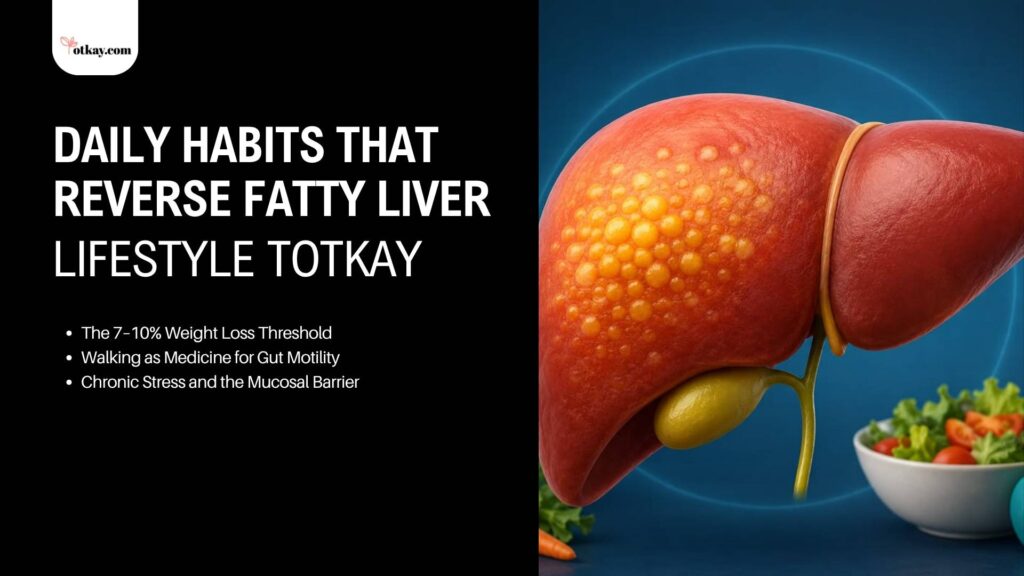
The 7–10% Weight Loss Threshold
Clinical evidence places a clear benchmark for reversing liver fat accumulation: a 7% to 10% reduction in total body weight. This level of weight loss achieved through sustained dietary change and movement measurably reduces hepatic inflammation, improves liver function, and begins reversing early liver fibrosis without pharmaceutical intervention.
You do not need extreme restriction. A consistent, moderate caloric deficit combined with daily physical activity produces this result within 3–6 months for most individuals. Crash dieting can paradoxically worsen liver stress, so a steady, sustainable approach matters.
Walking as Medicine for Gut Motility
Thirty minutes of brisk walking daily, 150 minutes per week tota,l delivers two distinct benefits for fatty liver gut health:
- Metabolic: Burns calories, reduces visceral fat, and lowers insulin resistance
- Digestive: Accelerates gut motility, which shortens the time waste spends fermenting in the colon — directly reducing the toxic load reaching the liver through the portal ve. in
Physical movement is one of the most effective non-dietary tools for improving gut microbiome composition and reducing systemic inflammation. Begin with 20 minutes if 30 feels demanding. Habit consistency matters more than initial intensity.
Chronic Stress and the Mucosal Barrier
Chronic psychological stress triggers a sustained fight-or-flight response. This diverts blood flow away from the gastrointestinal tract, thinning the protective mucus layer that lines the intestinal wall. Over time, this stress-induced thinning is sufficient to compromise intestinal permeability independently of diet.
A simple practical intervention: take five slow diaphragmatic breaths before each meal. This activates the parasympathetic nervous system, restores digestive blood flow, and supports the integrity of the mucosal barrier between meals. It costs nothing and takes less than two minutes.
Clinical Triage: When to Move Beyond Home Remedies
The 30-Day Check
Natural remedies and lifestyle changes work — but they require time and consistency. If persistent bloating, upper-right abdominal heaviness, or chronic fatigue do not improve after four full weeks of consistent dietary changes and liver gut therapy, seek a formal medical evaluation.
Delaying assessment beyond this window when symptoms persist can allow early liver disease to progress to a more advanced stage without detection.
Red Flag Symptoms Requiring Immediate Medical Attention
Do not wait for a scheduled appointment if you experience any of the following:
- Jaundice: Yellowing of the eyes or skin — signals significant disruption of liver function
- Ascites: Severe abdominal swelling — may indicate advanced liver cirrhosis or portal hypertension
- Sudden unexplained weight loss: Can signal advanced liver disease or malignancy
- Blood in vomit or tar-colored stools: Indicates possible internal bleeding from esophageal varices
- Severe, persistent upper abdominal pain: Requires urgent evaluation regardless of other symptoms
Diagnostic Tests That Assess the Liver-Gut Connection
Your doctor may order one or more of the following to evaluate fatty liver disease and gut health comprehensively:
- Liver function tests (LFTs): Blood panels measuring ALT/AST ratios and total bilirubin — the most accessible initial indicator of liver inflammation and hepatocyte damage
- FibroScan ultrasound: A non-invasive imaging test that measures liver stiffness to estimate the degree of liver fibrosis without a biopsy — widely used to stage nonalcoholic fatty liver disease
- Hydrogen breath test: Rules out small intestinal bacterial overgrowth (SIBO) as a contributing driver of gut-derived toxin load — particularly relevant if bloating, gas, and irregular motility are prominent symptoms
- Fasting insulin and glucose panel: Assesses insulin resistance and metabolic dysfunction that often co-drive liver fat accumulation
A Practical 4-Week Liver-Gut Reset Plan
Weeks 1 and 2 The Barrier Repair Phase
The goal in the first two weeks is to stop incoming damage and begin rebuilding the gut wall.
Remove:
- All commercial seed oils (canola, soybean, vanaspati)
- High-fructose beverages — sodas, packaged juices, energy drinks
- Processed flour products — white bread, biscuits, commercial pastries
Add:
- Morning ghee-water (1 tsp desi ghee in warm water) to deliver butyrate to colon cells
- Ispaghol (1 tbsp in water) each night before bed
- 30 minutes of brisk walking every day
Purpose: Reduce LPS toxin flow into the portal vein, begin sealing increased intestinal permeability, and stimulate gut motility to reduce fermentation and bacterial overgrowth risk.
Weeks 3 a: nd 4 The Flora Building Phase
Once the gut barrier begins stabilizing, shift attention to rebuilding a healthy gut microbiome.
Add:
- Cumin lassi (home-set dahi + water + roasted zeera) at lunch daily — introduces beneficial bacteria and improves digestive motility
- Moong dal khichdi or barley porridge for dinner three nights per week — provides beta-glucans, reduces the meal load on the liver, and gives the gastrointestinal tract a structured recovery window
- Standardized milk thistle (250–500 mg silymarin daily) under medical guidance — shields liver cells from ongoing gut-derived toxin exposure while dietary healing continues
Continue: Morning ghee-water, ispaghol at night, and daily walking from the first two weeks.
By the end of week four, most individuals following this protocol consistently will notice measurable improvements in bloating, bowel regularity, abdominal heaviness, and energy levels. Liver enzymes may take 8–12 weeks to normalize fully — this is expected and normal.
The Bottom Line
Fatty liver gut health is not a single-organ problem. The liver and gut operate as one integrated system through the gut-liver axis, and healing requires treating both at the same time.
Remove the dietary triggers that damage the gut barrier. Introduce targeted Totkay grounded in metabolic science. Build sustainable movement into your daily routine. Use milk thistle as a precision support tool under appropriate medical guidance.
Begin with the 4-week reset plan. It is specific, low-cost, and built on both traditional South Asian remedies and current clinical evidence. If symptoms persist beyond four weeks without improvement, pursue a formal diagnostic evaluation. The tools available today make early detection of nonalcoholic fatty liver disease accessible and actionable.
The path to a healthier liver begins in the gut. Start there.
Frequently Asked Questions
What is the connection between gut health and fatty liver disease?
A: Your gut and liver communicate directly through the portal vein. When gut bacteria fall out of balance — a state called gut dysbiosis — the intestinal wall becomes permeable, allowing toxic LPS molecules to reach the liver. This triggers liver inflammation and fat accumulation, which are the core drivers of nonalcoholic fatty liver disease (NAFLD). Healing the gut microbiome is essential for improving liver health.
Can an unhealthy gut microbiome cause nonalcoholic fatty liver disease?
A: Yes. A disrupted gut microbiome allows harmful bacteria to produce toxic byproducts that travel through the portal vein directly to the liver. These toxins activate inflammatory pathways in liver cells, forcing them to store fat instead of burning it. This process can cause NAFLD even in people who do not drink alcohol, making gut microbiome balance a critical factor in managing fatty liver disease.
How does leaky gut contribute to liver inflammation?
A: Leaky gut — or increased intestinal permeability — occurs when the gut lining develops microscopic gaps. Bacterial toxins called lipopolysaccharides (LPS) pass through these gaps into the bloodstream and reach the liver via the portal vein. The liver responds by triggering chronic inflammation, which over time leads to liver fat accumulation, elevated liver enzymes, and in more severe cases, liver fibrosis.
What do liver function tests reveal about gut-liver axis problems?
A: Liver function tests measure enzymes like ALT and AST in your blood. Elevated levels often indicate that liver cells are under stress — frequently caused by gut-derived toxins entering through a leaky gut. These tests are one of the earliest and most accessible ways to detect liver inflammation linked to gut dysbiosis, making them a valuable first step before pursuing imaging or further gut health evaluation.
Does milk thistle help with fatty liver caused by poor gut health?
A: Milk thistle contains silymarin, which stabilizes liver cell membranes and reduces the damage caused by gut-derived toxins reaching the liver. It also supports antifibrotic and anti-inflammatory activity in liver tissue. While milk thistle does not directly repair a leaky gut, it protects liver cells during the gut healing process. A typical evidence-based dose is 250–500 mg of standardized silymarin extract daily, under medical guidance.

Hi, I’m a dedicated writer at Totkay.com, passionate about sharing practical tips and solutions to make your life easier. Explore my articles for helpful insights and valuable advice. Stay connected for more expert content!
Related posts:
 Severe Period Pain on First-Day Home Remedies
 Improve Endurance Naturally: 10 Proven Ways to Go Further
 Natural Carb Blockers: 10 Pantry Hacks to Stop Weight Gain
 Nature’s Chill Pill: 10 Herbal Stress Relief Tips (2026)
 What Causes Piles in Men? Expert Guide and Prevention Tips
 Pregnancy Hemorrhoids: Safe Relief and Natural Care