
Anal Fissure Home Remedy: Safe Desi Totkay That Actually Help
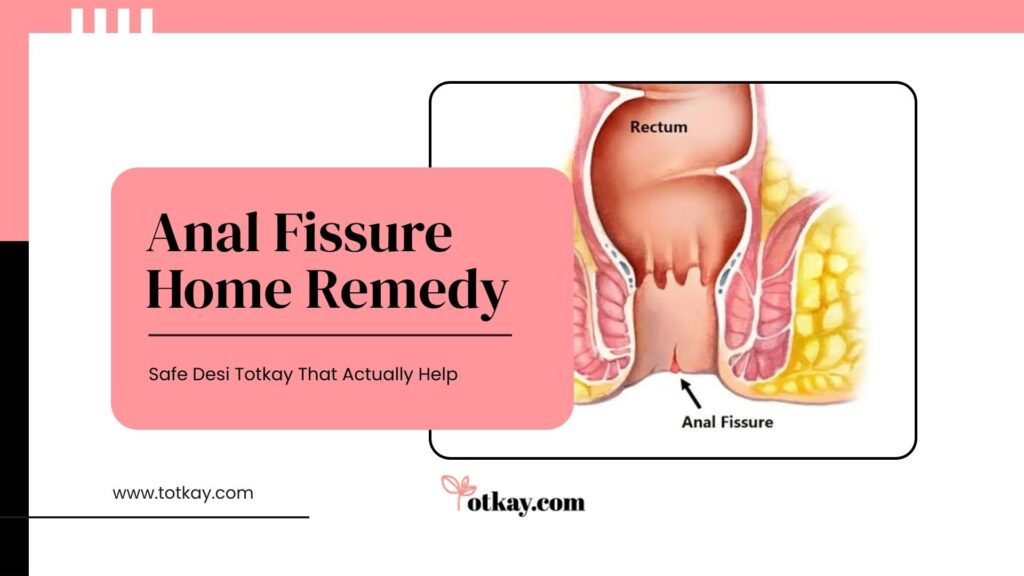
A safe anal fissure home remedy focuses on soft stool, warm water comfort, and avoiding straining. Helpful fissure totkay may include a sitz bath fissure totkay, more water, and fiber fissure prevention through fruits, vegetables, daal, and whole grains.
For anal pain home remedy, warm shallow baths can soothe pain after stool. A ghee fissure remedy should not be treated as a cure. Ghee may help some people through diet, but severe pain or bleeding needs medical care.
What Is an Anal Fissure?
An anal fissure is a small tear or crack in the lining of the anus. Hard stool stretches the anal opening beyond its normal capacity, creating a tiny wound in the sensitive tissue. That wound causes sharp pain, burning, or bright red bleeding during and after a bowel movement.
Common Anal Fissure Symptoms
Recognizing the symptoms early allows faster and safer home management. Many people confuse anal fissure symptoms with other conditions, which delays the right care.
The most useful way to check for a fissure is by paying attention to when the pain occurs and what it feels like. Fissure pain is typically worst during and immediately after passing stool, not throughout the day.
The most reported symptoms include:
- Sharp cutting pain during stool: The most defining sign of a fissure—not a dull ache, but a sudden sharp sensation.
- Burning after stool: Pain that lingers for 30 minutes to several hours after a bowel movement.
- Bright red blood on tissue or stool surface: Small amounts of fresh blood, not dark or tar-like.
- Anal itching: Mild irritation around the anal opening between bowel movements.
- Muscle spasm around the anus: A tight, gripping sensation that can worsen pain.
- Fear of passing stool: A psychological response that leads people to delay bowel movements, worsening constipation.
- Small visible crack near the anus: Visible in some cases when examined carefully.
Anal Fissure vs Piles: How to Tell the Difference
Anal fissure usually causes sharp cutting pain during stool. Piles may cause swelling, itching, bleeding, pressure, or a lump near the anus.
Both problems can happen together. A doctor can confirm the cause if symptoms repeat, bleeding continues, or pain does not improve.
Do not assume every case of rectal bleeding is piles. Repeated bleeding deserves proper evaluation.
Why Anal Fissures Happen
Understanding the cause of a fissure helps prevent it from coming back. Most fissures do not appear randomly—they follow a pattern that begins with stool consistency and bowel habits.
Common Causes of Anal Fissures
The anal lining tears when it faces more pressure or friction than it can handle. Several factors create that situation regularly.
The most common causes behind fissure formation include:
- Hard stool: The leading cause. A hard stool requires force and stretches the anal tissue during passage.
- Constipation: Infrequent or difficult bowel movements increase the size and hardness of stool.
- Straining during bowel movement: Direct mechanical force on an already tight anal sphincter.
- Diarrhea irritation: Repeated loose stools can strip and irritate the anal lining.
- Low-fiber diet: Refined foods without enough fiber produce hard, dry stool.
- Low water intake: Dehydration makes stool harder and more difficult to pass.
- Pregnancy or childbirth: Increased pressure on the pelvic floor and anal area during and after delivery.
- Tight anal sphincter: A naturally tight sphincter reduces blood flow and increases tear risk.
- Previous fissure reopening: A healed fissure can reopen if constipation returns.
Why Constipation Makes Fissures Worse
Hard stool stretches the anal lining. The tear becomes painful. Pain can trigger muscle spasms around the anus.
This spasm may reduce blood flow to the area and slow healing. Fear of pain can also make a person hold stool, which creates more constipation and harder stool.
This is why the most useful home support focuses on soft stool and less straining.
Anal Fissure Home Remedy: What Actually Helps?
Home care for an anal fissure works best when it targets the root problem: hard stool, sphincter spasm, and anal irritation. A safe anal fissure home remedy does not require harsh products, internal applications, or painful procedures.
The goal of every safe fissure totkay is practical and specific. A strong home care routine should cover these eight priorities:
- Soften stool: Make every bowel movement easier to pass.
- Reduce straining: Remove the force that tears the tissue.
- Relax the anal muscles: A warm sitz bath helps achieve this naturally.
- Soothe pain: Manage discomfort without masking serious symptoms.
- Keep the area clean: Gentle water cleaning prevents infection.
- Prevent constipation: Fiber and water intake work together here.
- Avoid irritation: No harsh soaps, wipes, or topical substances without medical advice.
- Know when to see a doctor: Home care has real limits that must be respected.
Safe vs Unsafe Fissure Totkay: A Comparison Guide
Some fissure totkay can be a safe and effective anal fissure home remedy for comfort. Others can irritate sensitive skin and delay healing.
The table below compares common remedies by safety level, correct use, and key warnings:
| Remedy or Habit | Safe or Unsafe? | Why It Matters | Best Use | Doctor Warning |
| Warm sitz bath | ✅ Safe | Relaxes the anal sphincter and soothes pain without irritation | After stool and before sleep | See a doctor if pain is severe or does not improve in 1–2 weeks |
| High-fiber foods (daal, fruit, sabzi) | ✅ Safe | Keeps stool soft and reduces straining at the source | Daily as part of every meal | Increase fiber slowly; sudden increases cause gas and bloating |
| Drinking enough water | ✅ Safe | Supports softer stool and prevents constipation naturally | Throughout the day, 8–10 glasses | Ask a doctor if you have fluid restriction due to kidney or heart conditions |
| Ghee in diet | ⚠️ Use carefully | May support digestion comfort for some people but does not heal a tear | Small amount in food if personally tolerated | Do not apply internally; avoid if you have high cholesterol or gallbladder issues |
| Harsh herbal pastes (garlic, lemon, turmeric) applied directly | ❌ Unsafe | Can burn sensitive anal tissue and worsen irritation | Avoid entirely on the fissure area | Stop immediately and seek care if burning increases |
| Strong laxatives without advice | ⚠️ Use only with guidance | Can cause cramping or diarrhea that irritates the fissure further | Doctor or pharmacist guidance only | Avoid self-use during active severe pain |
Sitz Bath Fissure Totkay: How Warm Water Helps

A sitz bath fissure totkay is one of the most effective and safest methods for managing fissure pain at home.
The concept is straightforward: sitting in warm, shallow water is an effective anal fissure home remedy that soothes the area, reduces muscle spasms, and encourages blood flow to the healing tissue.
How to Take a Sitz Bath Safely
The method matters as much as the habit. Doing it incorrectly reduces its benefit and may even cause irritation. Follow these steps consistently for the best results:
- Use warm water, not hot: Hot water burns delicate tissue and worsens irritation.
- Sit for 10–20 minutes: Long enough to relax the sphincter without over-saturating the skin.
- Time it after bowel movement: This is when pain and spasm peak—warm water provides direct relief.
- Pat dry gently afterward: Do not rub. Pat with a soft, clean cloth.
- Use a clean tub or a dedicated sitz bath basin: Hygiene prevents infection.
- Stop if burning increases: Any worsening sensation means the water is too hot or something else is wrong.
What Not to Add to Sitz Bath Water
The anal area is sensitive. Strong ingredients can worsen burning.
Avoid adding:
- Detergent
- Lemon
- Strong salt concentration
- Alum
- Harsh antiseptics
- Perfumed soap
- Bleach
- Unknown herbal powders
A plain warm-water sitz bath is usually safer than mixing strong desi ingredients.
Fiber Fissure Prevention: The Most Important Diet Step
Fiber fissure prevention helps make stool softer and easier to pass. This reduces pressure on the anal tear and helps prevent reopening.
Pakistan-Friendly Fiber Foods for Fissure Prevention
Most high-fiber foods recommended for fissure care are already part of everyday Pakistani and Indian cooking. There is no need for expensive supplements when the right foods are already in the kitchen.
Foods that directly support fissure prevention include:
- Daal (lentils): Masoor, moong, and chana daal are excellent daily fiber sources.
- Chana and lobiya: Legumes that soften stool and support gut health.
- Rajma: Kidney beans add strong fiber content to a meal.
- Oats and daliya: Gentle on digestion and effective for stool softening.
- Brown rice: More fiber than white rice with a similar flavor.
- Apples, guava, pears, papaya, bananas: All support softer stools and regular bowel movements.
- Carrots, spinach, bhindi, peas: Easy to add to daily sabzi for consistent fiber intake.
- Isabgol (psyllium husk): Effective stool softener when taken with a full glass of water; consult a pharmacist or doctor before regular use.
Fiber Rules to Follow
Fiber works only when combined with the right habits. The most important rules to follow:
- Add fiber gradually: One new food per two to three days to avoid bloating.
- Drink enough water: Fiber absorbs water to soften stool—without fluids, it can worsen constipation.
- Avoid increasing fiber without fluids: This is the most common mistake that backfires.
- Reduce fried and refined food: White bread, biscuits, and processed snacks reduce the effectiveness of a high-fiber diet.
- Keep stool soft, not loose: The goal is easy passage, not diarrhea.
- Ask a doctor if you have severe bowel disease: Conditions like Crohn’s disease or ulcerative colitis require personalized dietary guidance.
Stool Softening and Toilet Habits
Changing bathroom habits produces real results—sometimes more than any food change alone. The way a person sits, waits, and cleans affects how quickly a fissure heals.
Healthy toilet habits that protect the anal lining include:
- Do not strain: If stool does not pass easily, stop and try again later rather than forcing it.
- Do not sit on the toilet for a long time: Prolonged sitting increases pressure on the anal area.
- Go when you feel the urge: Holding stool dries it out and makes it harder to pass.
- Use a footstool to improve posture: Elevating the feet slightly creates a more natural squatting angle for easier passage.
- Breathe slowly instead of pushing hard: Slow breathing reduces intra-abdominal pressure.
- Avoid scrolling on mobile during toilet time: It extends the time spent sitting unnecessarily.
- Clean gently with water: Always use water instead of dry tissue directly on the anal area.
- Pat dry after cleaning: Never rub the area dry.
Fissure Totkay for Prevention: Daily Habits That Stop Recurrence
A successful anal fissure home remedy isn’t just about healing the current issue—it’s about preventing it from coming back. Prevention focuses on consistent daily habits, not one-time fixes.
The most reliable daily prevention habits include:
- Eat fiber daily: Include daal, sabzi, and fruit in at least two meals per day.
- Drink enough water: 8–10 glasses per day as a minimum for most adults.
- Walk regularly: Physical activity supports regular bowel movements and gut motility.
- Avoid delaying stool: Respond to the urge within a reasonable time.
- Avoid straining: If a bowel movement requires significant force, stool is too hard.
- Treat constipation early: Do not wait until it becomes severe before adjusting diet or seeking advice.
- Take a warm sitz bath if mild pain starts: Early intervention prevents escalation.
- Keep the anal area clean and dry: After every bowel movement, use water and pat dry.
- Follow doctor treatment fully: Do not stop prescribed ointment early, even if symptoms improve.
Simple 7-Day Fissure Comfort Plan
A structured week of consistent care gives the body the best chance to begin healing. This plan does not replace medical treatment—it supports mild fissure recovery while medical advice is being sought if needed.
- Day 1–2: Focus on warm sitz bath fissure totkay twice daily—once after stool and once before sleep. Drink 8–10 glasses of water. Eat soft, easily digestible foods: khichri, daliya, light daal, and fruit. Avoid all straining and sitting long on the toilet.
- Day 3–4: Slowly add more fiber-rich foods. Include masoor daal, boiled vegetables, papaya, guava, or apple with each main meal. Continue twice-daily sitz baths. Reduce all spicy and fried food from the diet.
- Day 5–6: Continue sitz baths after each bowel movement. Maintain fiber and water routine. Observe whether pain is reducing. If the area feels cleaner and less painful after stool, the routine is working. Do not stop early.
- Day 7: Review all symptoms honestly. If pain, bright red bleeding, or burning continues at the same or higher intensity, book a doctor appointment. Do not delay medical care because home remedies feel manageable.
Summary
A safe anal fissure home remedy focuses on soft stool, warm water, and less straining. Fissure totkay should be gentle and medically safe.
An anal pain home remedy should not include harsh topical products. A ghee fissure remedy is not a proven cure and should not replace treatment. Sitz bath fissure totkay can soothe pain and relax the anal area. Fiber fissure prevention helps reduce hard stool and recurrence.
Severe pain, repeated bleeding, fever, pus, black stool, or symptoms lasting more than 1–2 weeks need a doctor.
Frequently Asked Questions
What is the best anal fissure home remedy?
The safest anal fissure home remedy includes warm sitz baths, fiber-rich foods, enough water, soft stool habits, and avoiding straining. These steps can reduce pain and help prevent reopening. Severe pain, heavy bleeding, repeated bleeding, fever, pus, or recurring fissures need medical care instead of only home remedies.
Can fissure totkay heal an anal fissure?
Gentle fissure totkay may support mild fissure comfort, but they do not guarantee healing. Warm water sitz baths, fiber foods, hydration, and soft stool habits may help. Chronic fissures, severe pain, repeated bleeding, swelling, pus, or symptoms lasting more than 1–2 weeks need a doctor’s evaluation.
Is ghee good for fissure remedy?
A ghee fissure remedy is not a proven cure. A small amount of ghee in food may be tolerated by some people, but applying ghee internally is not recommended without medical advice. The safer approach is fiber, water, soft stool, warm sitz baths, and proper treatment if symptoms continue.
How does a sitz bath help fissure pain?
A sitz bath fissure totkay uses warm shallow water to relax the anal sphincter, soothe burning, reduce spasm, and improve comfort after stool. Use warm, not hot, water for 10–20 minutes. Do not add lemon, bleach, harsh soap, strong salt, or unknown herbal powders.
What foods help prevent fissures?
Fiber fissure prevention foods include daal, chana, lobiya, rajma, vegetables, fruits, oats, daliya, whole wheat roti, brown rice, and enough water. Fiber helps keep stool soft and reduces straining. Increase fiber slowly because sudden high fiber can cause gas, bloating, or cramps.

Hi, I’m a dedicated writer at Totkay.com, passionate about sharing practical tips and solutions to make your life easier. Explore my articles for helpful insights and valuable advice. Stay connected for more expert content!
Related posts:
 Severe Period Pain on First-Day Home Remedies
 Improve Endurance Naturally: 10 Proven Ways to Go Further
 Natural Carb Blockers: 10 Pantry Hacks to Stop Weight Gain
 Nature’s Chill Pill: 10 Herbal Stress Relief Tips (2026)
 What Causes Piles in Men? Expert Guide and Prevention Tips
 Pregnancy Hemorrhoids: Safe Relief and Natural Care