
Early Signs of Piles: 5 Ways to Shrink Mild Hemorrhoids at Home

Mild hemorrhoids are characterized by early signs such as minor itching, slight rectal bleeding (bright red streaks on toilet paper), and small, soft anal lumps. These symptoms indicate temporary swelling of anal veins due to pressure or strain.
To soothe mild hemorrhoids naturally, adopt a friction-free bathroom routine, use sitz baths, and apply aloe vera or coconut oil for relief. Addressing these symptoms early with lifestyle changes and natural remedies can prevent progression and ensure faster recovery.
Is It “Mild”? The Symptom Checklist
You must accurately identify your symptoms before starting any home treatment. Recognizing the early signs of piles allows you to take fast action.
Watch for these early indicators of mild hemorrhoids:
- Minor Itching and Irritation: This sensation often serves as the very first sign of localized swelling.
- Slight Rectal Bleeding: You might notice bright red streaks on the toilet paper after wiping. This type of bleeding is usually painless.
- Small Anal Lumps: You may feel soft, pea-sized lumps that are tender to the touch.
You must also recognize your “clearance zone.” This zone helps you know when you are safe to treat the issue at home and when you should call a doctor. If you experience pain that ruins your sleep, heavy bleeding, or a hard purple lump, you must seek medical attention immediately.
The “Friction-Less” Daily Routine
Modern bathroom habits often contribute directly to hemorrhoid flare-ups. You can eliminate unnecessary strain by adopting a frictionless daily routine.

The 7-Inch Footstool Hack
Modern toilets present a significant design flaw for human anatomy. Sitting at a 90-degree angle kinks the bowel. Placing a 7-inch footstool under your feet raises your knees above your hips. This simple elevation aligns your colon, makes the exit friction-free, and eliminates the need to strain.
The “No-Phone” Rule
Spending more than ten minutes on the toilet creates a harmful “gravity vacuum” effect on your pelvic floor. This sustained pressure forces blood into the anal veins. Leave your smartphone outside the bathroom. This simple rule ensures you complete your business and exit the room in under two minutes.
The Bidet and Water Switch
Dry toilet paper acts like sandpaper against inflamed skin. Continuous wiping causes micro-tears and delays healing. Switch to a bidet or use a gentle, water-based cleaning method. Water cleanses the area thoroughly while keeping the delicate skin intact and elastic.
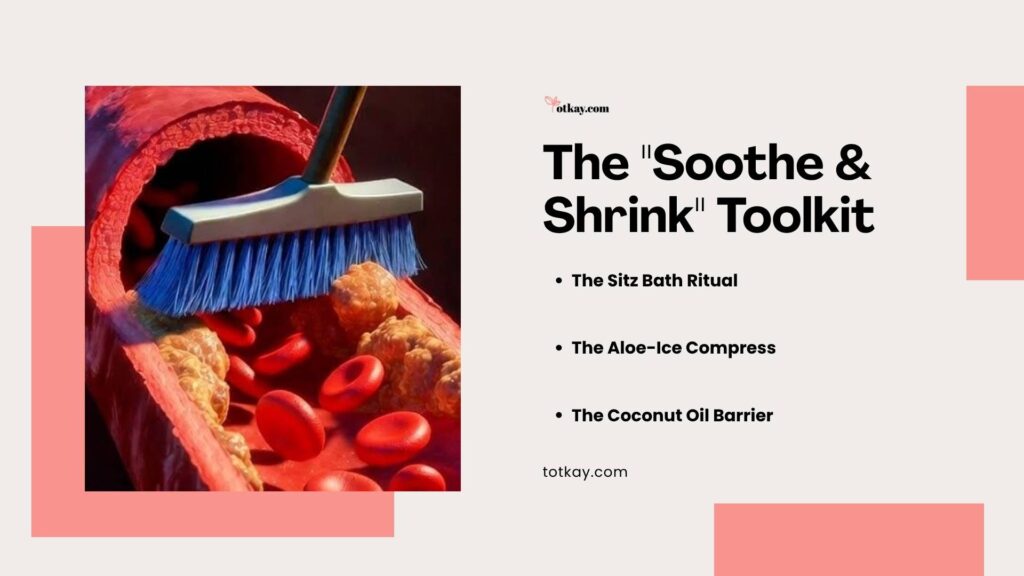
The “Soothe & Shrink” Toolkit
You can manage mild flare-ups effectively with a targeted, non-surgical approach. Use these natural methods to reduce inflammation and promote healing.
The Sitz Bath Ritual
Soaking the area in warm water provides immediate relief. Fill a shallow basin or your bathtub with a few inches of warm water. Do not add any harsh soaps or bubble baths. Sit in the water for ten minutes, two to three times a day. The warm water acts as a muscle relaxant for the anal sphincter and promotes blood flow for faster healing.
The Aloe-Ice Compress
Cold temperatures constrict blood vessels and reduce swelling quickly. Freeze pure aloe vera gel into small cubes. Wrap a single aloe cube in a soft, clean cloth and apply it gently to the affected area. The cold temperature shrinks the swollen vein, while the aloe vera heals the irritated skin.
The Coconut Oil Barrier
Friction during a bowel movement can worsen existing irritation. Apply a thin layer of virgin coconut oil to the area before you use the restroom. The oil acts as a protective sleeve that lubricates the canal and prevents painful micro-tears.
Mild vs. Severe Hemorrhoids: A Quick Comparison
Use the table below to evaluate your current condition and decide on the best course of action.
| Symptom | Mild Hemorrhoids (Manage at Home) | Severe or Advanced (See a Doctor) |
| Bleeding | Bright red streaks, only on toilet paper | Frequent, dripping, or dark-colored blood |
| Lump Profile | Soft, pea-sized, and relatively painless | Large, hard, and “stuck” outside the body |
| Pain Level | Mild ache or localized itching | Throbbing, stabbing pain that keeps you awake |
| Recovery | Three to seven days with lifestyle changes | Requires clinical intervention or surgery |
Why Your Piles Remain “Stuck”: The Silent Triggers
Sometimes, despite your best efforts, hemorrhoids refuse to shrink. You might unknowingly trigger them through common daily habits.
The Fiber and Water Trap
Fiber acts as a broom for your digestive system. However, if you increase your fiber intake but do not drink enough water, that fiber turns into digestive cement. This leads to severe constipation. You should aim to consume 25 grams of fiber and drink at least ten glasses of water every day.
The Heavy Lifting Mistake
Lifting heavy items at the gym or at work spikes your internal pelvic pressure. Many people mistakenly hold their breath when lifting a heavy load. This action forces intense pressure downward onto your anal veins. You must remember to exhale deeply as you lift the weight.
The “Wait” Habit
Ignoring the urge to use the restroom causes significant problems. When you wait, your body continues to absorb water from the stool in your colon. The stool becomes dry, hard, and incredibly difficult to pass later. If you feel the urge to go, you must go immediately.
Conclusion: Consistency is the Real Healer
You do not have to live with the daily irritation of mild hemorrhoids. By fixing your bathroom mechanics and keeping the affected area lubricated, you can stop the cycle of painful flare-ups for good.
Take control of your digestive health today with Totkay. Purchase a simple footstool for your bathroom, begin your daily sitz bath ritual, and implement the strict no-phone rule. Consistent action will restore your comfort and protect your body from future strain.
Frequently Asked Questions
What are the early signs of mild hemorrhoids?
Early signs include minor itching, slight rectal bleeding (bright red streaks on toilet paper), and small, soft anal lumps. These symptoms are usually painless and manageable at home. Recognizing these signs early allows you to take preventive measures, such as improving bathroom habits and reducing strain, to avoid worsening the condition.
How can I shrink mild hemorrhoids naturally?
Natural remedies include sitz baths, aloe vera ice compresses, and applying virgin coconut oil as a protective barrier. These methods reduce swelling, soothe irritation, and promote healing. Pair these treatments with a high-fiber diet and adequate hydration to prevent further strain during bowel movements.
When should I see a doctor for hemorrhoids?
Consult a doctor if you experience heavy bleeding, severe pain, or a hard, purple lump. Persistent symptoms that do not improve with home remedies or over-the-counter treatments may require medical evaluation to rule out other conditions or explore advanced treatment options.
Can lifestyle changes prevent hemorrhoids?
Yes, adopting healthy habits can prevent hemorrhoids. Use a footstool to align your colon, avoid prolonged sitting on the toilet, and switch to water-based cleaning methods. A fiber-rich diet and staying hydrated also help maintain regular bowel movements, reducing strain and pressure.
Does spicy food cause hemorrhoids?
Spicy food does not directly cause hemorrhoids, but it can irritate the anal area during bowel movements. This irritation may lead to straining, which worsens existing hemorrhoids. To minimize discomfort, pair spicy meals with fiber-rich foods and plenty of water to ease digestion.

Hi, I’m a dedicated writer at Totkay.com, passionate about sharing practical tips and solutions to make your life easier. Explore my articles for helpful insights and valuable advice. Stay connected for more expert content!
Related posts:
 Severe Period Pain on First-Day Home Remedies
 Improve Endurance Naturally: 10 Proven Ways to Go Further
 Natural Carb Blockers: 10 Pantry Hacks to Stop Weight Gain
 High Blood Pressure Remedy: 10 Tips for 2026
 Nature’s Chill Pill: 10 Herbal Stress Relief Tips (2026)
 What Causes Piles in Men? Expert Guide and Prevention Tips