
How to Remove Tea Stains From Fabric: Fresh and Dried Stain Guide

If tea has accidentally spilled on your clothes, how do you remove tea stains from fabric? This guide shows how to remove tea stains from clothes without damaging them. Start by checking the care label. Then blot the spill instead of rubbing it, and flush the stained area with cold water.
Next, pretreat the stain with your usual laundry detergent or a stain remover, and wash the garment as the label allows. Check the stain before using a dryer, because heat can set it. This guide follows university extension and Cleaning Institute advice, and no method can promise removal.
How to Remove Tea Stains From Clothes: Check the Care Label First
- A cup of tea can land on a white shirt at any time, and milk tea is an everyday drink in many homes, including Pakistani homes.
- Quick, label-led treatment gives you the best chance of getting rid of tea stains.
- Every fabric and every stain is different, so no single method can be promised to work on everything.
- The Cleaning Institute (ACI) says the care label is the best guide for a garment. Its symbols cover washing, bleaching, drying, ironing and dry cleaning.
- Product labels and usage instructions are more reliable than guesswork, so follow the directions on any product you use.
Fresh Tea Stains: What to Do Right Away
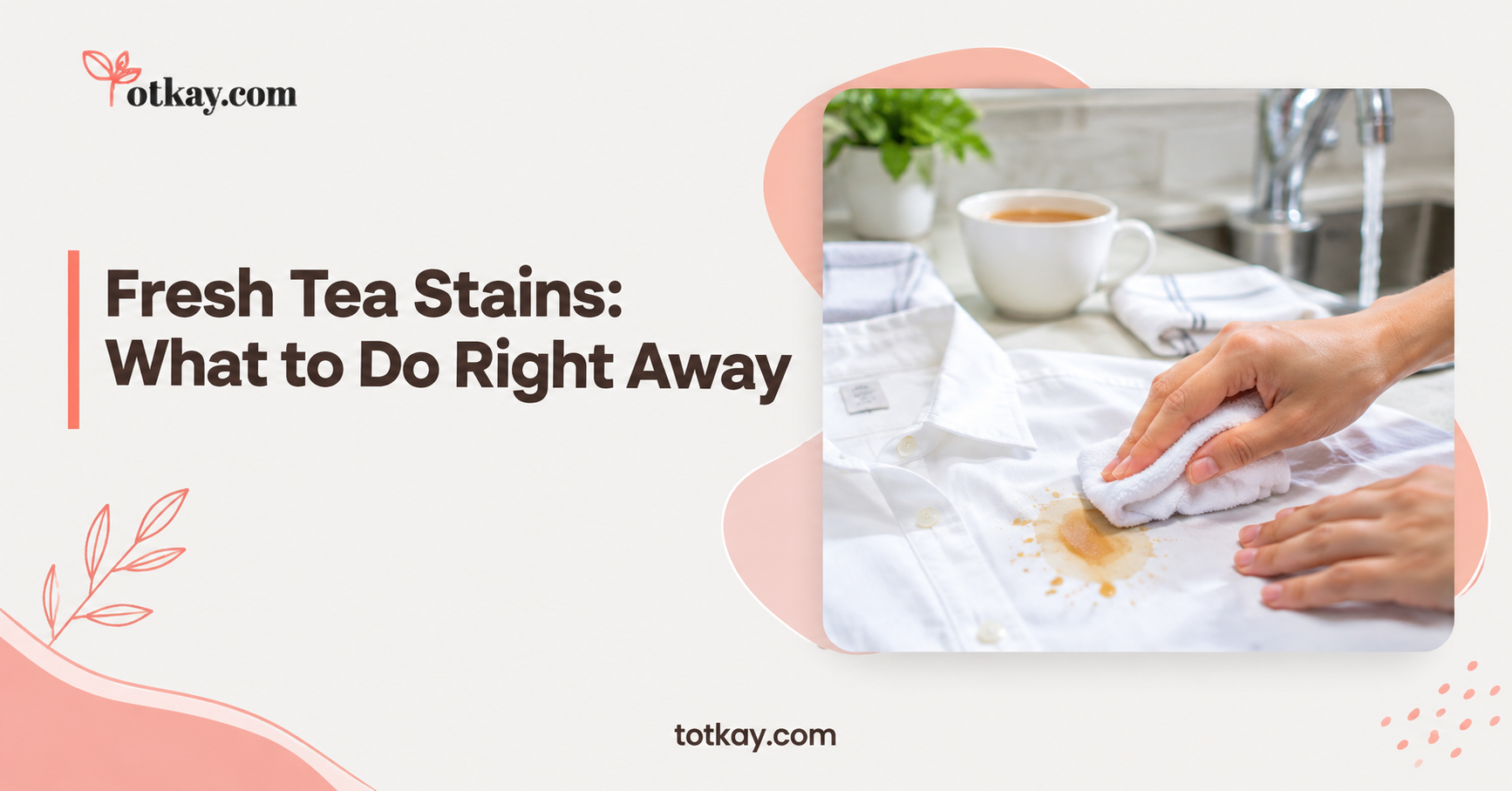
- Act quickly. The University of Illinois Extension says that stains that have been laundered and dried are almost impossible to remove.
- Left untreated, black tea or milk tea can leave stubborn tea stains, and most stains are easier to treat while fresh.
Steps:
- Check the care label. Blot excess liquid with a clean cloth, sponge or damp paper towel to absorb the extra tea. Avoid rubbing, because rubbing can spread the stain or damage the fabric.
- Flush the stained area with cool running water, or soak it in cold water. Mississippi State Extension suggests flushing plain or sweetened tea with cool water right away, or soaking it for 30 minutes in cool water.
- Pretreat with a prewash stain remover, liquid detergent, liquid detergent booster, or a paste of powdered laundry detergent and water. Use a small amount and let the product sit on the stained area.
- Wash the garment as the label directs. Wash the whole garment, not just the spot, to remove residue.
- Check the stain after washing, and do not use a dryer until the stain is gone.
Cold Water or Hot Water?
- For plain or sweetened tea, extension guides and ACI start with cool or cold water.
- ACI suggests cold water for regular stains, and the warmest water the fabric allows for heavily soiled or tough stains.
- Heat from a dryer or iron can set a stain, so avoid heat until the stain is gone.
Milk Tea vs Plain Tea Stains
- Milk tea contains milk, cream or sugar, so the stain is not just tea.
- Mississippi State Extension says that for tea or coffee with cream, you should rub in detergent and wash in the hottest water the fabric allows, using a bleach that is safe for the fabric.
- For older stains of this kind, it suggests pretreating or soaking with an enzyme product before laundering.
- We did not find a separate verified method for milk tea, so follow the care label and product instructions.
- The same basic steps apply to coffee stains.
How to Remove Dried Tea Stains
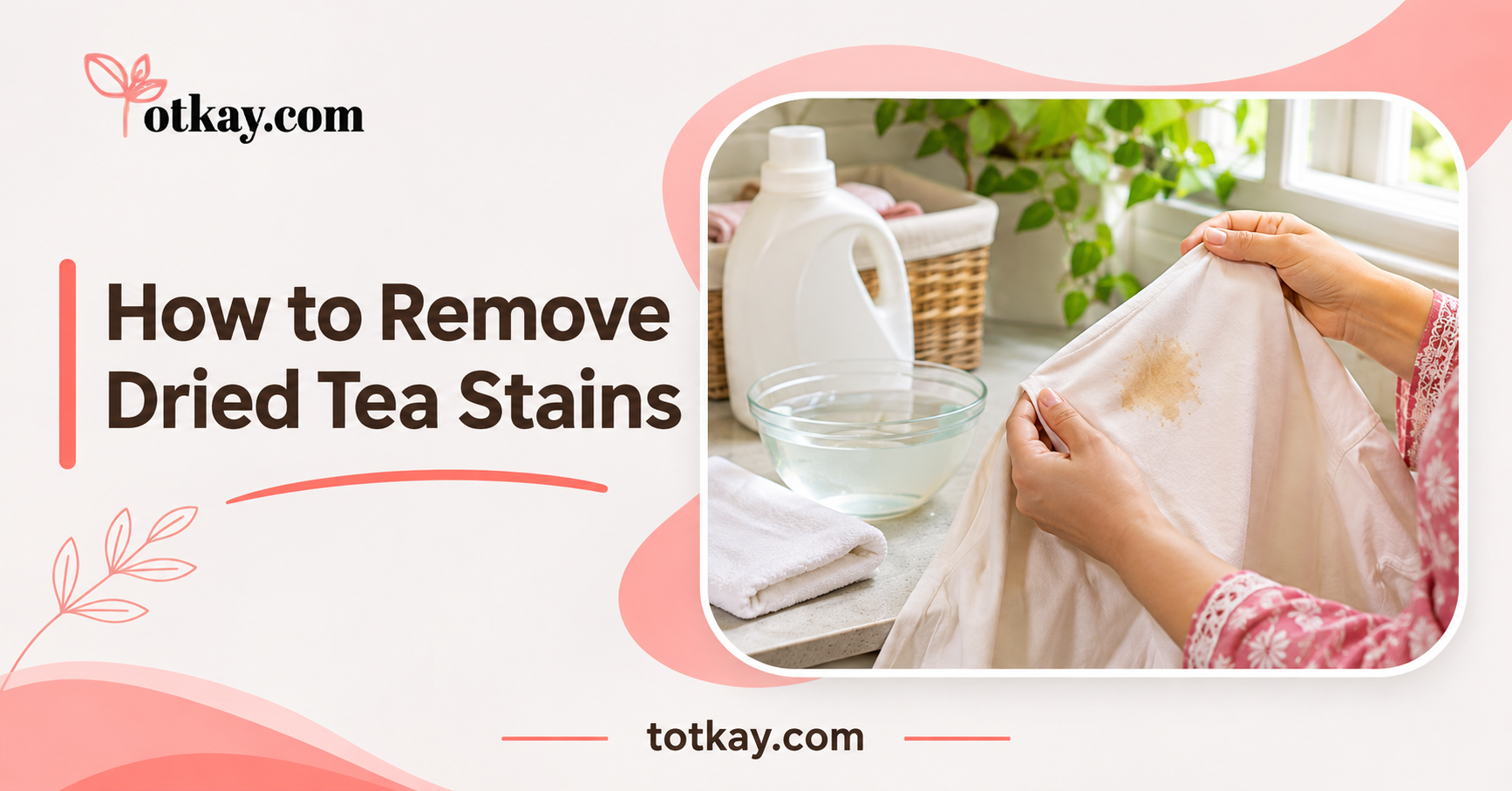
- Dried tea stains can become stubborn tea stains, and tough stains may need more than one attempt.
- For washable fabrics, the University of Illinois Extension suggests soaking for 15 minutes in lukewarm water with a little dish soap or dish detergent and one tablespoon of white vinegar, then rinsing.
- If the stain remains, soak the garment for 30 minutes in warm water with an enzyme presoak.
- If color remains, launder with chlorine bleach if the fabric allows it, or with oxygen bleach.
- Never mix chlorine bleach with ammonia.
- If the stain is still there, do not put the garment in the dryer. Air dry it and pretreat again.
- Nail polish is a different stain with different steps. See our guide on How to Remove Nail Polish from Clothes: Safe Steps for Every Fabric.
Vinegar, Baking Soda, Lemon Juice and Hydrogen Peroxide: What the Sources Say
- Many websites suggest a mixture, solution or paste of white vinegar, baking soda, lemon juice or hydrogen peroxide.
- White vinegar, which contains acetic acid, appears in the University of Illinois Extension method above for washable fabrics.
- The Mississippi State and Texas A&M guides do not list baking soda or lemon juice as tea stain treatments.
- The New Mexico State guide lists these items in a stain-removal kit but gives no tea steps.
- We found no reliable source for salt or similar home mixes either.
- So we do not recommend a thick layer of baking soda, an overnight treatment or lemon juice, and we do not promise that any of them removes stains.
- If you use vinegar, check the fabric label and rinse well so the vinegar smell and odors do not stay on the surface of the fabric.
- For other household cleaning jobs, see our DIY Cleaning Products and Homemade Dishwashing Liquid guides, but do not try them on tea stains without a label or reliable source.
- Brand products such as Vanish products have their own usage instructions and soak times. We do not rank brands, so read the product label and follow its time and fabric limits.
Effective Tips for White Clothes, Colored Fabrics and Delicate Fabrics
- For tea and coffee stains, ACI says to use chlorine bleach only if the fabric can take it, or to use oxygen bleach.
- Texas A&M AgriLife says to use diluted chlorine bleach only on colorfast fabrics, and to use non-chlorine or oxygen bleach on colored fabrics.
- On white clothes and a white shirt, read the label first too.
- Before using bleach or a pretreatment on colored fabric, test an inconspicuous area (a hidden area) for colorfastness. A test shows whether the color bleeds, but it does not guarantee that every treatment is safe.
- Do not use prewash stain removers on neon or fluorescent colors (ACI).
- For wool, linen, delicate fabrics and hand wash items, follow the care label.
- If the label says dry clean only or shows a dry cleaning symbol, talk to a professional cleaner instead of treating the stain at home.
Check the Stain Before Drying or Ironing
- After washing, look at the stained area on the clothing.
- If the stain is still there, do not use the dryer, because heat can set it for good.
- The New Mexico State guide says not to press or dry stained fabric.
- Texas A&M AgriLife says to air dry if a stain remains.
- Pretreat and wash again.
Common Mistakes When Treating Tea Stains
- Rubbing hard, which can spread the stain or damage the fabric.
- Using bleach without checking the care label.
- Putting the garment in the dryer while the stain is still visible.
- Mixing different cleaning products together.
- Following fixed soak times for baking soda, lemon juice or brand products without a label or reliable source.
Frequently Asked Questions
Can dried tea stains be removed?
Sometimes, but it is not guaranteed. The University of Illinois Extension and ACI mention an enzyme presoak and repeating the treatment. Both advise keeping the garment out of the dryer until the stain is gone.
Is tea stain removal guaranteed?
No. Fabric, color, the age of the stain and the product used all matter. We did not find any method with a guaranteed result.
Does hot water remove tea stains?
For plain or sweetened tea, extension guides and ACI start with cool water for flushing or soaking. Choose the wash temperature from the garment label and the product directions.
Will white vinegar remove tea stains?
The University of Illinois Extension describes a vinegar soak for washable fabrics, but it does not promise removal. Check the label and rinse well.
Does the same method work on coffee stains?
ACI gives the same steps for tea and coffee: use cool water, pretreat, wash as the label allows, and check the stain before drying.
When should I stop treating a stain at home?
Stop and ask a professional cleaner if:
- The label says dry clean only.
- The garment is very delicate or valuable.
- The color starts to come off.
- The stain stays after several attempts.
Conclusion
For tea stains, the most important steps are to check the label, blot right away, flush with cool water, pretreat, and check the stain before drying. No method is guaranteed on every fabric. For more cleaning ideas, see our Cleaning Hacks category and the Home & Kitchen Tips section.

Hi, I’m a dedicated writer at Totkay.com, passionate about sharing practical tips and solutions to make your life easier. Explore my articles for helpful insights and valuable advice. Stay connected for more expert content!
Related posts:
 Best Remedies to Make Dead Sea Mud Masks at Home
 How to Remove Nail Polish from Clothes: Safe Steps for Every Fabric
 How to Get Rid of Garden Snakes Home Remedies
 Ultimate Hair Care Guide for Healthy, Strong Hair
 DIY Cleaning Products: Homemade Cleaner Recipes and Safety Tips
 How to Clean Burnt Pots and Pans at Home (Jale Hue Bartan Saaf Karne Ka Tarika)