
Appendix Pain Gut Totkay: Signs You Must Not Ignore
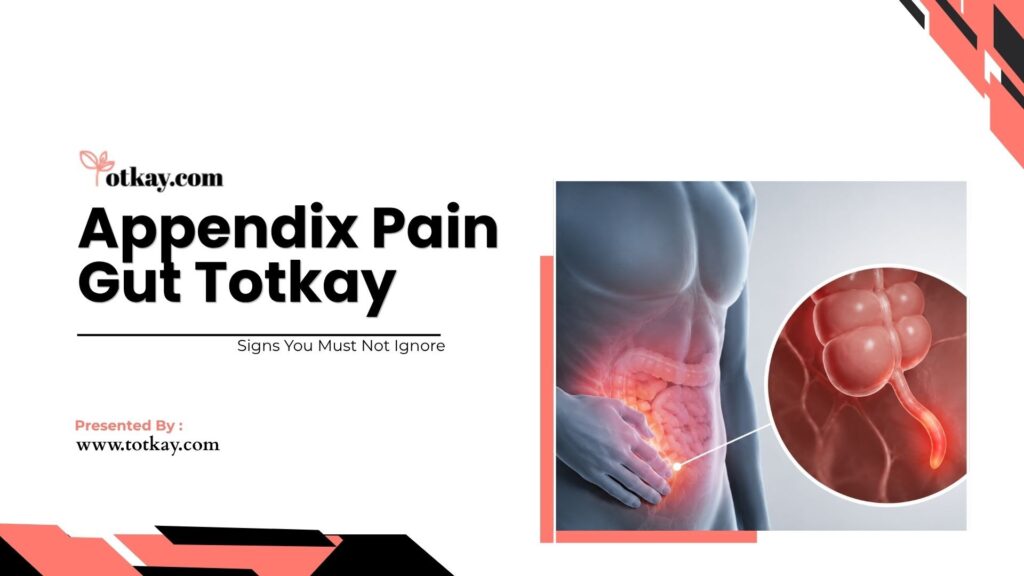
Appendix pain gut totkay should never replace medical care because appendicitis can become an emergency. Appendicitis early signs may include pain near the belly button that moves to the lower right side, nausea, fever, vomiting, and loss of appetite.
While mild home remedies might help with general gas or digestive discomfort, persistent pain in the lower right gut requires a doctor’s attention, especially if it worsens. The link between gut bacteria and the appendix is an area of research, but it doesn’t prevent appendicitis. If surgery is needed, recovery should always follow proper medical guidance.
Why So Many People Search for Appendix Pain Totkay
Many families in Pakistan and India feel sudden stomach pain and rush to find a quick totkay for relief. This habit feels normal, but it carries real risk when the pain comes from the appendix.
Lower-right abdominal pain can come from many causes. Some are harmless, like gas. Others, like appendicitis, can turn serious within hours.
The danger is simple. Appendix pain gut totkay can delay proper treatment when readers use them in the wrong way. A blocked or infected appendix can burst, and that spreads infection inside the body.
This guide explains symptoms, emergency signs, safe home support, the appendix-gut bacteria link, and appendix surgery recovery. Most of all, it makes one point clear: suspected appendicitis always needs a doctor.
What Is the Appendix?
The appendix is a small, finger-shaped pouch attached to the large intestine. It sits in the lower-right side of the abdomen.
This location matters. The appendix sits very close to the same area where people often feel sharp appendicitis pain. That is why lower-right pain deserves careful attention, not guesswork.
What Does the Appendix Do?
Doctors once thought the appendix served no real purpose. New research changed that view and gave the organ more respect.
The appendix may play a role in immune defense and gut bacteria balance. Even so, people live normal, healthy lives after the appendix is removed.
Before the points below, remember one thing. A possible gut role does not mean you can treat appendicitis at home.
- Possible immune tissue: The appendix contains immune cells that may support gut defense.
- Bacteria reservoir: Research describes the appendix as a possible “safe house” for helpful gut microbes.
- Life without it: Removal does not stop you from living and digesting food normally.
A 2025 appendix microbiome review describes the appendix as a possible “safe house” for beneficial gut bacteria that may help replenish gut microbes after disruptions such as infection or antibiotic use.
What Is Appendicitis?
Appendicitis means inflammation of the appendix. It often starts when the appendix becomes blocked or infected.
If no one treats it, the appendix can swell, fill with pus, and finally burst. A burst appendix spreads infection across the abdomen, which becomes a life-threatening problem.
Why Appendicitis Can Be Dangerous
Appendicitis rarely stays mild for long. The risk grows with each passing hour, which is why early action matters so much.
These points explain why doctors treat appendicitis as urgent:
- Rapid swelling: The inflamed appendix swells and presses on nearby tissue.
- Spreading infection: Bacteria can move beyond the appendix into the abdomen.
- Rupture risk: A ruptured appendix can cause peritonitis, a severe infection.
- Urgent surgery: Many patients need surgery and antibiotics quickly.
- Cost of delay: Waiting too long raises the risk of serious complications.
Appendicitis Early Signs You Should Not Ignore
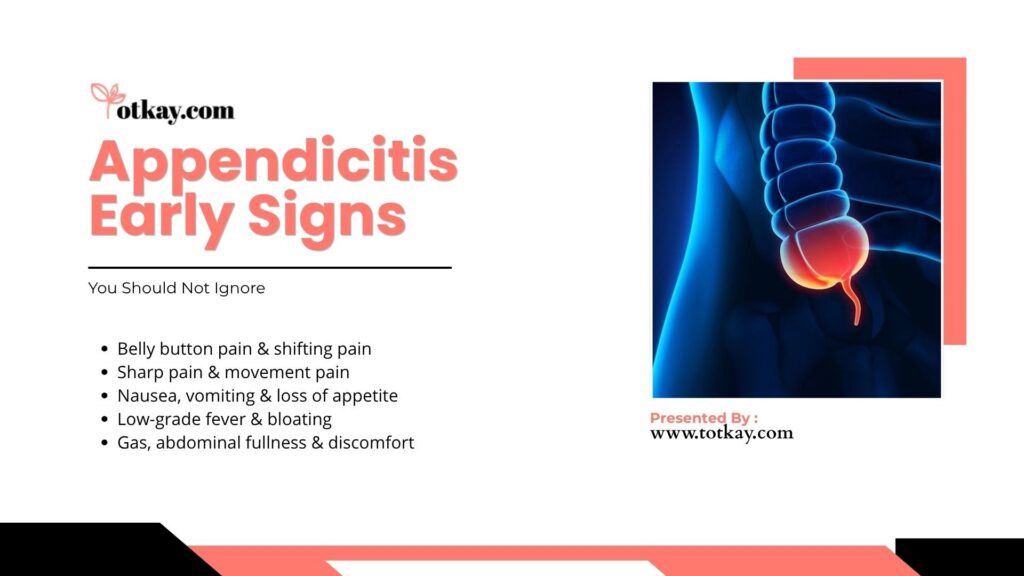
Early symptoms often look harmless. Many people mistake them for gas, acidity, stomach upset, or food poisoning.
The trick is to watch the pattern of pain, not just the pain itself. Appendicitis tends to follow a path that other stomach problems do not.
Common Early Signs to Watch
These signs help you notice trouble before it grows worse. Treat them as warnings, especially when more than one appears together.
- Belly button pain: Pain often starts near the navel.
- Shifting pain: Pain then moves to the lower-right abdomen.
- Sharper pain: The pain becomes constant or sharper over time.
- Movement pain: Walking, coughing, or jumping makes it worse.
- Nausea and vomiting: These often follow the pain.
- Loss of appetite: A strong drop in hunger is a key clue.
- Low-grade fever: A mild fever may appear.
- Bloating and gas: The belly may feel full and tight.
- Bowel changes: Constipation or diarrhea can occur.
- Tenderness: The lower-right area hurts when pressed.
NHS guidance also warns that appendicitis pain may start in the middle of the tummy and later travel to the lower right side, where it may become constant and severe.
Appendix Pain vs Gas Pain: A Red-Flag Comparison
It’s easy to mistake appendicitis for simple gas pain, but this confusion wastes precious time. When dealing with appendix pain, gut totkay (home remedies) are not a safe bet. .
This table shows how the two feel different and what action each pattern needs.
| Symptom Pattern | More Like Gas or Indigestion | More Like Possible Appendicitis | Risk Level | What to Do |
| Pain location | Moves around the abdomen | Settles in lower-right side | High | Get medical advice if pain localizes |
| Pain intensity | Comes and goes | Gets worse over hours | High | Do not rely on totkay |
| Movement | Improves after passing gas | Worsens with walking or coughing | High | Seek urgent care |
| Appetite | Normal or mildly reduced | Strong loss of appetite | Medium | Watch closely and call a doctor |
| Fever and vomiting | Usually absent | Fever and vomiting may appear | High | Medical check needed without delay |
What Else Causes Lower Right Abdominal Pain?
Not all lower right-sided gut pain is appendicitis. Still, you should never guess when symptoms feel strong or keep growing.
Lower-right abdominal pain can come from:
- Gas
- Constipation
- Stomach infection
- Food poisoning
- Appendicitis
- Kidney stone
- Urinary infection
- Menstrual cramps
- Ovarian cysts
- Pelvic infection
- Crohn’s disease or bowel inflammation
- Muscle strain
Home Remedies for Abdominal Discomfort: What’s Safe?
Home care is not a treatment for appendicitis. It may only ease mild digestive discomfort while you watch your symptoms or wait for advice.
Read the next point carefully before you try anything. Safe appendix discomfort home care applies only when there are no red flags.
Safer Support for Mild Digestive Discomfort
Use these steps only for mild discomfort without warning signs. If pain turns lower-right, sharper, or pairs with fever or vomiting, stop and seek care.
- Rest: Lie down and avoid strain.
- Sip water: Take small, slow sips to stay hydrated.
- Eat light: Choose plain, easy foods if you feel hungry.
- Avoid heavy meals: Skip oily, spicy, and fried food.
- Do not overeat: Smaller portions reduce pressure on the gut.
- Skip fizzy drinks: Carbonated drinks add gas and bloating.
- Avoid laxatives: Do not force bowel movements.
- Do not press the area: Repeated poking can worsen pain.
- Call a doctor: Reach out if pain stays or shifts.
What Not to Do With Suspected Appendix Pain
Some common totkay habits can make appendix pain far more dangerous. Avoid these actions if you suspect appendicitis.
- No strong laxatives: They can strain an inflamed appendix.
- No abdominal massage: Pressing may worsen the problem.
- No heating pads: Heat on severe pain can increase risk.
- No random antibiotics: Self-medication hides the real picture.
- No repeated painkillers: Masking pain delays correct treatment.
- No waiting on totkay: Fever or vomiting means act now.
- No heavy meals: Surgery may need an empty stomach.
When to Seek Emergency Medical Care
This section may save a life, so read it closely. Certain signs mean you should go straight to a doctor or emergency room.
Do not wait for the appendix pain gut totkay to work if any of these appear:
- Worsening lower-right pain: Pain that keeps building.
- Pain with fever: A combination that signals infection.
- Pain with vomiting: Especially when it does not stop.
- Appetite loss with pain: A strong red flag together.
- Movement pain: Walking or coughing hurts sharply.
- Hard or swollen belly: A rigid abdomen needs urgent care.
- Dizziness or weakness: Possible signs of spreading infection.
- Vulnerable patients: Children, pregnant women, and the elderly with new pain.
- Recent surgery: New pain after abdominal surgery.
Appendix Surgery Recovery: What to Expect
An appendectomy is the common treatment for appendicitis. Appendix surgery recovery depends on the type of surgery and whether the appendix burst.
Laparoscopic surgery often heals faster than open surgery. A ruptured appendix usually needs longer care and more antibiotics.
Common Recovery Guidance
Follow your surgeon’s instructions first. Recovery advice can differ between laparoscopic and open surgery.
Common guidance may include:
- Keep the incision clean and dry
- Take medicines as prescribed
- Eat soft foods at first if advised
- Walk gently when allowed
- Avoid heavy lifting until cleared
- Watch for fever, redness, swelling, pus, or worsening pain
- Attend follow-up appointments
- Ask before restarting exercise
- Ask before using herbal remedies or supplements
Do not compare your recovery with someone else’s. Burst appendix cases often need more careful recovery.
What to Eat After Appendix Surgery
Your diet should follow medical advice, especially after a complicated case. Gentle foods give the gut time to settle.
- Clear fluids: Take them if your doctor advises.
- Soft foods: Choose easy-to-digest meals.
- Khichdi and plain rice: Light desi options that sit well.
- Soup or yakhni: Warm, mild, and easy on the stomach.
- Banana and toast: Simple foods for early recovery.
- Yogurt: Only if you tolerate it and your doctor allows.
- Slow return: Move to normal meals step by step.
- Enough water: Stay well hydrated during healing.
Common Myths About Appendix Pain
Many myths spread through families and social media, and they cause real harm. Clearing them up helps you make safer choices.
- Easy to tell apart: Gas and appendix pain often look the same early on.
- Lemon water cure: No drink can cure appendicitis.
- Heating pad is safe: Heat can be risky for severe stomach pain.
- Home antibiotics work: Self-prescribed antibiotics cannot fix appendicitis safely.
- Less pain means safe: Reduced pain can sometimes signal a rupture.
- Appendix is useless: It may have an immune and bacteria-related role.
- Same recovery for all: Recovery time varies by case and surgery type.
- Children explain clearly: Kids often cannot describe appendix pain well.
Final Thoughts
Appendix pain gut totkay cannot treat appendicitis. The early signs may begin near the belly button and move to the lower-right abdomen. Pain that worsens with movement, fever, vomiting, or appetite loss needs urgent medical attention.
Mild appendix discomfort home care is only for non-severe digestive discomfort without red flags. Gut lower right pain needs medical attention if it worsens, localizes, or comes with fever, nausea, vomiting, or appetite loss. The appendix gut bacteria connection is interesting, but not a home treatment.
When in doubt, choose the doctor over the totkay. That single choice protects your health.
Frequently Asked Questions
What are the early signs of appendicitis?
Early appendicitis often starts with pain near the belly button that moves to the lower-right abdomen. You may notice nausea, vomiting, loss of appetite, and a low-grade fever. Bloating, constipation, or diarrhea can appear too. The pain usually grows worse with walking, coughing, or movement. When several signs show up together, treat it as urgent and see a doctor right away.
Can appendix pain be treated with gut totkay?
No. Appendix pain gut totkay cannot treat confirmed or suspected appendicitis. Mild digestive discomfort may ease with rest, water, and light food. However, worsening lower-right pain, fever, or vomiting needs medical care without delay. Totkay used in the wrong situation can hide warning signs and push back proper treatment, which raises the risk of a burst appendix and serious infection.
Is the appendix connected to gut bacteria?
Yes, research suggests the appendix gut bacteria link is real. The appendix may store helpful gut bacteria and may help refill the gut after diarrhea or infection. It also holds immune tissue. Still, this role does not prevent or treat appendicitis.
What should I avoid if I suspect appendix pain?
Avoid strong laxatives, since they can strain an inflamed appendix. Do not massage the lower-right area or place a heating pad on severe pain. Skip random antibiotics and repeated painkillers, because they hide warning signs. Avoid heavy meals if surgery may be needed.
What helps appendix surgery recovery?
Smooth appendix surgery recovery depends on following your surgeon’s instructions. Keep the wound clean and dry, take prescribed medicines, and start with soft foods if advised. Gentle walking helps circulation, while heavy lifting should wait until you are cleared. Stay hydrated and attend every follow-up.

Hi, I’m a dedicated writer at Totkay.com, passionate about sharing practical tips and solutions to make your life easier. Explore my articles for helpful insights and valuable advice. Stay connected for more expert content!
Related posts:
 Severe Period Pain on First-Day Home Remedies
 Improve Endurance Naturally: 10 Proven Ways to Go Further
 Natural Carb Blockers: 10 Pantry Hacks to Stop Weight Gain
 Nature’s Chill Pill: 10 Herbal Stress Relief Tips (2026)
 What Causes Piles in Men? Expert Guide and Prevention Tips
 Pregnancy Hemorrhoids: Safe Relief and Natural Care