
Colitis Home Remedy: Natural Totkay for Colon Inflammation Relief
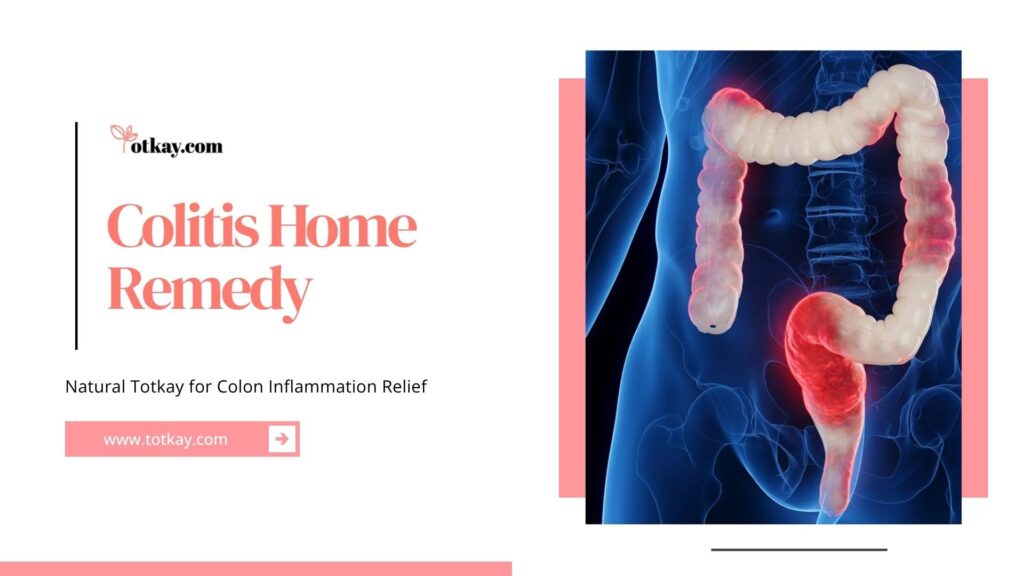
A colitis home remedy focuses on soothing the digestive tract using gentle foods, proper hydration, and stress management. A natural colon inflammation remedy usually includes eating easy-to-digest items like yogurt, bananas, and rice water to reduce bowel irritation.
While a colitis natural treatment supports daily comfort and helps manage mild flare-ups, it does not replace medical care. People often use these lifestyle adjustments alongside professional guidance to improve their overall gut health and maintain long-term remission.
Understanding Colitis and Why Colon Inflammation Affects Daily Life
Colitis affects more than bathroom habits. It can disturb eating, sleep, work, travel, family routines, and emotional peace. Many people try random totkay first, but they often miss the most important step: understanding what kind of colon problem they have.
Doctors use the word colitis when the colon lining becomes inflamed. NIDDK explains that ulcerative colitis causes inflammation and ulcers in the large intestine, and doctors diagnose it through symptoms, medical history, blood tests, stool tests, and endoscopy when needed.
What Is Colitis?
Colitis refers to inflammation of the inner lining of the colon. This inflammation disrupts normal digestive processes and causes significant discomfort. The condition forces the bowel to contract more frequently and urgently.
How Colon Inflammation Changes Digestion
Inflammation damages the intestinal lining and reduces its ability to absorb water and nutrients. This damage causes food to move through the digestive tract too quickly. You experience this rapid movement as frequent diarrhea and ongoing abdominal discomfort.
Why Symptoms Often Come and Go in Cycles
Colitis does not always cause constant pain. Patients usually experience periods of severe symptoms, known as flare-ups, followed by periods of complete remission. Stress, dietary choices, and minor infections often trigger these sudden flare-ups.
Ulcerative Colitis vs General Colon Irritation: Understanding the Difference
General stomach bugs pass quickly, but chronic colon conditions require a long-term management strategy. You must know exactly what you are dealing with before trying new treatments.
What Is Ulcerative Colitis?
Ulcerative colitis is a chronic inflammatory bowel disease. It affects the large intestine and can cause diarrhea, blood in stool, urgency, abdominal pain, and weight loss.
Doctors usually treat ulcerative colitis with medicines that reduce inflammation and help maintain remission. NIDDK notes that some people may need surgery when medicines do not control disease or complications appear.
Why Proper Diagnosis Matters
A person may think they have colitis when they actually have an infection, IBS, food intolerance, or another gut condition. These problems can share symptoms, but they need different care.
A diagnosis helps you avoid unsafe restrictions, wrong remedies, and delayed treatment. It also helps your doctor decide whether you need medicines, stool tests, blood tests, imaging, or endoscopy.
Conditions That Can Mimic Colitis Symptoms
Many gut problems create cramps, loose stool, bloating, and urgency. You should not assume chronic colitis without medical guidance.
These conditions can look similar at first:
- IBS: It can cause cramps and bowel changes, but it does not create visible colon inflammation.
- Food intolerance: Dairy, gluten, or other triggers can cause diarrhea and bloating in sensitive people.
- Bacterial infection: Food poisoning can cause sudden diarrhea, cramps, fever, and weakness.
- Medication reaction: Some medicines can upset the gut and change stool pattern.
- Stress-related gut symptoms: Anxiety can increase urgency and cramps through the gut-brain connection.
A doctor can help separate short-term irritation from chronic inflammatory disease.
Early Signs That the Colon May Be Under Stress
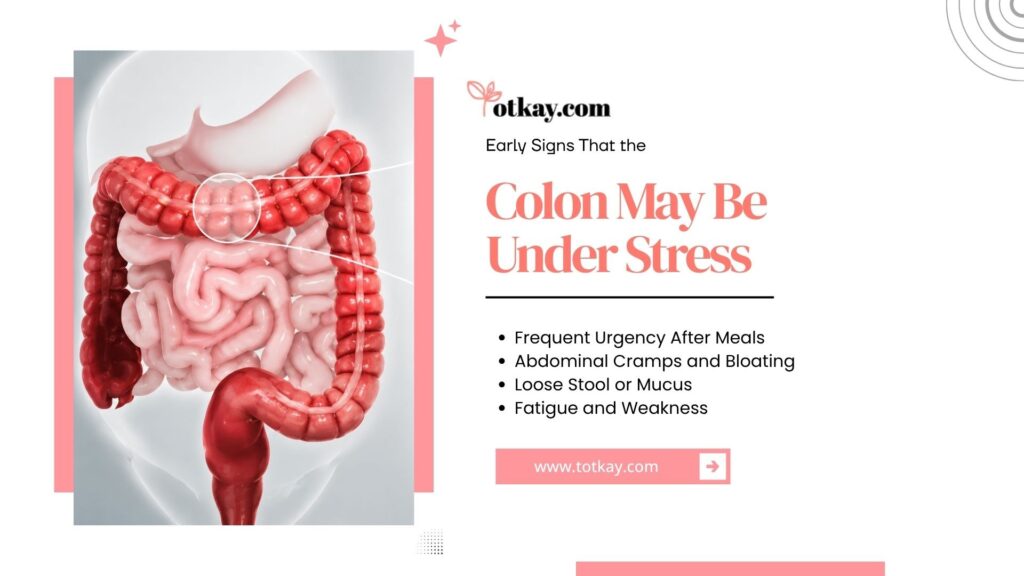
Catching a flare-up early gives you the best chance to manage it with a gentle colitis natural treatment. Your body always sends warning signals before a full crisis begins.
Frequent Urgency After Meals
Your colon may become hyperactive when inflammation first begins. You might feel a sudden, intense need to use the restroom immediately after eating a normal meal.
Abdominal Cramps and Bloating
Inflammation can make colon muscles spasm. These spasms often feel like rolling cramps in the lower abdomen.
Bloating may also appear when the gut struggles to handle gas. Carbonated drinks, fried snacks, and large meals can make this discomfort worse for some people.
Loose Stool or Mucus
Loose stool can happen when the colon fails to absorb water properly. Mucus may appear when the colon lining becomes irritated.
Blood, black stool, persistent diarrhea, or severe pain needs medical care. Do not treat these signs with only totkay.
Fatigue and Weakness
Chronic gut inflammation can drain energy. Diarrhea can also reduce fluids and minerals.
NHS guidance for ulcerative colitis recommends a balanced diet and plenty of fluids to avoid dehydration and nutrient problems.
Everyday Habits That May Aggravate Colon Inflammation
Small daily choices often determine whether your colon stays calm or becomes angry. You must identify and remove hidden stressors from your routine.
Highly Processed Foods
Packaged snacks, sugary foods, processed meats, fried items, and ultra-processed meals can burden digestion. A 2021 review on IBD food groups notes that processed foods, alcohol, sweetened beverages, red meat, and sugar should often stay limited or avoided in IBD-focused dietary patterns.
Excessive Spicy Meals During Active Symptoms
Spices like red chili powder contain capsaicin, which directly irritates the digestive tract. Eating spicy curries during a flare-up acts like pouring salt on an open wound.
Inconsistent Eating Schedules
Your digestive system thrives on a predictable routine. Skipping meals and eating massive portions late at night overwhelms the colon and forces it to work too hard.
Chronic Stress and Digestive Discomfort
Your brain and your gut communicate constantly through the vagus nerve. High mental stress sends panic signals to your colon, which directly triggers spasms and urgency.
Poor Hydration Habits
Your colon needs adequate water to process waste smoothly. Drinking too little water forces the bowel to strain, which aggravates existing inflammation.
Colon-Friendly Choices vs Common Flare-Up Triggers
Choosing the right foods during a flare-up can drastically reduce your pain. This table highlights common dietary swaps that support a calmer digestive tract.
Food triggers vary from person to person. Tracking personal reactions often helps you identify your specific patterns over time.
| Colon-Friendly Choice | Why It May Feel Easier to Digest | Common Trigger | Possible Effect During Flare-Ups | Better Alternative |
| Plain white rice | Contains low fiber and digests quickly | Very spicy foods | Increases bowel spasms and pain | Mildly spiced yakhni |
| Ripe bananas | Provides easy-to-digest pectin fiber | Fried foods | Causes rapid transit and diarrhea | Baked or steamed foods |
| Homemade yogurt | Supplies natural probiotics | Excess caffeine | Stimulates rapid bowel movements | Herbal chamomile tea |
| Well-cooked carrots | Breaks down easily in the stomach | Carbonated drinks | Traps gas and causes severe bloating | Plain coconut water |
| Lean chicken breast | Provides protein without heavy fats | Highly processed snacks | Irritates the intestinal lining | Fresh homemade applesauce |
Colitis Diet: Foods That May Feel Gentler During Digestive Flare-Ups
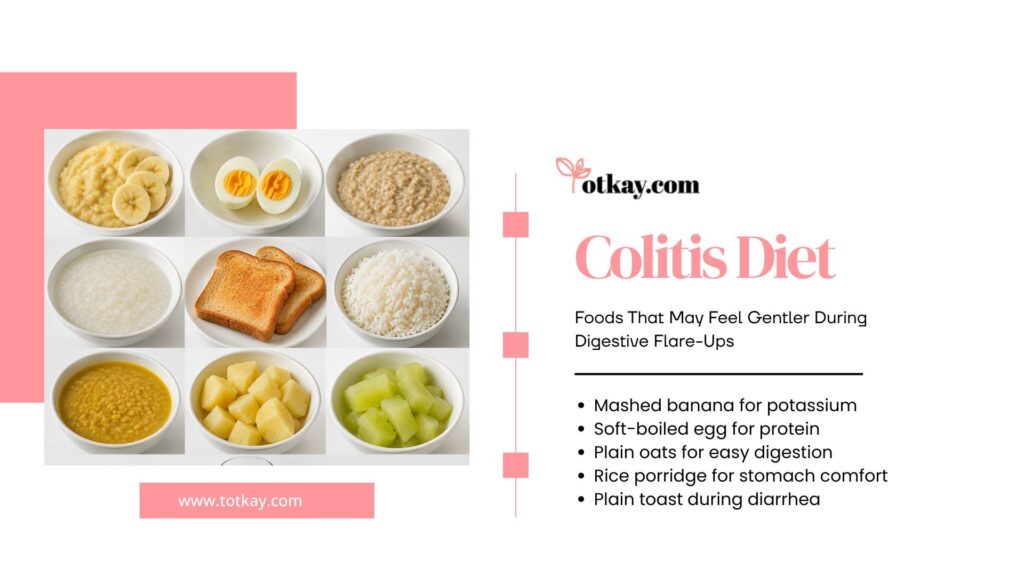
A proper colitis diet in Pakistan focuses on traditional, easily digestible foods that calm the stomach. When prepared correctly, local ingredients can offer excellent healing properties and serve as a natural colitis home remedy.
Easy-to-Digest Breakfast Ideas
Breakfast should give energy without forcing the gut to work too hard. If your symptoms flare in the morning, choose soft and simple foods.
Gentle options may include:
- Mashed banana: It feels soft and helps replace potassium after loose stool.
- Soft boiled egg: It gives protein without frying oil.
- Plain oats: Cook them well and keep the texture soft.
- Rice porridge: It feels light when the stomach feels unsettled.
- Plain toast: It may suit some people during diarrhea.
Avoid testing too many foods at once. Add one food and observe your response.
Lunch Meals That Reduce Digestive Burden
Choosing the right midday meals is an effective colitis home remedy that can prevent afternoon bloating. Focus on soft, thoroughly cooked foods that are gentle on your digestive system.
Traditional desi meals can work beautifully if you modify the spices. Try these comforting options:
- White rice with moong daal: This combination provides gentle carbohydrates and easily digestible protein.
- Boiled potatoes: Potatoes offer comforting calories and potassium without irritating the gut lining.
- Steamed bottle gourd (loki): This mild vegetable contains high water content and digests very easily.
Dinner Habits That Support Digestive Comfort
Eating heavy meals right before bed guarantees a night of digestive distress. You must keep your evening meals light and simple.
Why Hydration Matters During Colon Inflammation
Diarrhea drains your body of essential fluids and electrolytes very rapidly. Following a strict colitis diet in Pakistan means nothing if you do not drink enough water to keep your system hydrated.
Natural Remedies Commonly Used to Support Digestive Comfort
Many people turn to a colitis home remedy to supplement their medical treatments. Natural ingredients often provide a soothing effect on irritated tissues.
Aloe Vera and Colon Comfort
People have used aloe vera colitis remedies for generations to soothe internal inflammation. The gel inside the plant contains compounds that may help calm irritated digestive tissues. You must consume food-grade aloe vera juice carefully, as taking too much can cause a laxative effect.
Yogurt and Beneficial Gut Bacteria
Your colon relies on millions of good bacteria to process food properly. Homemade yogurt contains active probiotics that help restore this bacterial balance. You should test a small amount first, as some individuals experience dairy sensitivity during flare-ups.
Isabgol for Bowel Regularity
Isabgol, or psyllium husk, acts as a gentle regulator for your bowel movements. It absorbs excess water during diarrhea and adds soft bulk to the stool. You must drink at least two glasses of water with isabgol to prevent intestinal blockages.
Chamomile Tea for Digestive Relaxation
Chamomile contains natural antispasmodic compounds that relax the muscles in your intestines. Drinking a warm cup of this tea after meals helps reduce sudden abdominal cramping. It also promotes better sleep, which aids the body in healing.
Coconut Water for Hydration Support
Frequent bowel movements deplete your body of crucial electrolytes like potassium and sodium. Coconut water serves as a natural oral rehydration solution. It replenishes these lost minerals much better than plain water or sugary sports drinks.
Why Stress and Gut Health Are Closely Connected in Colitis
Mental anxiety directly impacts your physical digestion. You cannot heal your colon if your mind remains in a constant state of panic.
The Gut-Brain Connection
A massive network of neurons connects your brain directly to your digestive tract. When your brain perceives danger or stress, it immediately shuts down normal digestive functions.
Why Stress May Intensify Symptoms
Stress hormones like cortisol increase systemic inflammation throughout your entire body. This chemical reaction causes the colon to spasm, leading to unpredictable bowel movements and sharp pain.
Relaxation Habits That Support Digestive Comfort
You must actively train your nervous system to calm down. Daily relaxation practices tell your gut that it is safe to digest food normally.
Simple stress management techniques provide real physical relief. Consider adding these habits to your routine:
- Deep belly breathing: Taking slow, deep breaths activates the vagus nerve and immediately calms bowel spasms.
- Gentle walking: Light physical activity helps move trapped gas without putting pressure on the abdomen.
- Digital detox: Turning off stressful news and social media before bed lowers cortisol levels and improves sleep quality.
Final Thoughts
A colitis home remedy should focus on gentle food, hydration, rest, stress control, and personal trigger tracking. Soft rice, ripe banana, light yakhni, plain potatoes, mild moong daal, and homemade dahi if tolerated may support comfort during mild symptoms.
A safe colon inflammation remedy should never promise a cure. Colitis natural treatment works best as support alongside medical diagnosis and care.
Use desi totkay carefully and avoid extreme dietary restrictions. Seek immediate medical help if you experience blood in your stool, fever, severe pain, persistent diarrhea, dehydration, or unintended weight loss.
For more powerful insights on gut health, visit the Totkay blog.
Frequently Asked Questions
What is the best colitis home remedy?
The most effective colitis home remedy depends entirely on your specific symptoms. Most experts recommend starting with a bland diet of plain rice and bananas. You should also focus on drinking plenty of water and using stress reduction techniques to calm the nervous system.
Can diet affect colon inflammation?
Yes, your daily diet directly impacts the severity of your colon inflammation. Highly processed, spicy, and greasy foods irritate the intestinal lining and trigger severe flare-ups. Switching to a gentle, traditional colitis diet Pakistan helps reduce this daily digestive burden.
Is aloe vera commonly used for digestive comfort?
Many people successfully use aloe vera colitis remedies to soothe their digestive tract. The natural gel contains anti-inflammatory compounds that coat the stomach and intestines. You must always use pure, food-grade aloe juice and consume it in small, controlled amounts.
What foods may feel easier to digest during a flare-up?
During an active flare-up, you should eat foods that require very little digestive effort. Plain white rice, soft boiled potatoes, ripe bananas, and light yakhni digest very easily. You must avoid raw vegetables and whole grains until the inflammation completely subsides.
How does stress affect colitis symptoms?
Stress triggers the brain to release cortisol, which increases inflammation throughout the body. This chemical response causes the colon muscles to spasm aggressively. Managing your daily stress levels acts as a highly effective colon inflammation remedy by relaxing these overactive muscles.

Hi, I’m a dedicated writer at Totkay.com, passionate about sharing practical tips and solutions to make your life easier. Explore my articles for helpful insights and valuable advice. Stay connected for more expert content!
Related posts:
 Severe Period Pain on First-Day Home Remedies
 Improve Endurance Naturally: 10 Proven Ways to Go Further
 Natural Carb Blockers: 10 Pantry Hacks to Stop Weight Gain
 Nature’s Chill Pill: 10 Herbal Stress Relief Tips (2026)
 What Causes Piles in Men? Expert Guide and Prevention Tips
 Pregnancy Hemorrhoids: Safe Relief and Natural Care