
Herbal Cold Remedies: Your 3-Phase Immune Support Guide

Herbal cold remedies provide targeted relief by addressing specific symptoms at each stage of a cold. Elderberry and zinc boost immune signaling during the onset, while ginger and peppermint help clear congestion at the peak.
For lingering coughs, honey and licorice root offer soothing relief. These remedies work by supporting your body’s natural defenses rather than suppressing symptoms. Incorporating these herbs into your routine can shorten recovery time and improve overall comfort during a cold.
This comprehensive guide outlines a targeted approach to herbal wellness. You will discover the exact phases of an immune response and the specific remedies required for each stage.
Comparative Table: Herbal Cold Remedies
| Cold Stage | Target Symptom | Best Herbal ‘Totka’ | Usage Method |
| Onset | Tickle, fatigue | Elderberry | Syrups or lozenges |
| Peak | Stuffy nose | Peppermint / Eucalyptus | Steam inhalation |
| Peak | Sore throat | Ginger / Turmeric | Warm tea |
| Recovery | Lingering cough | Licorice Root / Honey | Soothing syrup |
The 3-Phase Immune Roadmap
Treating a cold effectively requires timing. You must match your herbal intervention to the current phase of your immune response. Using the wrong herb at the wrong time wastes resources and delays healing.
Phase 1: The Alert (Onset)
The Goal: Prevent the virus from hijacking your cells.
At the first sign of a scratchy throat or “heavy” eyes, your window of opportunity is narrow. You aren’t just fighting symptoms yet; you are trying to minimize the viral load.
- Elderberry (The Shield): Research suggests elderberry flavonoids can bind to the virus, potentially preventing it from entering healthy cells.
- Advisable Action: Use a high-quality syrup or lozenge. Avoid “watered-down” juices.
- Zinc (The Jammer): Zinc ions interfere with the replication process of rhinoviruses.
- Advisable Action: Use zinc gluconate or acetate lozenges. Let them dissolve slowly to coat the throat tissues where viruses often congregate.
Expert Tip: In Phase 1, hydration is your best friend. Your immune cells travel via lymph fluid; if you are dehydrated, your “internal police force” is stuck in traffic.
Phase 2: The Battle (Peak)
The Goal: Break up mucus and dampen systemic inflammation.
The virus has taken hold, and your body is using inflammation (fever, swelling, mucus) to flush it out. Now, we support the “flush.”
- Ginger (The Fireman): Contains gingerols and shogaols—potent anti-inflammatory compounds that soothe the “body aches” often associated with the peak of a cold.
- How to use: Grate 2 inches of fresh ginger into boiling water. Let it steep for 10 minutes. The spice should be strong enough to make your throat tingle.
- Peppermint/Eucalyptus (The Decongestants): Menthol acts as a natural expectorant, thinning thick mucus so you can actually cough it up.
- How to use: Perform a Facial Steam. Add 3 drops of essential oil to a bowl of hot water, drape a towel over your head, and breathe deeply for 5–10 minutes.
Phase 3: The Rebuild (Recovery)
The Goal: Heal irritated membranes and stop the “dry linger.”
The virus is gone, but your respiratory tract looks like a battlefield—raw and sensitive. This is when a “lingering cough” usually sets in because the nerves in your throat are exposed.
- Raw Honey (The Band-Aid): Honey is a “demulcent”—it creates a physical film over the throat, protecting it from the air that triggers cough reflexes.
- How to use: Take one tablespoon of raw (preferably Manuka or dark) honey straight. Do not mix it into boiling tea, as high heat can destroy its beneficial enzymes.
- Licorice Root (The Soother): Known for its “mucilaginous” properties, it provides a slippery coating to the esophagus.
- How to use: Drink “Throat Coat” style teas. Look for “Deglycyrrhizinated Licorice” (DGL) if you have high blood pressure concerns.
The Herbal Toolkit: Matching Herb to Symptom
Building an effective herbal toolkit requires understanding exactly why an herb works. Use this reference guide to treat specific symptoms safely.
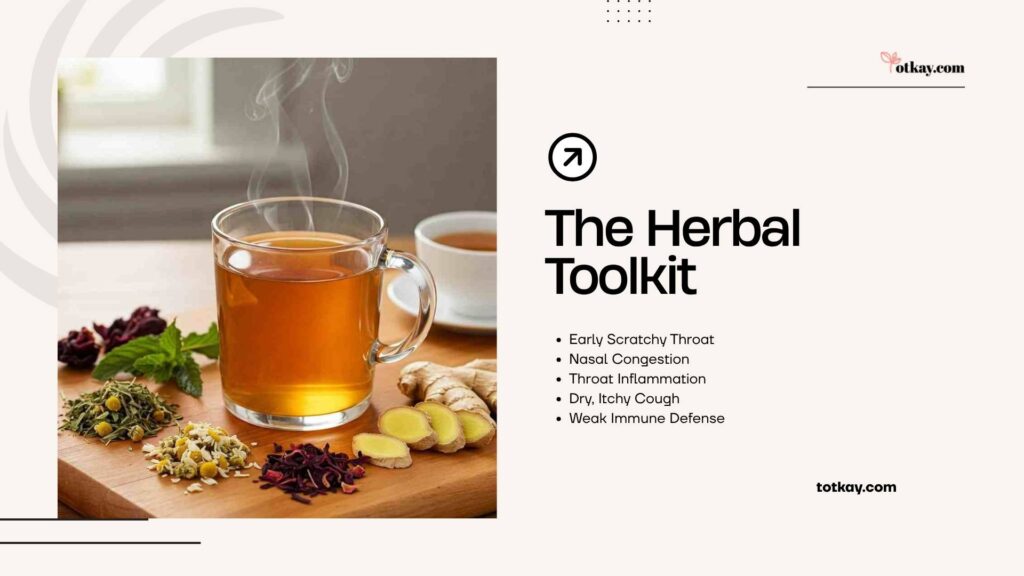
- Early Scratchy Throat: Use Elderberry. Its high anthocyanin levels provide strong antiviral support. Consume it via thick syrups or slow-dissolving lozenges.
- Nasal Congestion: Use Peppermint or Eucalyptus. The menthol compounds physically open tight airways. Apply these via hot steam inhalation for immediate relief.
- Throat Inflammation: Use Ginger. It contains potent anti-inflammatory gingerols. Steep fresh ginger root in hot water for a soothing tea.
- Dry, Itchy Cough: Use Licorice Root. It coats the throat and prevents microspasms that trigger coughing. Consume it as a warm herbal decoction.
- Weak Immune Defense: Use Garlic. Raw garlic releases allicin, a natural antimicrobial compound. Crush fresh garlic and stir it into warm.
Conclusion
In summary, herbal cold remedies offer a natural, effective way to support your body through every stage of a cold. By aligning remedies like elderberry, ginger, and honey with your symptoms, you can ease discomfort, reduce inflammation, and speed up recovery.
This stage-based approach not only addresses symptoms but also empowers your immune system to work efficiently. Prevention remains an essential focus on building a strong immune foundation with proper sleep, Vitamin D, and gut health.
Ready to take control of your cold recovery? Start building your herbal Totkay today and experience the power of nature’s remedies. Share this guide with friends and family to help them stay healthy too! Let us know your favorite herbal remedy in the comments below. Your journey to wellness begins now!
Frequently Asked Questions
What are the best herbal remedies for a cold?
The best herbal remedies depend on the stage of your cold. Elderberry and zinc are ideal for the onset phase to boost immunity. During peak congestion, peppermint and ginger help clear airways and reduce inflammation. For lingering coughs, licorice root and honey provide soothing relief. Always match the remedy to your symptoms for effective results.
How does elderberry help during a cold?
Elderberry is rich in antioxidants and supports immune function. It helps reduce the severity and duration of cold symptoms when taken early. Elderberry syrups or lozenges are convenient options. This natural remedy is particularly effective during the onset phase of a cold, signaling your body to fight off the virus.
Can peppermint relieve nasal congestion?
Yes, peppermint contains menthol, which opens up nasal passages and eases breathing. Steam inhalation with peppermint essential oil is a quick and effective method to relieve congestion. It is especially useful during the peak stage of a cold when stuffy noses and sinus pressure are common.
Is honey effective for a lingering cough?
Honey is a natural cough suppressant and antibacterial agent. It coats the throat, reducing irritation and soothing dry coughs. For best results, consume raw honey directly or mix it with warm water. This remedy is particularly effective during the recovery phase of a cold.
When should I see a doctor for a cold?
Consult a doctor if your fever exceeds 101°F, symptoms persist beyond seven days, or you experience chest tightness. These could indicate a more serious condition. While herbal remedies are effective, they are not substitutes for medical care in severe cases. Always prioritize safety and seek professional advice when needed.

Hi, I’m a dedicated writer at Totkay.com, passionate about sharing practical tips and solutions to make your life easier. Explore my articles for helpful insights and valuable advice. Stay connected for more expert content!
Related posts:
 Severe Period Pain on First-Day Home Remedies
 Improve Endurance Naturally: 10 Proven Ways to Go Further
 Natural Carb Blockers: 10 Pantry Hacks to Stop Weight Gain
 Nature’s Chill Pill: 10 Herbal Stress Relief Tips (2026)
 What Causes Piles in Men? Expert Guide and Prevention Tips
 Pregnancy Hemorrhoids: Safe Relief and Natural Care