
Safe DIY Homemade Bath Salts: Pro Guide to Perfect Soaks
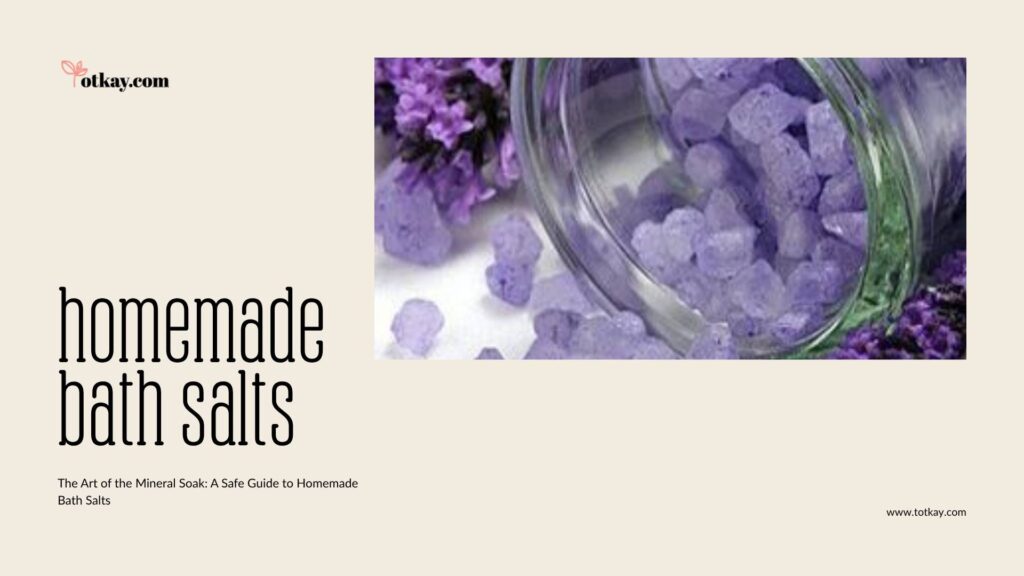
To make safe homemade bath salts, you must always dilute essential oils into a carrier oil like sweet almond oil before mixing them with your dry ingredients. Combine your diluted oils with a base of Epsom salt, Dead Sea salt, and baking soda to relieve muscle aches and support your skin barrier.
Store your homemade bath salts in an airtight glass jar away from direct sunlight to prevent clumping and preserve the therapeutic scent. Finally, soak in warm water for 20 minutes to maximize the absorption of magnesium and trace minerals.
By following this masterclass, you will learn the exact science behind a therapeutic bath. You will discover how to blend essential oils safely, protect your jetted tub, and craft fragrant bath salts at home. You can even gift these blends for Mother’s Day or keep them for your own routine.
The Science of the Soak: Mineral Profiles
Every successful soak begins with a proper foundation. You must choose your base minerals carefully. Each salt blend serves a distinct purpose. When you understand these properties, you can create targeted recipes for specific needs, such as soothing sore muscles or addressing certain skin conditions.
Epsom Salts: The Muscle Relaxer
Epsom salts are highly regarded in herbal remedies. This compound is magnesium sulfate, a naturally occurring mineral. When you dissolve Epsom salt in warm water, it excels at releasing magnesium into the bath.
Magnesium plays a crucial role in bodily function. Soaking in an Epsom salt bath is the most famous aid to relieve muscle aches after rigorous activity. It also helps relax sore muscles and promotes deep physical relaxation before sleep.
Sea Salt: Skin Barrier Support
Sea salt comes directly from evaporated ocean water. It contains a wealth of trace minerals. Sea salt’s benefits depend on the origin and purity of the harvest. Using the highest quality sea salt actively supports your skin barrier.
Adding Dead Sea salts to your diy bath salts provides gentle exfoliation. It helps draw impurities out of the body while locking in essential moisture. Dead Sea salt offers exceptional benefits for dry or itchy skin conditions.
Baking Soda: The pH Balancer
Baking soda acts as the secret ingredient in professional bath salt recipe formulation. It softens the water and creates a silky texture. This alkaline powder neutralizes skin acidity and soothes sensitivity.
If you have delicate skin, baking soda is an essential addition. It transforms a standard hot bath into a deeply comforting, skin-softening experience.
Carrier Oils: The Non-Negotiable Safety Element
You must never add undiluted essential oils directly to your tub. Essential oils are highly concentrated. Since oils and water do not mix, raw oils will float on the surface. They will adhere directly to your skin and cause burns.
Carrier oils solve this problem. A nourishing option like sweet almond oil dilutes the essential oils safely. Carrier oils act as a protective buffer while hydrating your skin during the soaking process.
Master Reference Table: Ingredients for Success
Keep this reference guide handy when you make homemade bath salts. It outlines the primary benefits and crucial safety notes for each base ingredient.
| Ingredient | Primary Benefit | Safety and Usage Note |
| Epsom Salt | Muscle Soothing | Use 1 to 2 cups per standard bath. |
| Dead Sea Salt | Skin Barrier Support | Excellent for dry or itchy skin. |
| Pink Himalayan Salt | Trace Minerals | Provides aesthetic color and light exfoliation. |
| Baking Soda | Water Softening | Always use food-grade baking soda. |
| Carrier Oil | Skin Hydration | You must mix essential oils into this first. |
Professional Mixing Protocol
Creating high-quality DIY bath salts requires strict adherence to a professional mixing protocol. You must follow these steps to ensure safety and stability. The prep time is short, and the process is super easy if you follow the rules.
The Carrier Oil Rule
As mentioned, essential oils demand respect. You must strictly adhere to the oil-in-water safety rule. First, measure a few tablespoons of your chosen carrier oil into a small bowl. Next, add a few drops of your essential oil into the carrier oil. Stir this mixture thoroughly.
Only after you combine the oils should you pour them into a large glass bowl containing your dry salt. This method ensures the oils distribute evenly, preventing skin sensitization.
The Marrying Period
Your mineral soak needs time to stabilize. Do not use your freshly mixed salts immediately. Instead, place the mixture into a glass jar. Mason jars work perfectly for this step.
Allow the blend to rest for at least 24 hours. Professionals call this the “marrying” period. During this time, the oils permeate the salts completely. You must follow these dark instructions: place the jar in a dark cabinet away from direct sunlight. The molecules stabilize, resulting in a robust aroma.
Temperature Logic
Hotter water does not equal a better bath. Scalding water strips your skin of its natural lipid barrier. Fill your tub with warm water. Warm water optimizes mineral absorption and opens your pores gently. Limit your soaking time to 15 to 20 minutes.
Signature Safe Recipes
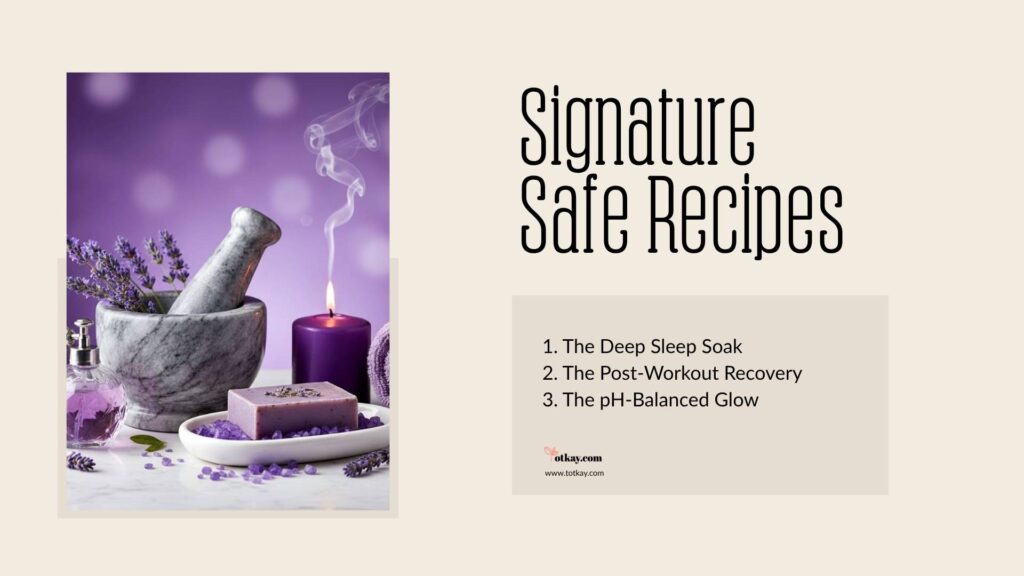
Ready for the fun part? Start with these three professional-grade recipes. Each recipe addresses a specific wellness goal. Mix your dry ingredients in a large bowl before adding your diluted oils.
1. The Deep Sleep Soak
This blend represents the gold standard for nighttime relaxation. The combination of magnesium and floral aromatics signals your brain to rest. Turn off your mental cook mode and prepare for sleep.
- 2 cups Epsom salts
- 1 tablespoon Sweet almond oil
- 10 drops of Lavender essential oil
- 5 drops Chamomile oil
These lavender bath salts create the ultimate evening retreat.
2. The Post-Workout Recovery
Use this cooling, invigorating soak after intense physical exertion. The salts replenish trace minerals to relieve muscle aches.
- 1 cup Epsom salts
- 1 cup Coarse sea salt
- 1 tablespoon Carrier oil
- 8 drops of Eucalyptus essential oil
- 7 drops of sweet orange essential oils
3. The pH-Balanced Glow
This formula contains no essential oils. It is entirely fragrance-free, making it the perfect choice for highly sensitive skin.
- 1 cup Pink Himalayan salt (fine grain)
- 1 cup Baking soda
- 1 tablespoon Sweet almond oil
If you prefer citrus essential oils, you can safely add a few drops of orange essential oil diluted in the carrier oil for a gentle uplift.
The Botanical Guide for Clean Plumbing
Dried herbs, dried flowers, and rose petals look beautiful in a glass jar. However, they create massive problems for your plumbing. They clog pipes and make the clean up process frustrating.
You can still enjoy herbs by using the muslin bag method. Place your botanical elements into a reusable cotton bag. Hang this bag on the faucet so the water runs through it. The therapeutic properties dissolve into the water, but the mess stays contained.
Safety and Troubleshooting
Even with perfect recipes, you might encounter minor issues. Follow these troubleshooting guidelines to maintain your products and your bathroom.
Preventing Clumping and Maximizing Shelf Life
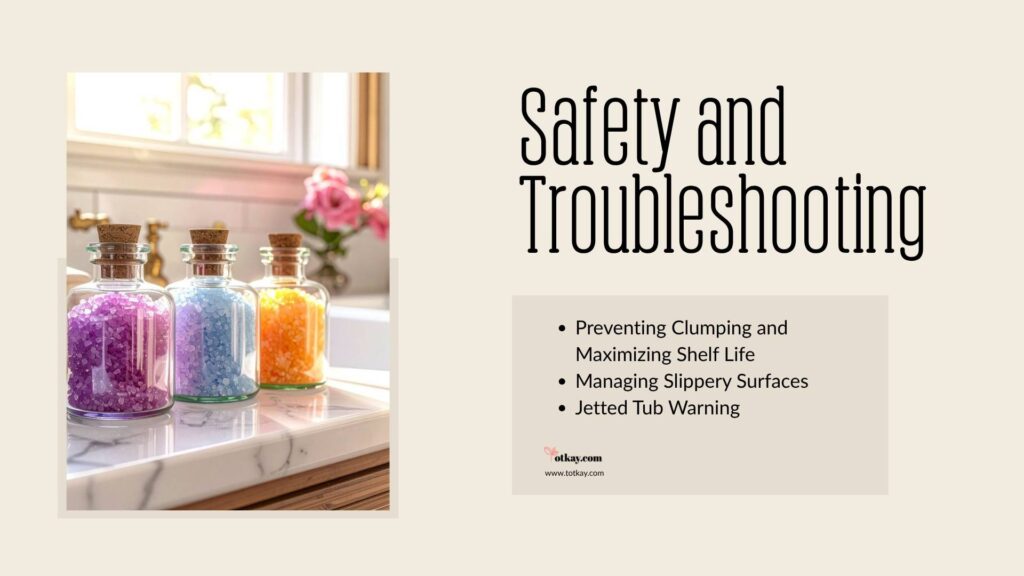
Humidity acts as the primary enemy when making bath salts. Moisture causes the minerals to fuse. Proper storage dictates shelf life. Store your mixtures in an airtight container. Keep them in a dry place away from direct sunlight. When you store them correctly, your mineral soaks will remain potent for up to six months.
Managing Slippery Surfaces
Carrier oils provide excellent skin hydration. However, they coat the bottom of your bathtub, creating a slip hazard. You must exercise extreme caution when stepping out of the tub. Always perform a quick soapy rinse of the tub immediately after your bath.
Jetted Tub Warning
Do not use bath salts containing oils or botanicals in a jetted tub. The oils coat the internal tubing, creating a breeding ground for bacteria. Reserve these mixtures for standard soaking tubs.
Conclusion
You now possess the exact formulas and protocols required to craft high-quality, professional-grade mineral soaks. You understand the science of the ingredients, the critical safety measures for essential oils, and the methods to protect your plumbing.
Creating homemade bath salts is a rewarding practice that elevates your personal care routine. Apply these techniques to build a therapeutic collection that rivals any luxury spa.
Which therapeutic blend will you craft first? Leave a comment below at Totkay and let us know your favorite bath ritual!
Frequently Asked Questions
How do you make safe homemade bath salts with essential oils?
To make homemade bath salts safely, you must always dilute your essential oils in a carrier oil, such as sweet almond oil, before mixing them into your salt blend. Water and oil do not mix, so adding raw essential oils directly to your tub can cause severe skin irritation. Combining diluted oils with Epsom salts and baking soda ensures a relaxing, skin-safe soaking experience.
What are the benefits of using Epsom salts in a warm bath?
Epsom salts, naturally composed of magnesium sulfate, are highly effective remedies used to relieve muscle aches and relax sore muscles. When dissolved in warm water, they release magnesium, which helps ease tension and promotes deep physical relaxation. Incorporating Epsom salts into your DIY bath salts recipe makes it the perfect post-workout recovery aid or a soothing nighttime ritual for better sleep.
Can I use regular table salt instead of sea salt for bath recipes?
You should never use regular table salt for your DIY bath salts. Table salt is heavily processed and stripped of the beneficial trace minerals your body needs. Instead, opt for high-quality alternatives like Dead Sea salts, pink Himalayan salt, or coarse sea salt. These unrefined options support your skin barrier, provide gentle exfoliation, and deliver genuine therapeutic effects during your soak.
How long is the shelf life of DIY bath salts?
The shelf life of homemade bath salts is typically up to six months if stored correctly. Humidity is the biggest threat, causing clumping and degrading the essential oils. To maximize longevity, store your salt blend in an airtight container, preferably a glass jar or mason jar. Keep the jar in a cool, dry place away from direct sunlight to preserve the scent and therapeutic properties.
Why should I add baking soda to my homemade bath salt recipe?
Baking soda is an excellent addition to any bath salts recipe because it acts as a natural water softener and pH balancer. It helps neutralize skin acidity, making it highly beneficial for soothing sensitive skin and calming certain skin conditions. Mixing baking soda with magnesium sulfate and trace minerals creates a silky, luxurious water texture that leaves your skin feeling exceptionally soft.

Hi, I’m a dedicated writer at Totkay.com, passionate about sharing practical tips and solutions to make your life easier. Explore my articles for helpful insights and valuable advice. Stay connected for more expert content!
Related posts:
 Koyla Se Bartan Dhone Ke Fayde
 6 Best Homemade Air Fresheners: Natural Recipes That Work
 The Ultimate Guide to Homemade Furniture Polish (Chemical-Free)
 Homemade Refrigerator Deodorizers That Actually Work
 4 Homemade Dishwashing Liquid Recipes that work | Totkay.com
 DIY Natural Room Spray Recipes: Easy Scent Blends