DIY Insect Repellent Recipes: Easy & Natural

Natural insect repellents use plant extracts and essential oils to keep bugs away. They offer safe, chemical-free protection for your family. You can create effective and eco-friendly repellents at home with simple ingredients.
These homemade insect sprays provide immediate relief from mosquitoes and flies without toxic side effects. Proper insect repellent recipes combine active oils with carrier liquids to mask human scents. You must reapply them frequently for the best results.
Why Choose Natural Insect Repellent Recipes?
Benefits of Homemade Insect Sprays
Summer brings warm weather, outdoor fun, and, unfortunately, swarms of biting insects. If you’re tired of mosquitoes and flies crashing your backyard barbecues and leaving you with itchy bites, it might be time to consider a different approach.
Instead of reaching for chemical-laden store-bought sprays, using natural insect repellent recipes to create your own repellent at home offers a safe, effective, and eco-friendly alternative.
Discover the advantages of mixing your own bug spray.
- They provide non-toxic protection for your entire household.
- They act as eco-friendly repellents that protect the environment.
- They save you money compared to store-bought brands.
- They keep children and pets safe when you follow proper precautions.
Are Natural Repellents Effective?
Short answer: Yes, they work well for short periods. Chemical products last longer, but natural plant oils evaporate quickly. You must set realistic expectations. You will need to spray yourself more often to maintain a strong barrier against pests.
How Natural Insect Repellents Work
Role of Essential Oils
Plants have been repelling insects for millions of years. But how do they do it? The secret lies in the powerful active compounds found in certain essential oils. Let’s take a closer look at the science behind how these oils work.
- Block Insect Senses: Active compounds like citronella and eugenol interfere with an insect’s ability to smell, effectively blocking the receptors they use to find you.
- Mask Human Scents: The powerful aroma of essential oils covers up the natural human odors (like sweat and carbon dioxide) that pests are drawn to.
- Create a Protective Barrier: When applied, these oils form a temporary, fragrant shield on your skin that physically repels insects.
Why Reapplication Is Necessary
Essential oils are volatile, meaning they evaporate quickly, especially in warm weather. How long your protection lasts depends on the specific oils used in your insect repellent recipes. To maintain a continuous barrier against pests, you’ll need to reapply your homemade mixture every one to two hours.
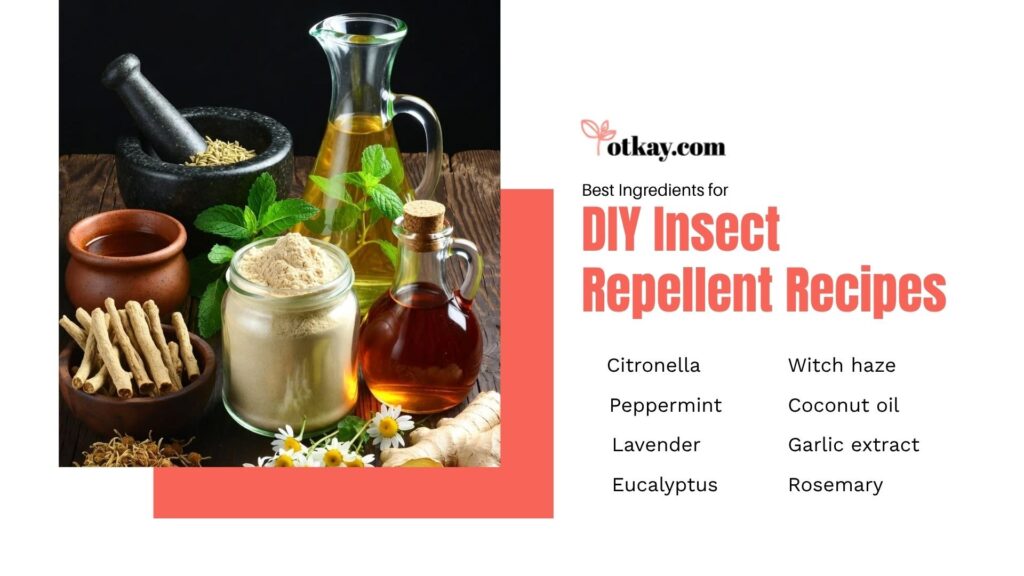
Best Ingredients for DIY Insect Repellent Recipes
Top Essential Oils
Which oils perform the best against bugs? Nature provides many powerful options. Select these proven oils for your homemade insect sprays.
- Citronella drives away mosquitoes effectively.
- Peppermint repels spiders and ants.
- Lavender soothes the skin while keeping flies away.
- Eucalyptus confuses the senses of biting insects.
- Tea tree cleanses the skin and deters ticks.
Carrier Ingredients
What liquids should you mix with your oils? Pure oils irritate the skin. You must dilute them with these safe carriers.
- Witch hazel helps the oils mix evenly.
- Apple cider vinegar adds extra repelling power.
- Coconut oil moisturizes the skin and traps the oils.
- Water serves as a basic base for any spray.
Natural Boosters
To make your sprays even more effective, add these simple boosters from your kitchen. With these natural ingredients, you can increase the potency of your repellent and keep more bugs at bay. Try these simple additions to enhance your DIY spray.
- Garlic extract repels heavily due to its high sulfur content.
- Lemon juice adds acidity that bugs avoid.
- Rosemary and basil plants provide extra-strong aromas.
DIY Insect Repellent Recipes
1. Mosquito Repellent DIY Spray
Ready to whip up a skin-safe spray that actually works? This is one of our simplest insect repellent recipes and is perfect for daily use.
Follow these easy steps to get started.
- Create the Base: Combine two ounces of witch hazel with two ounces of water in a small bowl. This mixture will serve as the foundation for your repellent.
- Add Essential Oils: Infuse the base with 20 drops of citronella oil and 10 drops of peppermint oil. These oils are known for their natural mosquito-repelling properties.
- Bottle and Mix: Carefully pour the solution into a spray bottle. Shake it vigorously to ensure all ingredients are well combined.
- Apply to Skin: Before heading outdoors, spray a light mist onto any exposed skin to create a protective barrier against mosquitoes.
2. Herbal Bug Spray for Home
This herbal air and surface spray is perfect for keeping pests out of your living spaces. The natural ingredients are safe to use indoors around your family.
Follow these steps to prepare the mixture.
- Boil and Steep: Bring water to a boil, then add dried lavender and rosemary. Let the herbs steep for one hour to infuse the water.
- Strain and Mix: Strain the herbs from the liquid and mix the infused water with witch hazel.
- Apply as Needed: Pour the final mixture into a spray bottle and apply around doorways, windows, and other entry points to keep bugs out.
3. Natural Pest Control Spray for Garden

Protect your garden from pests with this potent, plant-safe spray. Its powerful formula effectively deters bugs without harming your vegetables. Apply this solution with care to keep your garden thriving.
- Combine Ingredients: In a spray bottle, mix one cup of apple cider vinegar with one tablespoon of dish soap.
- Add Essential Oil: Add 30 drops of eucalyptus oil to the mixture and shake well to combine.
- Apply to Plants: Lightly spray the solution directly onto plant leaves in the early morning to avoid sun damage.
4. Oil-Based Roll-On Repellent
This portable, oil-based roll-on is perfect for travel. Its long-lasting formula offers a convenient and effective way to repel insects while on the go. Simply apply it directly to your skin for lasting protection.
- Combine Ingredients: Fill a small glass roller bottle with liquid coconut oil, then add 10 drops of tea tree oil and 10 drops of lavender oil.
- Mix Well: Secure the rollerball and cap, then shake the bottle gently to ensure the oils are thoroughly mixed.
- Apply as Needed: Roll the oil blend directly onto your wrists, ankles, and other pulse points for targeted protection.
5. Kid-Friendly Mild Repellent Recipe
When it comes to insect repellent recipes for young children, a gentle approach is essential. Their sensitive skin can react to the harsh chemicals in many store-bought repellents, and standard formulas aren’t always safe for kids.
This mild, low-concentration recipe offers a safe way to keep them protected.
- Mix four ounces of water with one ounce of witch hazel.
- Add only five drops of lavender oil.
- Avoid applying the mixture to the hands or faces of children.
How to Use Homemade Insect Sprays Effectively
Application Tips
Where should you spray your body? Correct application guarantees better results. Focus on these areas for maximum protection.
- Spray onto pulse points like your neck and wrists to spread the scent.
- Apply the liquid to your clothing instead of your skin to prevent irritation.
- Rub the solution evenly across all exposed skin areas.
Reapplication Guide
You must spray yourself every one to three hours. The exact time depends on your chosen oils and your activity level. Sweating causes the oils to wash away faster.
Storage Tips
How do you keep your sprays fresh? Sunlight destroys the active compounds in essential oils. Protect your creations with these methods.
- Use dark glass bottles to protect the essential oils from sunlight, which can break down their active compounds.
- Store your sprays in a cool, dark place like a cabinet to preserve their freshness and potency.
- To ensure maximum effectiveness and safety, discard any unused spray after three months.
Safety Tips and Precautions
Essential Oil Dilution Rules
You must always dilute essential oils before they touch your skin. Pure oils cause severe burning and irritation. Follow a strict ratio of one drop of oil to one teaspoon of carrier liquid.
Who Should Be Careful?
Do these recipes work for everyone? Certain people need to take extra care. Watch out for these sensitive groups.
- Children under three years old should not use strong essential oils.
- Pregnant women must consult a doctor before using any new oils.
- Pets react poorly to many oils, especially tea tree and peppermint.
Natural vs Chemical Insect Repellents: Which Is Better?
| Feature | Natural Insect Repellents | Chemical Insect Repellents | Best Choice |
| Active Ingredients | Essential oils (citronella, peppermint, eucalyptus, lavender) | DEET, picaridin, IR3535 | Depends on preference |
| Effectiveness | Moderate; suitable for light exposure | High; strong protection in high-risk areas | Chemical (for heavy exposure) |
| Duration | Short (30 mins – 3 hours) | Long-lasting (4 – 12 hours) | Chemical |
| Safety for Skin | Generally safer when diluted | May irritate some users | Natural |
| Toxicity Level | Low; eco-friendly | Moderate; synthetic chemicals | Natural |
| Kid & Pet Safety | Safer with proper use | Requires caution | Natural |
| Environmental Impact | Biodegradable, eco-friendly | Can harm ecosystems | Natural |
| Cost | Low; DIY-friendly | Moderate to high | Natural |
| Ease of Use | Requires preparation | Ready-to-use products | Chemical |
| Best Use Case | Daily use, home, garden | travel, high-risk mosquito zones | Hybrid approach |
Common Mistakes to Avoid
What ruins a good bug spray? Many people make simple errors. Prevent these mistakes to ensure success.
- Applying undiluted oils directly to the skin: This can cause irritation and painful rashes. Always dilute essential oils with a carrier oil like coconut or jojoba oil.
- Incorrectly mixing ingredients: Using the wrong ratios or combinations can result in a weak scent barrier that fails to repel insects effectively.
- Expecting all-day protection: Homemade repellents are not as long-lasting as chemical options and require more frequent application to prevent bug bites.
- Forgetting to reapply: Natural sprays wear off quickly, especially with sweat or water exposure. Failing to reapply regularly can leave you unprotected.
Protect Your Family with Safe Solutions
You now possess the knowledge to create the best insect repellent recipes right in your own kitchen. These simple mixtures empower you to ditch harsh chemicals for good. Making a mosquito repellent DIY ensures you know exactly what touches your skin.
You can trust these natural pest control methods to keep your home comfortable and safe. Take action today and mix your first batch of eco-friendly repellents using the oils in your cabinet. Enjoy your outdoor time with complete peace of mind. For more daily life remedies and effective tips that make your life easy, visit totkay.com.
Frequently Asked Questions
Do homemade insect repellents really work?
Yes, they successfully repel bugs. Essential oils mask human scents and confuse pests. You must reapply them often to maintain the barrier. They work best for short periods in areas with low bug populations.
How long do natural repellents last?
They typically last between one to three hours. The duration depends on the specific ingredients you use and how much you sweat. You must spray yourself regularly to stay protected.
What is the best essential oil for mosquitoes?
Citronella and lemon eucalyptus oil provide the strongest defense against mosquitoes. These oils contain active compounds that mosquitoes hate. Always mix them with a carrier liquid before applying them to your skin.
Are DIY insect sprays safe for kids?
They are generally safe for older children when properly diluted. You must use very low concentrations of mild oils like lavender. You should avoid putting the spray on their hands to prevent eye irritation.
Can I use vinegar as an insect repellent?
Yes, apple cider vinegar deters many pests. Bugs dislike the strong acidic smell. You can mix vinegar with water and essential oils to create a potent bug spray for your skin or garden.
How often should I reapply natural bug spray?
You should reapply the mixture every two hours. You must spray more frequently if you swim or sweat heavily. Frequent reapplication guarantees that the protective scent barrier remains intact.

Hi, I’m a dedicated writer at Totkay.com, passionate about sharing practical tips and solutions to make your life easier. Explore my articles for helpful insights and valuable advice. Stay connected for more expert content!