Eye Health Tips: Does the Ice Hack Work for Better Vision?
Eye Health Tips focus on simple daily habits that protect your vision and reduce eye strain. The most effective practices include following the 20-20-20 rule, blinking regularly, maintaining a screen distance of about 25 inches, eating foods rich in lutein, zeaxanthin, vitamin A, and omega-3 fatty acids, staying hydrated, and wearing UV-protective sunglasses outdoors.
While the viral ice hack can temporarily reduce puffiness and soothe tired eyes, it does not improve eyesight or correct refractive errors. Consistently following these evidence-based eye health tips supports long-term visual comfort, healthy vision, and overall eye wellness.
7 Daily Eye Health Tips for Better Vision
Following simple habits every day can reduce eye fatigue and support long-term visual health to keep your eyes healthy.
1. Follow the 20-20-20 Rule
Looking away from digital screens every 20 minutes relaxes your focusing muscles and reduces eye strain associated with computer vision syndrome.
2. Blink More Often
People naturally blink less while using computers and smartphones. Conscious blinking keeps your eyes lubricated, prevents dry eyes, and clears up temporary blurred vision.
3. Stay Hydrated
Proper hydration supports healthy tear production, reduces irritation, and allows you to rely less on artificial eye drops.
4. Eat Vision-Friendly Foods
Incorporate a balanced diet rich in nutrients by eating green leafy vegetables like spinach and kale, alongside carrots, salmon, walnuts, citrus fruits, and eggs for essential vitamins.
5. Protect Your Eyes from UV Rays
Minimize UV exposure by choosing to wear sunglasses with 100% UVA and UVB protection whenever you are outdoors to block harmful uv rays.
6. Get Enough Sleep
A good night’s sleep allows your eyes to recover from daily strain, prevents eye fatigue, and supports healthy tear production.
7. Schedule Routine Eye Exams
Undergoing a regular eye exam helps detect conditions like glaucoma, cataracts, and diabetic retinopathy before major symptoms appear.
Best Eye Health Tips at a Glance
| Eye Health Tip | Main Benefit | Best For |
| Ice Compress | Reduces puffiness | Tired eyes |
| 20-20-20 Rule | Relieves digital eye strain | Computer users |
| Frequent Blinking | Prevents dry eyes | Office workers |
| Omega-3 Rich Foods | Supports tear quality | Dry eye sufferers |
| Leafy Green Vegetables | Protects the retina | Long-term eye health |
| UV Protection | Prevents sun damage from UV light | Outdoor activities |
| Annual Eye Exam | Achieves early detection of eye disease | Everyone |
Foods That Support Eye Health
Nutrition plays a significant role in maintaining healthy eyes. A healthy diet supplies antioxidants and essential nutrients that help protect the retina, support blood vessels, and reduce age-related eye damage. Research shows that incorporating whole foods like brown rice alongside targeted nutrients can vastly improve overall health.
| Nutrient | Food Sources | Eye Health Benefits |
| Vitamin A | Carrots, sweet potatoes | Supports night vision and prevents decreased vision |
| Lutein | Kale, spinach | Protects the macula against macular degeneration |
| Zeaxanthin | Corn, eggs | Filters harmful blue light |
| Omega-3 | Salmon, oily fish, chia seeds | Prevents dry eyes and protects retinal tissue |
| Vitamin C | Oranges, strawberries | Supports eye tissues and slows early cataracts |
| Vitamin E | Almonds, sunflower seeds | Protects eye cells from oxidative stress |
Common Habits That Can Damage Your Eyes
Certain everyday habits can contribute to eye strain, vision problems, and even long-term vision loss if left unchecked.
- Using digital screens continuously without breaks, leading to computer vision syndrome.
- Rubbing your eyes excessively, which can cause physical eye injury or damage delicate blood vessels.
- Sleeping while you wear contact lenses without practicing good hygiene.
- Ignoring early signs of dry eyes and skipping soothing eye drops.
- Reading in poor lighting or failing to establish proper lighting in your workspace.
- Smoking, which increases the risk of optic nerve damage and age-related macular degeneration.
- Spending long periods outdoors without eye protection from UV rays.
- Skipping your annual eye exam with an eye doctor.
- Forgetting to wear protective eyewear or safety glasses during home repairs.
- Applying expired eye makeup, which can introduce harmful bacteria.
Reducing these habits complements other eye health tips and helps preserve sharp vision while preventing permanent vision loss.
Benefits of Following Daily Eye Health Tips
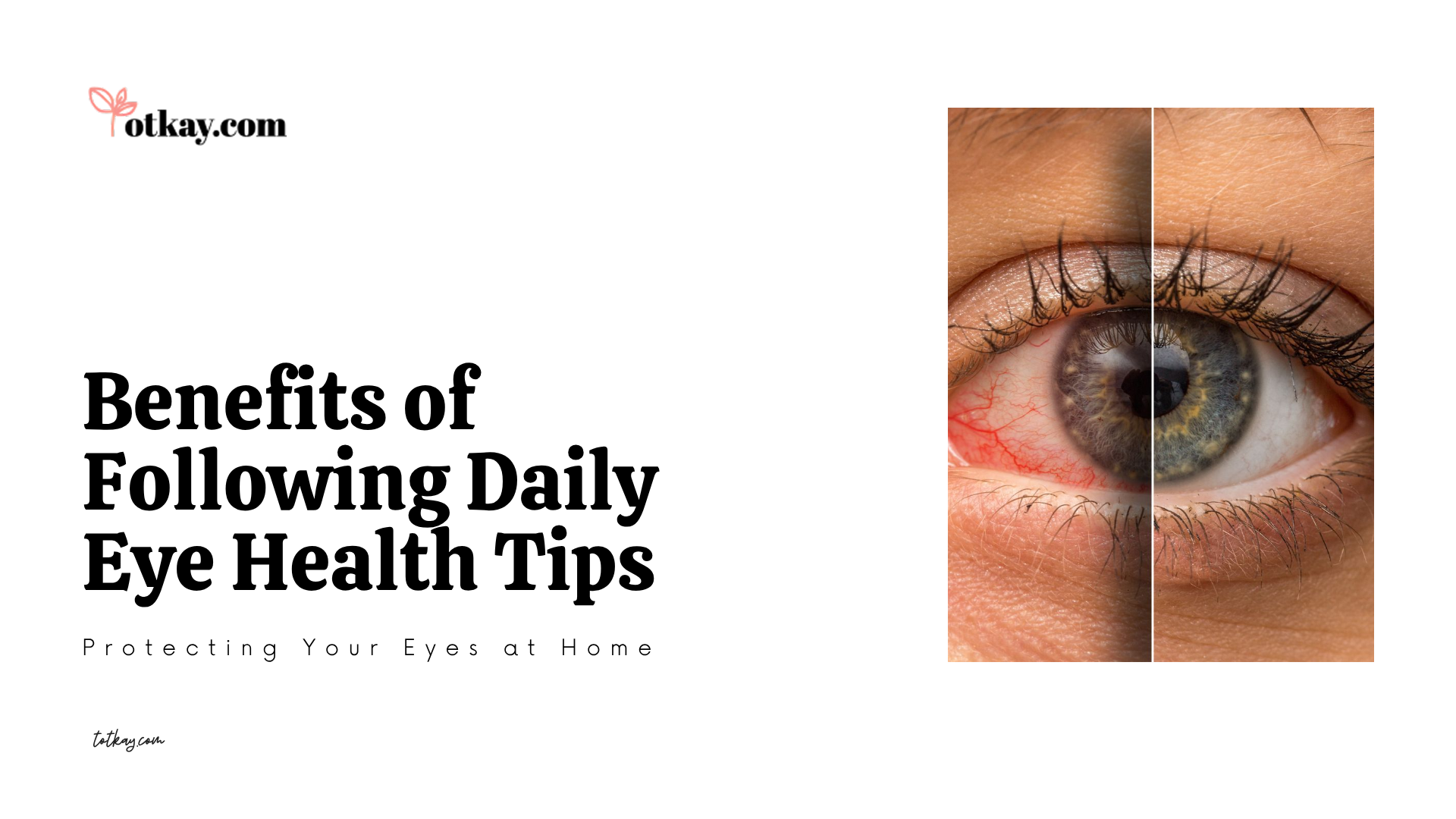
Following healthy eye care habits can help:
- Reduce digital eye strain and physical side effects like neck or shoulder pain
- Prevent dry eyes and irritated eyes
- Improve tear film stability
- Lower eye fatigue during screen use
- Support long-term retinal health and protect the optic nerve
- Reduce puffiness around the eyes
- Promote comfortable vision throughout the day
- Manage internal risk factors linked to high blood pressure
Daily Habits That Protect Your Eyes Naturally
Simple lifestyle changes have a significant impact on long-term vision health. The National Eye Institute emphasizes that preventive care is the best way to protect your eyes.
- Stay hydrated throughout the day to support your tear film.
- Blink more often while using digital devices to combat computer vision syndrome.
- Wear sunglasses outdoors to lower lifetime UV exposure.
- Get a good night’s sleep for proper eye recovery.
- Quit smoking because it significantly increases the risk of chronic eye conditions.
- Maintain healthy high blood sugar levels and normal blood pressure to avoid diabetic retinopathy.
- Know your family history, as many eye diseases are hereditary.
- Wear protective eyewear, such as sports goggles or protective goggles, during high-impact activities.
- Always practice good hygiene when handling contact lenses to avoid severe infections.
- Schedule comprehensive regular eye exams with medical doctors or optometrists.
These small habits complement other eye health tips and help reduce the risk of age-related eye problems.
Natural Eye Health Tips at a Glance
| Eye Health Tip | Primary Benefit | Best For |
| Ice Compress | Reduces puffiness | Tired eyes |
| 20-20-20 Rule | Relieves eye strain | Screen users |
| Omega-3 Foods | Improves tear quality | Dry eyes |
| Leafy Greens | Supports retinal health | Long-term vision |
| Proper Monitor Distance | Reduces focusing stress | Office workers |
| Regular Eye Exams | Early detection of optic nerve damage | Everyone |
Common Signs Your Eyes Need Extra Care
Watch closely for these early symptoms and early warning signs:
- Frequent headaches or unexplained shoulder pain from slouching at screens
- Blurred vision or decreased vision after screen use
- Dry, burning, or chronically dry eyes
- Watery eyes or discharge caused by improper care of contact lenses
- Difficulty focusing on objects in your central vision
- Increased light sensitivity
- Eye redness or signs of an underlying eye disease
- Persistent eye fatigue
If these symptoms continue despite following healthy eye care practices, consult a licensed eye doctor immediately.
Eye Health Tips: Myth vs Reality
| Myth | Fact |
| Ice improves eyesight permanently. | Ice only provides temporary relief from puffiness and eye fatigue. |
| Eye exercises cure nearsightedness. | They reduce strain but do not change refractive errors. |
| Blue light permanently damages eyes. | It mainly contributes to digital eye strain and sleep disruption. |
| Glasses weaken eyesight. | Prescription glasses or wear glasses choices improve vision without causing vision problems. |
| Eye surgery is the only way to treat eye diseases. | Many eye conditions are managed early with prescription medications or lifestyle updates. |
Conclusion
Healthy vision is built through consistent daily habits rather than viral shortcuts. While the ice hack can temporarily reduce puffiness and soothe tired eyes, it cannot replace proven eye health tips like a balanced diet, proper screen habits, regular blinking, and routine regular eye exams. Protecting your eyes against macular degeneration and ensuring early detection of complications starts with minor daily adjustments.
Start protecting your vision today by following these practical eye health tips, and explore more trusted natural wellness guides on Totkay for a healthier lifestyle!
Frequently Asked Questions
What are the most effective eye health tips for protecting your vision?
The best eye health tips include following the 20-20-20 rule, taking regular screen breaks, blinking frequently, staying hydrated, and eating foods rich in lutein, zeaxanthin, vitamin A, and omega-3 fatty acids. Wearing UV-protective sunglasses and scheduling routine eye exams also support healthy eyesight. These simple daily habits help reduce digital eye strain, prevent dry eyes, and promote long-term vision care.
Can natural eye health tips improve eyesight without glasses?
Natural eye health tips can improve eye comfort, reduce fatigue, and support overall eye wellness, but they cannot reverse refractive errors such as nearsightedness, farsightedness, or astigmatism. Healthy nutrition, proper screen habits, eye exercises, and adequate sleep help maintain healthy vision. However, corrective lenses or medical treatment remain necessary for vision correction when prescribed by an eye care professional.
Which foods are best for maintaining healthy eyes?
A balanced diet plays an important role in eye health. Leafy greens like spinach and kale provide lutein and zeaxanthin, while carrots and sweet potatoes supply vitamin A for normal vision. Fatty fish, walnuts, chia seeds, and flaxseeds are excellent sources of omega-3 fatty acids that support tear production and help reduce dry eye symptoms. These nutrients contribute to long-term eye health and retinal protection.
How can I reduce digital eye strain while using screens?
Reducing digital eye strain starts with following practical eye health tips. Apply the 20-20-20 rule, position your monitor about an arm’s length away, adjust screen brightness to match your surroundings, and remember to blink more often. Using blue light settings during the evening and maintaining proper posture can also improve visual comfort, reduce eye fatigue, and minimize headaches caused by prolonged screen use.
When should I see an eye specialist instead of using home remedies?
Home remedies and eye health tips can relieve temporary discomfort, but you should seek professional care if you experience sudden vision loss, flashes of light, a rapid increase in floaters, severe eye pain, or persistent blurry vision. Regular eye examinations are also important for detecting conditions like glaucoma, cataracts, diabetic eye disease, and macular degeneration before noticeable symptoms develop.

Hi, I’m a dedicated writer at Totkay.com, passionate about sharing practical tips and solutions to make your life easier. Explore my articles for helpful insights and valuable advice. Stay connected for more expert content!