
DIY Natural Room Spray Recipes: Easy Scent Blends
Creating your own room spray recipes provides a simple way to craft effective homemade air fresheners. These natural alternatives use a basic combination of essential oils, water, and natural emulsifiers to eliminate odors and refresh your living spaces. Commercial sprays often contain hidden synthetic compounds that can cause respiratory irritation or trigger allergies. By mixing your own ingredients, you ensure your home remains chemical-free.
Crafting eco-friendly room scents allows you absolute control over the ingredients and the environmental impact of your home fragrance. You can easily customize these sprays to match your mood, enhance focus, or promote relaxation in specific areas of your house. Best of all, you can mix these simple solutions in just a few minutes using standard household ingredients.
Why Homemade Room Sprays Are Better Than Store-Bought
Commercial air fresheners frequently rely on artificial fragrances to mask unpleasant odors. These synthetic chemicals often cause headaches, trigger asthma, and leave a heavy, unnatural residue in the air.
By switching to homemade room sprays, you can:
- Breathe Cleaner Air: Natural sprays use pure plant extracts, eliminating the harsh chemicals found in commercial air fresheners that can irritate your lungs.
- Save Money: A single bottle of essential oil can make dozens of room sprays, saving you a significant amount of money over time.
- Create Custom Scents: Enjoy the freedom to mix and match essential oils to create a scent that perfectly suits your preferences.
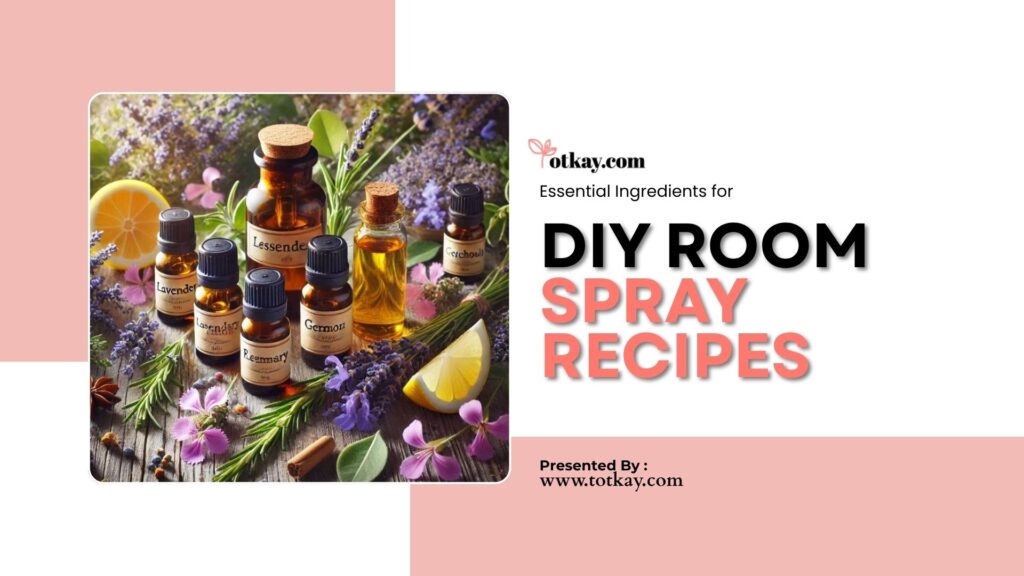
Essential Ingredients for DIY Room Spray Recipes
Base Liquid (Water)
Water serves as the primary carrier for your natural room spray. You must choose the right type of water to ensure a long-lasting product.
- Use distilled water: This prevents mineral buildup and bacterial growth inside your spray bottle.
- Avoid tap water: Tap water contains impurities that can alter the scent and spoil the mixture quickly.
Essential Oils (Fragrance Core)
Essential oils provide the aromatic power and therapeutic benefits of your spray. Selecting high-quality oils determines the success of your final product.
- Lavender: Delivers a calming, soothing aroma perfect for relaxation.
- Citrus (Lemon or Orange): Provides a bright, fresh scent that invigorates the senses.
- Eucalyptus: Offers a clean, sharp fragrance that clears the air.
Emulsifier (Critical Step)
Since oil and water don’t mix, including an emulsifier is a critical step in most room spray recipes to bind these ingredients together effectively.
- Witch hazel: A gentle, natural astringent that helps disperse the oil droplets.
- Vodka or rubbing alcohol: A strong solvent that preserves the mixture and ensures an even spray.
- Epsom salt or sea salt: An alternative binder that absorbs the oils before you add the water.
Optional Add-Ons
You can enhance your basic formula with a few extra ingredients. These additions improve the longevity and functionality of your spray.
- Vegetable glycerin: Helps the scent molecules adhere to the air and fabrics for a longer duration.
- Baking soda: Adds powerful odor-neutralizing properties for tough bathroom or kitchen smells.
Basic DIY Room Spray Recipe (Step-by-Step)
Ingredients
Creating a reliable base requires precise measurements. Gather these exact ingredients before you begin the mixing process.
- 1 cup distilled water: The foundation of your spray.
- 2 tablespoons alcohol or witch hazel: The emulsifying agent.
- 15 to 30 drops of essential oil: The fragrance core of your choosing.
Instructions
Follow this specific order of operations to ensure the oils mix properly. Adding the water too early will cause the oils to float on the surface.
- Combine the emulsifier and oils: Start by pouring the alcohol or witch hazel into a clean glass spray bottle. This acts as the emulsifier, helping the essential oils mix with the water. Add your chosen essential oils directly into the alcohol.
- Mix well: Gently swirl the bottle to ensure the essential oils and alcohol are thoroughly combined. This step is crucial for preventing the oils from separating later.
- Add the water: Fill the rest of the bottle with distilled water.
- Final shake: Secure the spray top and shake the bottle vigorously. Remember to shake well before each use to ensure the fragrance is evenly distributed every time you spray.
How to Create Your Own Natural Scent Blends
Top, Middle, and Base Notes
Professional perfumers structure fragrances using distinct layers. Understanding these layers helps you build well-rounded natural scent blends.
- Top notes (Citrus): The first scents you smell, which evaporate quickly.
- Middle notes (Floral): The heart of the fragrance that provides balance.
- Base notes (Woody): The deep, lingering scents that anchor the blend.
Balanced Blend Formula
Achieving the perfect aroma requires a specific ratio of fragrance notes. Use this standard formula to guarantee a pleasant result.
- 50 percent top notes: For an immediate burst of freshness.
- 30 percent middle notes: To round out the scent profile.
- 20 percent base notes: To provide lasting depth and stability.
7 Easy DIY Room Spray Recipes You Can Try
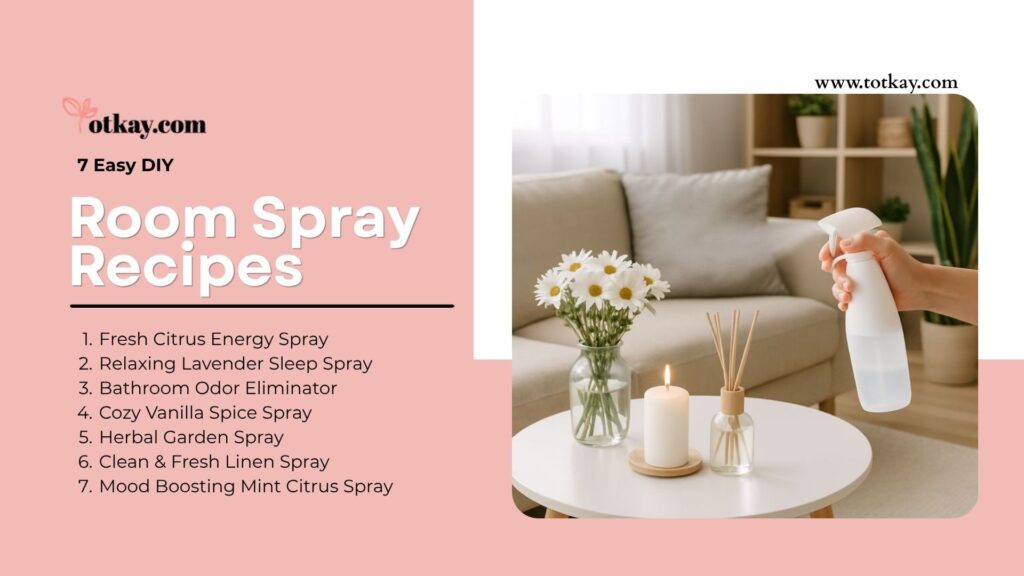
1. Fresh Citrus Energy Spray
Combine 10 drops of lemon, 10 drops of sweet orange, and 5 drops of grapefruit essential oil. This bright combination instantly energizes a sluggish environment.
2. Relaxing Lavender Sleep Spray
Mix 20 drops of lavender and 10 drops of chamomile essential oil. Spray this soothing blend over your pillows to promote deep, restful sleep.
3. Bathroom Odor Eliminator
Blend 10 drops of tea tree, 10 drops of eucalyptus, and 10 drops of lemon essential oil. This powerful antibacterial mix neutralizes strong odors instantly.
4. Cozy Vanilla Spice Spray
Combine 15 drops of vanilla oleoresin and 10 drops of cinnamon bark essential oil. This creates a warm, inviting atmosphere perfect for the autumn and winter seasons.
5. Herbal Garden Spray
Mix 10 drops of rosemary, 10 drops of peppermint, and 5 drops of basil essential oil. This crisp, green fragrance mimics the scent of a fresh herb garden.
6. Clean & Fresh Linen Spray
Blend 15 drops of eucalyptus and 15 drops of lavender essential oil. Use this to refresh stale towels, curtains, and guest bedding.
7. Mood Boosting Mint Citrus Spray
Combine 10 drops of peppermint, 10 drops of lime, and 10 drops of sweet orange essential oil. This uplifting blend sharpens focus and elevates your mood.
Best Room Spray Recipes for Different Spaces
Bedroom (Relaxation)
The bedroom requires scents that lower your heart rate and prepare the mind for rest.
- Use lavender-based blends to create a tranquil sanctuary perfect for sleep.
- Incorporate chamomile or sandalwood to deepen relaxation and reduce anxiety.
- A light spritz on your pillows and bedding can enhance the calming effect throughout the night.
Bathroom (Odor Control)
Bathrooms need strong, purifying scents that combat bacteria and humidity.
- Rely on tea tree and citrus blends to maintain a sanitary, fresh environment.
- Add a few drops of eucalyptus to help clear congestion during a steamy shower.
- Lemongrass is excellent for neutralizing strong odors and leaving a crisp, clean scent.
Kitchen (Freshness)
Kitchen odors can linger long after cooking concludes.
- Utilize lemon and mint to cut through heavy food smells like garlic and onion.
- Add basil or rosemary essential oils to create a fresh, herbaceous aroma that complements cooking.
- A quick spray can also help deter pests like fruit flies that are attracted to food scents.
Living Room (Warm Ambience)
The living room serves as the central gathering space for family and guests.
- Introduce vanilla and subtle spices like cinnamon or clove to establish a welcoming, cozy atmosphere.
- Blend in sweet orange or bergamot to add a bright, uplifting feel that encourages conversation.
- Use a cedarwood or fir base to create a grounding, comforting foundation for your scent blend.
Tips to Make Your DIY Room Spray Last Longer
Use Alcohol or Witch Hazel
Do not skip the emulsifier step. Alcohol and witch hazel break down the essential oils, allowing them to disperse evenly and linger in the air rather than falling quickly to the floor.
Spray on Fabrics (Curtains, Cushions)
Air cannot hold scent molecules for extended periods. Spray your mixtures lightly onto soft furnishings like curtains, rugs, and throw pillows to trap the fragrance for hours.
Store in Glass Bottles
Essential oils degrade rapidly when exposed to light and plastic. Always store your room spray recipes in dark amber or cobalt blue glass bottles to protect the volatile plant compounds.
Shake Before Use
Separation naturally occurs when mixing oil and water. You must shake the bottle vigorously for three seconds before every single use to guarantee a consistent scent profile.
Safety Tips When Using Essential Oils
Although they’re natural, essential oils are highly concentrated substances. It’s important to be careful when preparing your room spray recipes.
- Avoid overuse: Spraying too much can overwhelm the respiratory system.
- Keep away from pets: Certain oils, like tea tree and eucalyptus, are highly toxic to cats and dogs.
- Test for allergies: Always spray a small amount in a well-ventilated area to ensure no family members react negatively.
Final Thought: Create Your Signature Home Fragrance Naturally
Mastering room spray recipes empowers you to take control of your indoor environment. By using simple ingredients like distilled water, witch hazel, and quality essential oils, you can easily replace toxic commercial products.
Whether you desire energizing herbal room fragrances for your home office or calming blends for your bedroom, customization remains entirely in your hands.
For more life hacks and easy-to-use home remedies that will make your life easy, visit totkay.com.
Frequently Asked Questions
How do you make a natural room spray at home?
You create a natural spray by combining distilled water, your choice of essential oils, and an emulsifier like witch hazel or rubbing alcohol in a glass spray bottle. Shake the mixture well to ensure the ingredients bind together properly.
What is the best essential oil for room spray?
The best oils depend on your goal. Lavender provides excellent relaxation, citrus oils like lemon or sweet orange offer bright energy, and eucalyptus delivers a clean, purifying scent that eliminates odors effectively.
How long does DIY room spray last?
A homemade spray typically lasts between one and three months. Its lifespan depends heavily on using distilled water, including an alcohol preservative, and storing the glass bottle in a cool, dark location away from direct sunlight.
Can I make room spray without alcohol?
Yes, you can make a spray without alcohol. However, the oil and water will separate rapidly, and the scent will not linger in the air for very long. You must shake it vigorously before every use.
Is homemade room spray safe?
Yes, homemade sprays are generally safe when used correctly. You must ensure adequate ventilation, avoid over-spraying, and research which specific essential oils are safe to use around pregnant women, children, and household pets.

Hi, I’m a dedicated writer at Totkay.com, passionate about sharing practical tips and solutions to make your life easier. Explore my articles for helpful insights and valuable advice. Stay connected for more expert content!
Related posts:
 Ghar pr Jewelry Polish Karne Ka Tarikay
 Koyla Se Bartan Dhone Ke Fayde
 6 Best Homemade Air Fresheners: Natural Recipes That Work
 The Ultimate Guide to Homemade Furniture Polish (Chemical-Free)
 Homemade Refrigerator Deodorizers That Actually Work
 4 Homemade Dishwashing Liquid Recipes that work | Totkay.com