
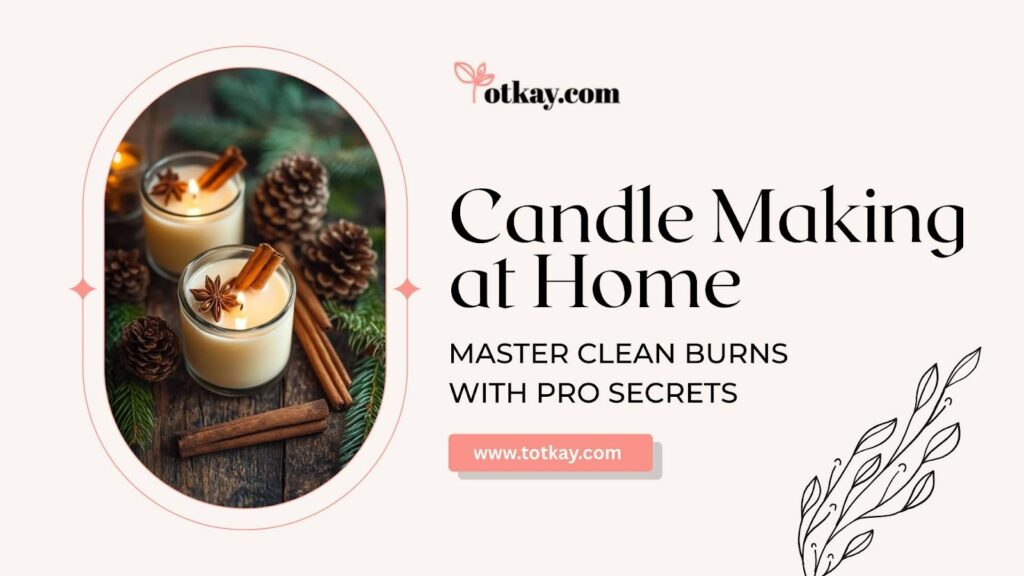
Candle Making at Home: 9 Pro Secrets for Clean Burning
Most commercial candles hide a dirty secret. You light them to relax, yet they often release toxins into your sanctuary. The black soot you see on the rim of a jar? That is particulate matter entering your lungs.
True luxury is not about a brand name. It is about the purity of the ingredients.
This guide moves beyond basic crafts. We are sharing the “Totkay” (secret wisdoms) of professional chandlers. These tips transform simple wax into a healing tool. You will learn how to create a candle that serves as an extension of your natural health practices.
When you master candle making at home, you control the atmosphere. You choose health over synthetic perfumes. You choose “clean burns” over petroleum byproducts.
While you create a serene environment, do not forget to cleanse your body too.
The “Clean Canvas” Comparison Table
Your choice of wax dictates the quality of your candle. Many cheap candles use paraffin. Paraffin is a byproduct of petroleum refining. Burning a paraffin candle is essentially burning diesel fuel in your living room.
To prioritize health, you must choose a natural base. Use this quick-reference guide to select your “health-first” wax.
| Wax Type | Soot Level | Scent Throw | The Totkay Advantage |
| Soy Wax | Zero | Moderate | Sustainable and slow-burning. The best choice for beginners. |
| Beeswax | Zero | Mild (Honey) | Air Purifying. Releases negative ions that grab dust and allergens. |
| Coconut Wax | Zero | High | The “Luxe” choice. It gives the best fragrance finish and creaminess. |
| Paraffin | High | Extreme | Avoid for Totkay. Releases synthetic soot and carcinogens into lungs. |
Step-by-Step: Your First “Healing” Candle
Precision creates perfection. Follow these steps exactly to avoid common pitfalls like tunneling or weak scents.
Preparation: The “Glass Tempering Totka”
Pre-heat your glass jars. Cold glass shocks hot wax. This causes the wax to pull away from the sides, creating ugly “wet spots.” Place your jars in a warm oven (lowest setting) for a few minutes before you pour.
Measuring: Use a Scale
Do not use a measuring cup. Volume is inaccurate for wax. Utilize a kitchen scale to accurately measure ingredients based on their weight. Precision ensures your ratio of wax to fragrance oil is correct. This prevents the candle from sweating oil later.
The Double Boiler Method
Never melt wax directly on the heat. It will scorch and discolor. Place a pouring pitcher inside a pot of boiling water. This gentle heat preserves the integrity of the wax.
The Binding Point
Temperature is everything. You must add scents at exactly 185°F (85°C). At this temperature, the wax molecules expand fully. They trap the fragrance oil effectively. If the wax is too cool, the oil will not bind, and your candle will have no smell.
The Pour
Pour slowly and keep the pitcher low. High, fast pours trap air bubbles. These bubbles create pockets that ruin the look of the candle.
The Cure: The 7-Day Rule
Patience is a virtue in candle making at home. Do not light the candle immediately. Allow the candle to rest undisturbed for a minimum of seven days to ensure optimal curing. This allows the wax and fragrance to bond completely. A longer cure equals a stronger scent.
The “Secret 9”: Pro-Hacks Nobody Tells You
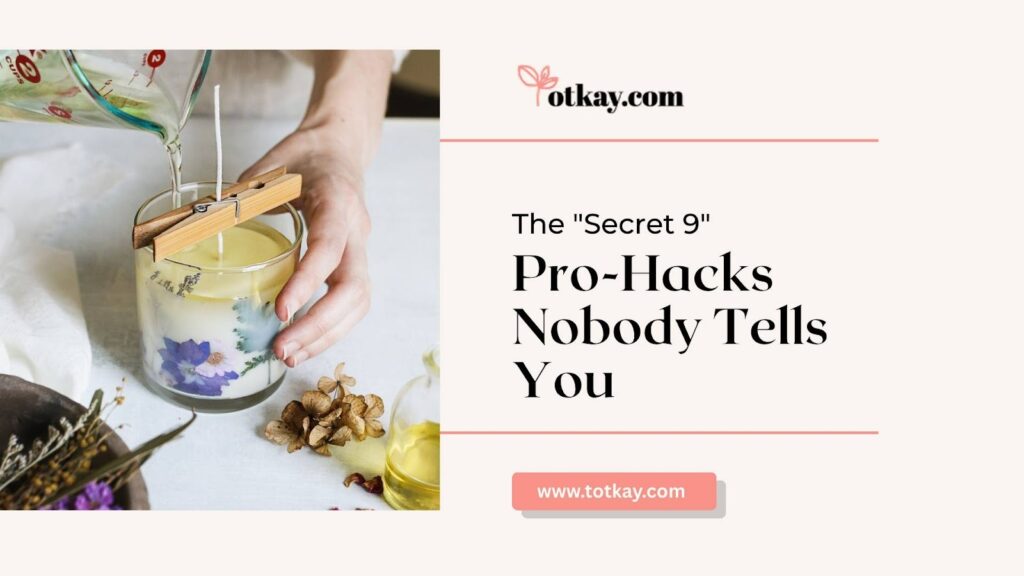
These are the “high-maintenance” unique tips that separate hobbyists from artisans. These “Totkay” ensure a professional result every time.
The Salt Pinch Hack
Add a tiny pinch of fine sea salt to your melted wax just before pouring. Salt increases the density of the wax slightly. This slows down the burn rate. Your candle will last approximately 20% longer with this simple addition.
The “Wick Priming” Secret
Store-bought wicks can be flimsy. Dip your raw cotton wicks into melted wax and let them dry straight before assembly. This stiffens the wick. It prevents “mushrooming” (carbon buildup) and ensures a steady, smoke-free flame.
The Hairdryer Finish
Did your candle cool with a rough top or a sinkhole? Do not panic. Use a hairdryer on the low heat setting. Blast the top of the candle for 30 seconds. The surface will melt slightly and level itself out perfectly.
The Isopropyl Flush
Dust and finger oils inside the jar prevent wax adhesion. Wipe the inside of your jar with a paper towel dipped in rubbing alcohol before pouring. This ensures the wax “grips” the glass firmly, eliminating wet spots.
The “Reverse Scent” Throw
If you use essential oils, try this trick. Add 10% more oil to the bottom layer of the jar before pouring the rest of the wax. As the candle burns down, the heat usually dissipates the scent. This trick ensures the fragrance gets stronger as the candle finishes.
The Warm Jar Totka
We mentioned heating jars earlier, but here is a specific method. Dip your glass jars in warm water and dry them thoroughly just before pouring. This prevents “thermal shock.” Thermal shock causes the wax to shrink rapidly and detach from the glass.
The Bamboo Skewer Tap
After you pour the wax, take a bamboo skewer. Gently tap the sides of the glass jar. This releases “hidden” air bubbles trapped near the bottom or around the wick. It prevents air pockets from appearing as the candle hardens.
The “Fridge No-Go.”
Never put candles in the fridge to set faster. Rapid cooling causes microscopic cracks in the wax structure. These cracks ruin the scent throw. Always let them cure at room temperature away from drafts.
The Infusion Trick
Do not rely solely on oils for scent. Steep a vanilla bean, cinnamon stick, or dried lavender in the melting wax for 10 minutes. Strain it out before adding your fragrance oil. This adds a deep, organic aroma layer that oil alone cannot replicate.
Troubleshooting: Healing Your Candles
Even pros face issues. Here is how to fix them using simple logic.
The Mushrooming Wick
If your wick looks like a mushroom top, it is carbon buildup. This causes large, smoky flames.
- The Fix: Trim the wick to 1/4 inch before every burn. This is a crucial safety, “Totka.”
Tunneling
Tunneling happens when a candle burns down the center, leaving hard wax on the sides.
- The Fix: Wrap a piece of aluminum foil around the top of the jar, leaving a hole over the flame. The foil reflects heat onto the sides. This melts the hard wax and levels the surface.
Beyond the Scent: Functional Aromatherapy
Candle making at home allows you to create tools for mental wellness. Use these specific Aromatherapy Blends for functional benefits.
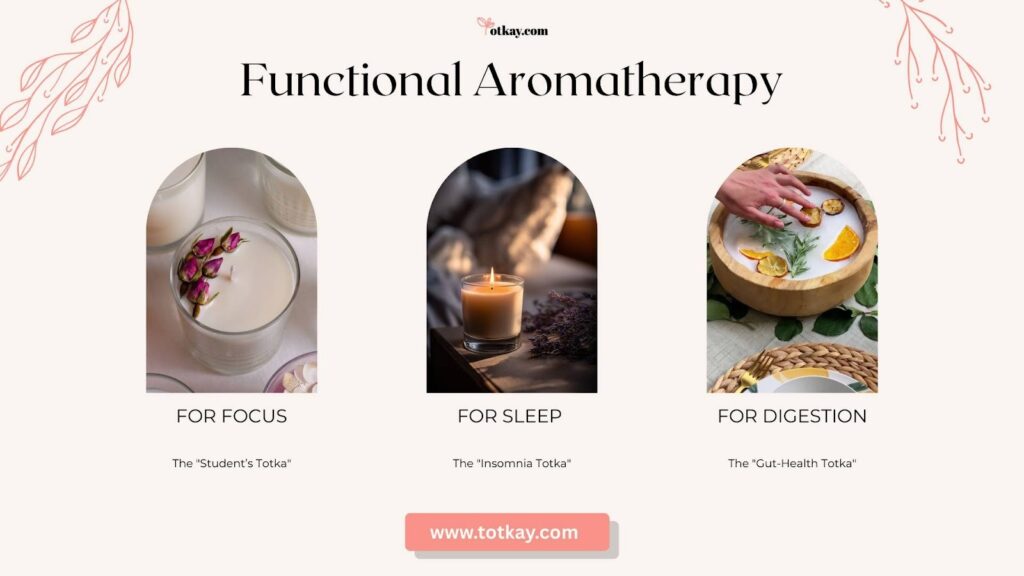
- For Focus (The “Student’s Totka”): Blend Rosemary + Lemon. Rosemary stimulates memory retention, while lemon promotes alertness.
- For Sleep (The “Insomnia Totka”): Blend Lavender + Cedarwood. Lavender lowers heart rate, and cedarwood provides a grounding, earthy base.
- For Digestion (The “Gut-Health Totka”): Blend Peppermint + Ginger. Inhaling peppermint can help settle nausea and stimulate digestion.
Conclusion: Lighting the Path to Wellness
Candle making at home is more than a craft; it is a transformative path to wellness and mindful living. By using pure waxes and blending unique scents, you actively improve your indoor air quality, uplift your mood, and create a personalized sanctuary.
Each secret shared in this guide, from clever totkay to expert troubleshooting, equips you to master the art of clean and natural candle crafting. This journey turns every burn into an act of self-care, making your home a haven of relaxation and positive energy.
Ready to try your hand at these pro-level tips with Tokay? Light up your creativity and share your favorite secret in the comments below. The first 20 responses will receive a custom scent blend recipe to elevate your candle-making game. Do not let this illuminating opportunity pass you by!
Frequently Asked Question
Why does my homemade candle have no smell?
This usually happens because you added the fragrance oil when the wax was too hot or too cold. Always add scent at 185°F. Also, ensure you let the candle cure for at least 7 days before lighting it.
Is soy wax really better than paraffin?
Yes. Paraffin is a petroleum byproduct that releases carcinogens when burned. Soy wax is plant-based, biodegradable, and burns cleaner with zero petrol-carbon soot.
How do I make my candles burn evenly?
The first burn is the most important. Let the candle burn until the entire top layer of wax is liquid (the melt pool) and reaches the edges of the jar. This sets the “memory” of the wax and prevents tunneling in future burns.

Hi, I’m a dedicated writer at Totkay.com, passionate about sharing practical tips and solutions to make your life easier. Explore my articles for helpful insights and valuable advice. Stay connected for more expert content!
Related posts:
 Ghar pr Jewelry Polish Karne Ka Tarikay
 Koyla Se Bartan Dhone Ke Fayde
 6 Best Homemade Air Fresheners: Natural Recipes That Work
 The Ultimate Guide to Homemade Furniture Polish (Chemical-Free)
 Homemade Refrigerator Deodorizers That Actually Work
 4 Homemade Dishwashing Liquid Recipes that work | Totkay.com