
Home Remedies for Dry Skin in Winter: Simple Totkay That Actually Help
By Dr. Nimra Chohan, MBBS · Updated

Cold air, low humidity, hot baths, and room heaters pull water from your skin, which is why winter dry skin feels tight and flaky. The simplest of all home remedies for dry skin is to moisturise on slightly damp skin right after you wash.
Choose a fragrance-free cream or ointment and reapply it after washing. Glycerin is one ingredient to look for on the label. American Academy of Dermatology guidance.
Why Skin Gets Dry in Winter
Your skin barrier is the outer layer of skin cells and natural oils that helps your skin retain moisture and keeps irritants out. Winter conditions pull that water out faster than your skin can replace it, so it helps to know the cause. In desi winters, these four usually play a part:
- Cold air: it holds very little moisture, so cold weather dries your face, lips, and hands.
- Low humidity: dry air outdoors and indoors draws water from the skin surface and lowers skin hydration.
- Hot water baths: a long, steaming bath strips natural oils along with dirt.
- Room heaters: gas and electric heaters lower the humidity of your indoor environment.
Watch for these symptoms: tightness after washing, flakiness, itching, redness, and cracked lips and heels. The Mayo Clinic lists the same signs and notes that deep cracks can bleed.
Some people have a dry skin type, which stays dry in every season, and sensitive skin often feels the dryness first. Winter dryness is temporary and usually eases when the weather warms up. Ask a dermatologist if the dryness stays all year, and see our dry skin home remedy guide for year-round care.
Traditional ingredients for dry skin
Glycerin and gulab jal, malai and honey, aloe, coconut oil and oatmeal are familiar totkay. The clinical guidance linked here supports a simpler starting point: a fragrance-free cream or ointment after washing. It does not establish how often to use a homemade mask or how long a mixed preparation keeps.
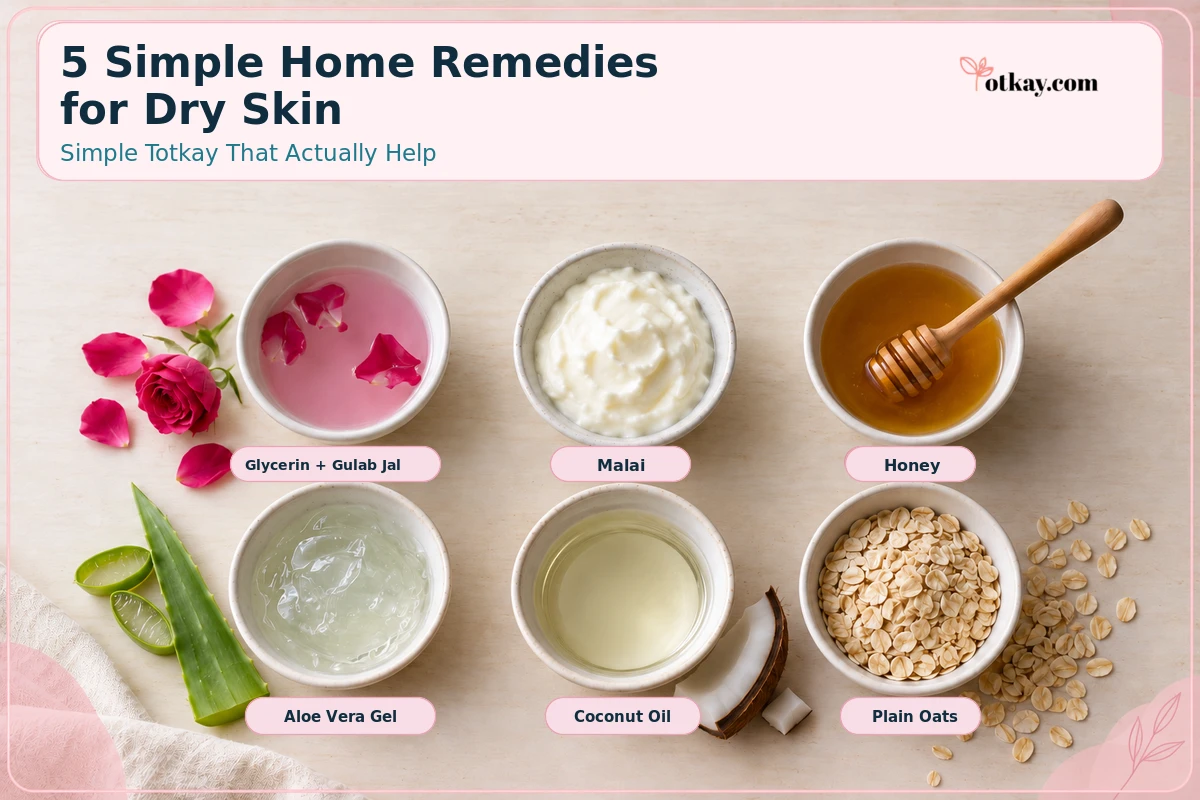
Glycerin, rose water and milk-cream masks
If you want glycerin in your routine, choose a prepared moisturiser that lists it. A rose-water blend or a food mask adds ingredients that may irritate sensitive skin. Skip ingredients you know you react to.
Aloe, coconut oil and oats
Aloe can cause burning, itching or a rash. Research on aloe for burns does not establish that it treats winter dryness. If a new product irritates your skin, wash it off and stop using it. NCCIH’s review of aloe.
If coconut oil leaves your face greasy or aggravates breakouts, choose a fragrance-free moisturiser labelled non-comedogenic. For an oatmeal bath, follow the directions on a colloidal oatmeal bath product. The reviewed sources do not establish a dose or frequency for kitchen oats.
When trying a new skin-care product, the AAD suggests testing a small area of the inner arm twice daily for seven to ten days, following the usual contact time for rinse-off products. How to test a new product.
A Daily Routine That Locks in Moisture
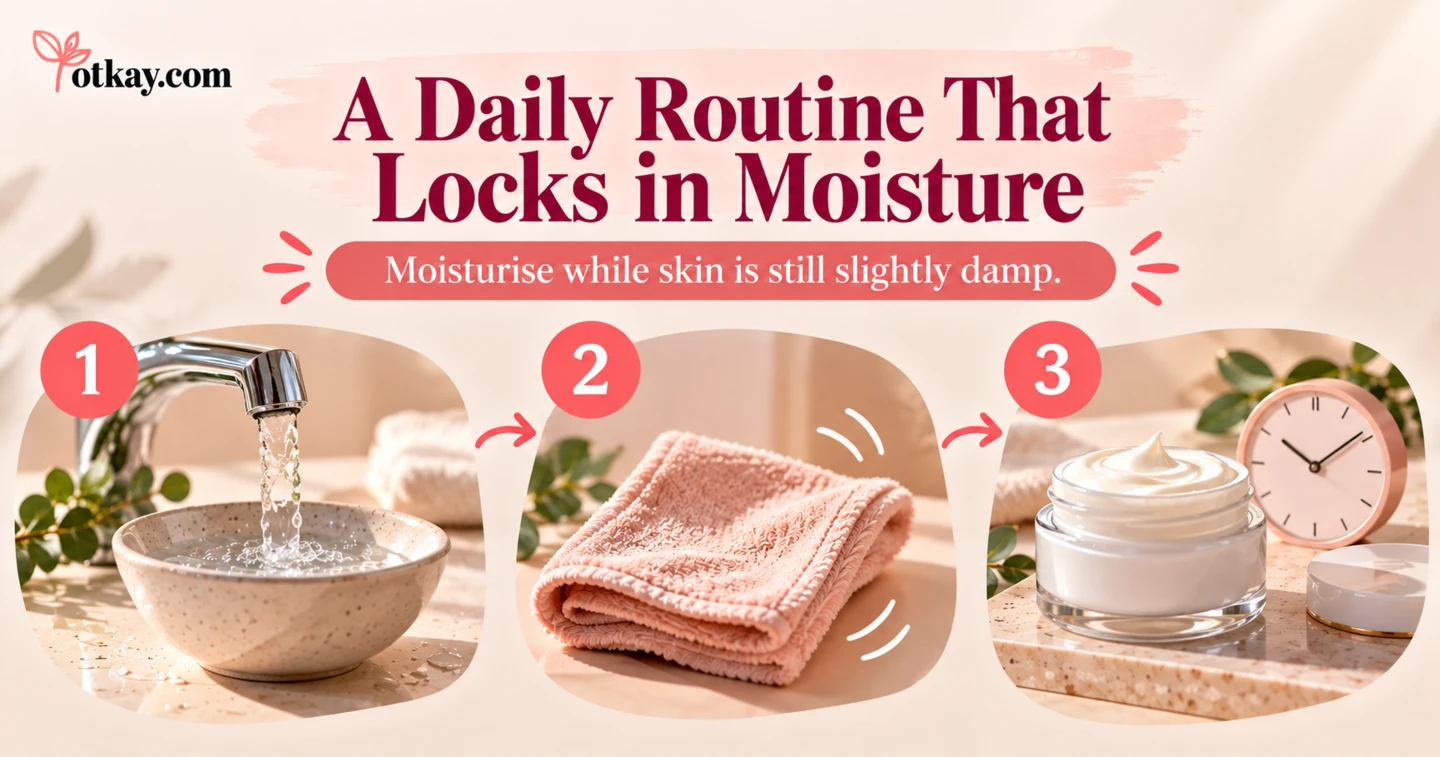
These remedies help, but daily habits decide whether your skin stays hydrated. These tips work as a simple dry skin treatment at home, and you can pair them with a skincare routine for your skin type.
Keep moisturiser close to the sink so you can reapply it after washing.
- Warm water: use warm, not hot, water and keep each bath or shower to about 5 to 10 minutes.
- Gentle cleanser: choose a fragrance-free cleanser, remove makeup gently, and skip harsh soap on your face.
- Moisturise on damp skin: pat skin dry with a towel instead of rubbing, then begin applying moisturiser right away, within a few minutes of washing, while skin is still damp.
- Sunscreen in the day: wear a broad-spectrum sunscreen with SPF 30 or higher to protect your skin, even in winter.
- Lips and hands: use lip balm, wear gloves when you wash dishes and outdoors in the cold, and add a thin layer of petroleum jelly over moisturiser at night to seal very dry heels, hands and lips.
- Water and humidity: drink enough water through the day, and run a humidifier in your bedroom while you sleep. Clean it regularly.
When you buy a moisturiser, choose a fragrance-free cream with ceramides, hyaluronic acid, glycerin or shea butter. Wear loose cotton clothes next to your skin, because wool can irritate dry, sensitive skin.
Common Mistakes and Ingredients to Avoid
Some popular totkay and natural remedies make dryness worse, because they irritate skin that already lacks water. Even a good remedy cannot undo the irritation these ingredients cause:
- Lemon juice and baking soda: lemon juice is acidic and baking soda is alkaline, so both can irritate dry skin.
- Toothpaste: it contains ingredients that suit teeth, not skin, and they can sting.
- Undiluted essential oils: strong oils can burn the skin and irritate.
- Alcohol-based products: alcohol in a toner or other skincare product dries the skin further.
Your habits can also slow healing, so watch for these three.
- Scrubbing flaky skin hard: rubbing or exfoliating dry, peeling skin can make the dryness worse. Pat it gently and moisturise instead.
- Using many new products at once: you cannot tell which one caused a reaction.
- Very hot showers: hot water strips natural oils, so keep it lukewarm.
Home remedies support the skin barrier, but they do not treat eczema or other skin conditions. The American Academy of Dermatology shares more dermatologist tips on dry skin. See a dermatologist if you notice any of these:
Seek medical advice if dryness persists despite self-care, itching disrupts sleep, or cracks become painful or bleed. Seek prompt care for spreading redness, warmth, swelling or pus. Mayo Clinic on dry skin and complications.
Conclusion
For everyday winter dryness, keep showers short and apply fragrance-free cream or ointment while the skin is still damp.
These steps relieve winter dryness and help keep it away, but home remedies do not replace care from a dermatologist when you need it.
Looking for more gentle, natural ideas for your skin? Browse our skin care Totkay for remedies by skin type and season, or explore Totkay’s full guide to natural remedies for everyday health and beauty.
Ready to build a full routine? Find the right daily routine for your skin type.
Frequently Asked Questions
Can I apply glycerin directly on my face?
Choose a prepared face moisturiser containing glycerin and follow the label.
The cited guidance does not specify a homemade glycerin-to-rose-water ratio.
Stop using it if your skin turns red or stings.
Is coconut oil good for dry skin on the face?
It depends on your skin type. Coconut oil softens dry skin on the body, hands, and lips, but it can clog pores for some people. If you have acne-prone skin or an oily T-zone, skip it on your face and choose a lighter moisturiser instead.
If you still want to try it, patch test first and use a tiny amount.
How often should I moisturise dry skin in winter?
Apply moisturiser after washing and again when the skin feels dry.
Use a thicker form of moisturiser, such as a cream or ointment, at night when your skin feels especially dry.