
How to Clean Burnt Pots and Pans: Check the Material Before Choosing a Method
By Dr. Nimra Chohan, MBBS · Updated

A burnt patila, a scorched degchi, or a blackened tawa is frustrating, and the first instinct is to scrub hard. That is how pans get scratched, warped, or damaged. The safer way to clean burnt pots and pans is to let the pan cool, find out what it is made of, and use warm water, dish soap, and a soft, non-abrasive tool.
Different methods suit different cookware, so a method that works on one pan can damage another. This guide uses care advice from Le Creuset, Lodge, Meyer and Hawkins. We have not tested any product, and your cookware maker’s instructions always come first.
Step 1: Let the Pan Cool and Identify the Material
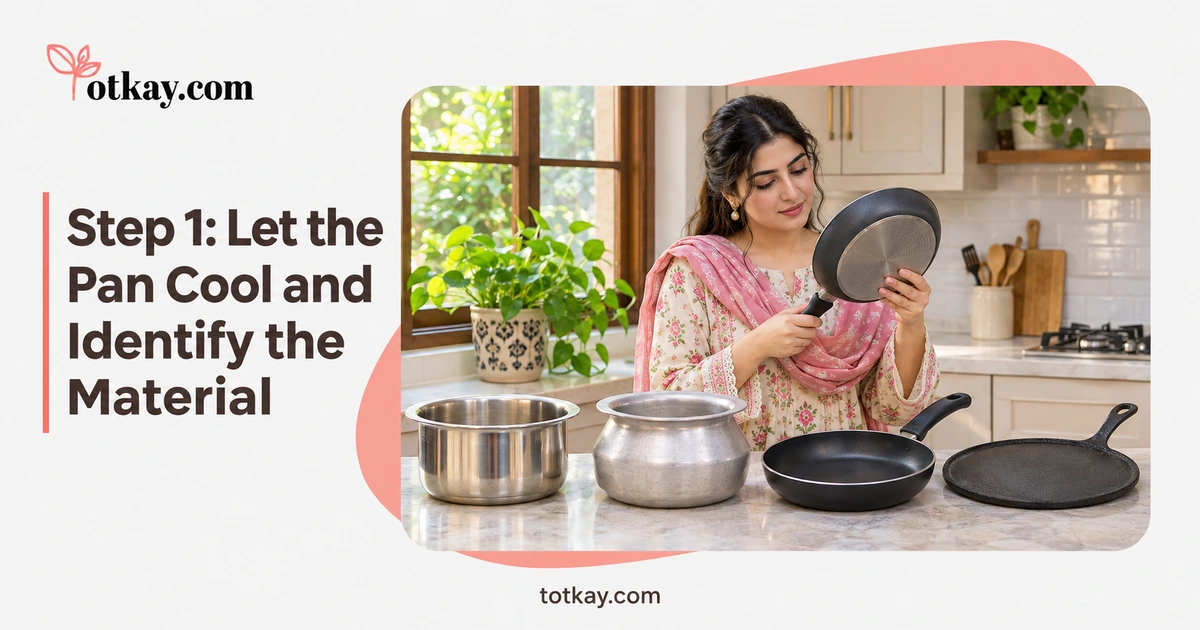
The problem: Burnt food looks like an emergency, so people pour cold water into a hot pan.
The fix:
- Let the pan cool for a few minutes first. Le Creuset says not to plunge a hot pan into cold water, because it can warp the base of a stainless pan or crack enamel.
- Find the material: stainless steel, non-stick, enamel, hard-anodised aluminium, plain aluminium, or seasoned cast iron.
- Check the care booklet, the label or the maker’s website. We follow the same label-first approach in our tea stain guide.
- If you are not sure, start with the gentlest method: warm soapy water and a soft sponge.
Burnt Stainless Steel Pan or Patila
The problem: Black, burnt-on food on a steel patila tempts you to reach for steel wool or a scouring pad.
The fix (Le Creuset, stainless steel):
- Fill the pan with warm, soapy water (hot water and a little dish soap), or baking soda and water, and let it soak until the burnt residue loosens.
- For stuck-on food, Le Creuset suggests boiling water with dish soap in the pan on the stove for 10 to 15 minutes. That is the maker’s advice for its own stainless range, not a rule for every pan.
- Once the food bits soften, gently scrub the burnt area with a nylon or non-stick sponge. Do not use metal scouring pads or abrasive cleaners.
- Rinse and dry with a soft cloth right away to avoid water spots.
Burnt Non-Stick Pan or Non-Stick Tawa
The problem: A burnt non-stick surface is easy to damage while cleaning.
The fix:
- Cool the pan, then clean burnt non-stick cookware by hand with warm water, mild dish soap, and a non-abrasive sponge made for non-stick.
- Do not use steel wool, metal pads, or abrasive powders, even on tougher stains. Le Creuset and Meyer both warn against them.
- Overheating and scratching can damage the coating, and Le Creuset’s warranty does not cover that damage.
- We found no manufacturer method to repair a damaged coating. If the coating is scratched or peeling, check the maker’s advice.
Burnt Enamel and Hard-Anodised Pans
The problem: Enamel can chip, and hard-anodised finishes can dull when scrubbed too hard.
The fix:
- Enamelled cast iron (Le Creuset): Cool the pan for a few minutes, soak it in warm water for 15 to 20 minutes, then use a nylon or soft pad. Avoid metal pads, scourers, and metal tools scraped across the enamel.
- Hard-anodised aluminium (Meyer): For uncoated pans, soak in hot water with dish detergent. For burnt-on spots, Meyer describes a paste of baking soda and water rubbed on with a nylon pad for up to 30 minutes. Do not use steel wool, scouring pads, oven cleaners, or chlorine bleach cleansers.
- Do not put these pans in the dishwasher unless your use and care guide says it is safe.
Aluminium Degchi and Pressure Cooker: Follow the Maker
The problem: Many websites tell you to boil lemon or vinegar in aluminium, but that is not a safe general rule.
The fix:
- Hawkins says to wash its aluminium cookers soon after use with hot water, mild soap and a sponge, then dry them completely, because aluminium can pit when left wet.
- Hawkins also says not to leave salted liquid, vinegar, lemon juice, mayonnaise or mustard in the cooker.
- For these reasons, we do not give an acid-simmer recipe for aluminium.
- For a pressure cooker, follow the manual for your model. We do not give steps for removing the lid, gasket, or vent parts.
- Hawkins gives burnt-cooker methods for specific models. Some use abrasives or pressure, so use only what your own model’s manual allows.
Seasoned Cast Iron Tawa or Karahi
The problem: Harsh cleaning can damage the seasoning on cast iron.
The fix (Lodge):
- Let the cast iron pan cool, hand wash it with warm, soapy water, dry it completely, and rub on a thin layer of oil.
- For occasional tough messes, Lodge suggests simmering water in the pan for 3 to 5 minutes. Once the pan has cooled, release the burnt bits from the bottom of the pan with a pan scraper.
- Lodge suggests holding off on tomato or lemon dishes until the seasoning is well established.
- If your tawa is not seasoned cast iron, use the instructions for its actual material.
Burnt Milk or Kheer at the Bottom of the Patila
The problem: A scorched pot of milk has a brown layer on the bottom of the pan and a smell that stays.
The fix:
- Switch off the heat and let the pot cool. Do not scrape the base while it is hot.
- Fill it with warm, soapy water and soak it, then follow the method for your pot’s material above.
- Loosen the layer with a soft scraper, a wooden spoon, or a wooden spatula, and gently rub off the burnt food particles instead of using elbow grease or metal tools.
- To prevent a repeat, cook milk on low or medium heat. Le Creuset says overheating is a common cause of sticking.
What Not to Do
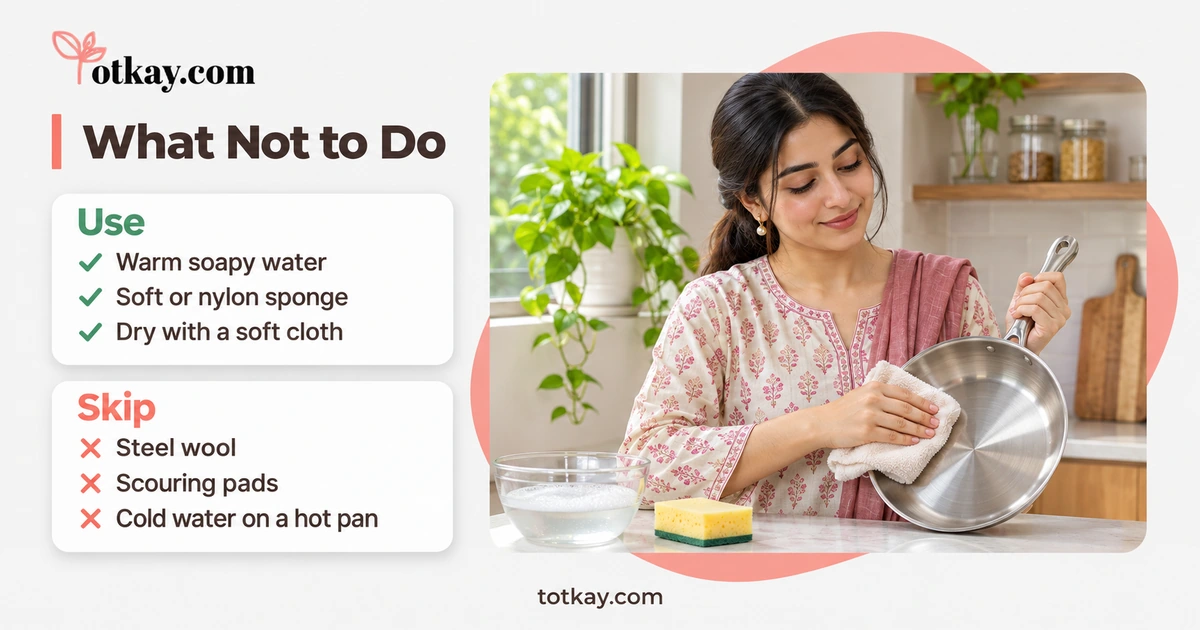
The problem: Stubborn stains and scorch marks make online cleaning hacks tempting, but most of them are not backed by cookware makers.
The fix: Skip these:
- Steel wool, scouring pads, and balls of aluminum foil. The makers above warn against metal pads and abrasives.
- Heating dishwasher tablets in a pan, or oven cleaner. Meyer says not to use oven cleaners on hard-anodised cookware.
- Chlorine bleach cleaners on hard-anodised pans (Meyer), or mixing bleach with vinegar or ammonia. See the mixing warnings in our DIY Cleaning Products guide.
- Boiled lemons or white vinegar in aluminium cookware, as explained above.
- The dryer sheet method and “powerful” baking soda and vinegar mixes. We found no cookware maker that recommends them.
- Lemon juice as a “sterilizer”. We found no source for that claim.
- Fixed overnight soaks. The makers above give short soak times, not overnight ones.
- Harsh chemicals on non-stick or cast iron, and cold water on a hot pan.
Prevent Burnt Food
- Cook on low heat or medium heat and avoid high heat, because overheating is a common cause of sticking. Le Creuset says not to preheat its stainless pans on high.
- Use enough oil or fat, and wipe off sticky oil build-up. Le Creuset notes it can build up as a residue over time.
- Stay near the stove while you cook. Multitasking is an easy way to burn milk, rice or daal.
- See more kitchen guides in our Home & Kitchen Tips section.
When to Stop and Contact the Manufacturer
Stop and check the maker’s guidance if:
- Non-stick coating is peeling or deeply scratched.
- Enamel is chipped or cracked.
- A pan is warped or pitted.
- The gasket, vent, or lid of a pressure cooker looks damaged.
Warranty terms differ by brand, so read yours before you try anything stronger.
Frequently Asked Questions
What is the best way to clean burnt pots and pans?
Cool the pan, identify the material, and soak it in warm soapy water. Scrub gently with a soft sponge, and follow your cookware maker’s instructions.
Is baking soda safe on all cookware?
No. Le Creuset mentions baking soda and water for stainless steel, and Meyer mentions a paste for uncoated hard-anodised pans. We found no source that says it is safe for every material.
Can I use vinegar or lemon juice on a burnt pan?
Check your maker’s instructions first. Hawkins warns against leaving vinegar or lemon juice in its aluminium cookers.
Can I use steel wool on a burnt pan?
Not on non-stick, enamel or hard-anodised pans. The makers we reviewed warn against steel wool, scouring pads and abrasives.
Why does food stick and burn?
Overheating is a common cause of sticking, according to Le Creuset. Use low or medium heat and enough oil or fat.
Conclusion
To clean burnt pots and pans safely, cool the pan, identify the material, and use warm soapy water with a soft tool. Follow your cookware maker’s directions, and skip abrasive tools and risky mixes. For more guides, see our Cleaning Hacks category and our Nail Polish Removal guide.