
Home Remedies for Hair Growth: Baal Mazboot Karne Ka Tarika

Home remedies for hair growth can support healthy hair, but research is limited, and they cannot fix hair loss caused by thyroid problems, PCOS, or genetics. Scalp massage and diluted rosemary oil have the strongest support, although the evidence comes from small studies. Other natural remedies, such as oils and masks, mainly protect the hair you already have.
Choose one or two that match your concern, evaluate them over months rather than days, and see a doctor if heavy shedding continues.
Baal Girne Ki Wajuhat: Common Causes of Hair Loss
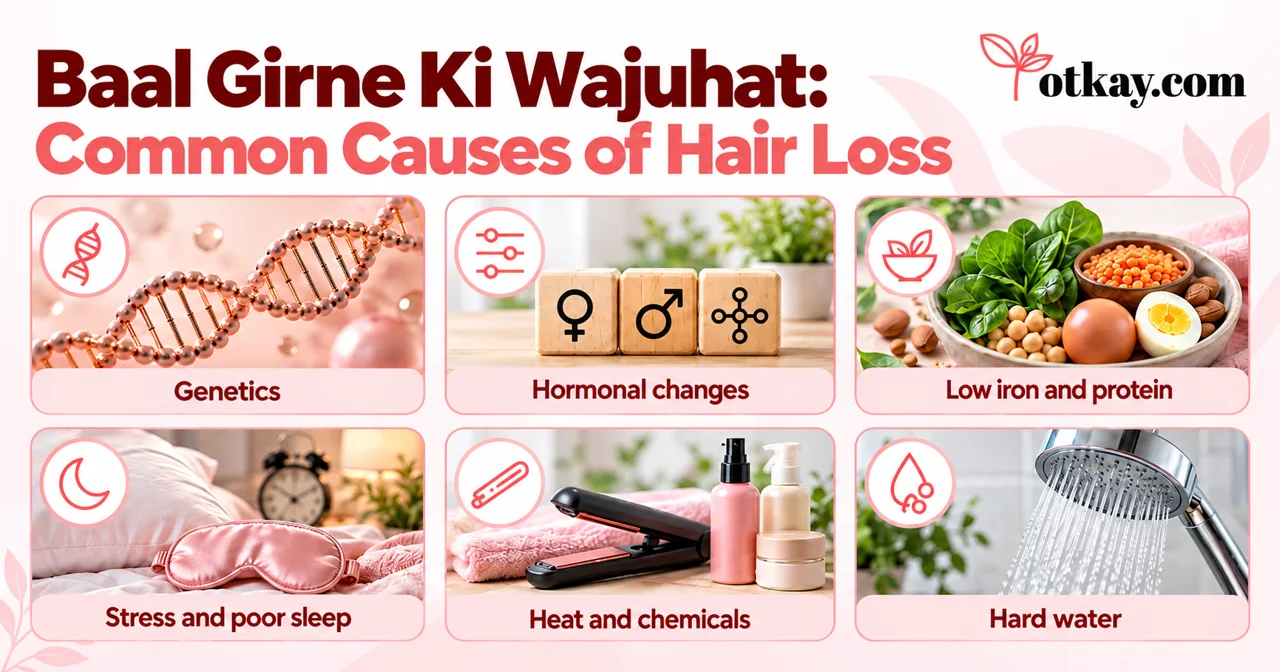
Losing 50 to 100 hairs a day is normal (AAD). Hair fall becomes a concern when you see clumps, a wider parting, or thinning hair. Check the common causes below before you try any remedy for healthy hair growth.
Genetics and Hormones
Pattern hair loss and hormone-related problems are common reasons for thinning hair.
- Genetics: pattern hair loss (androgenetic alopecia) runs in families, with a receding hairline or thin crown in men and a wider parting in women.
- Hormonal changes: thyroid problems and PCOS can cause hair loss and need medical care.
- After pregnancy: according to the AAD, shedding a few months after delivery is common and usually settles within six to nine months.
Low Iron and Poor Nutrition
Diet and iron levels affect hair health.
- About 4 in 10 Pakistani women of reproductive age had anaemia in the 2018 National Nutrition Survey (UNICEF key findings).
- MedlinePlus lists poor nutrition and a low-protein diet as causes of hair loss.
- Get a blood test first, because the AAD says biotin, iron, or zinc can be harmful without a deficiency.
Stress, Heat and Chemicals
Daily habits can cause shedding or breakage that looks like hair fall.
- Stress and illness: surgery, illness, or a death in the family can trigger heavy shedding a few months later.
- Heat and chemicals: rebonding, straighteners, and hair colour cause breakage that looks like hair loss.
Scalp Infections and Hard Water
Not every cause is genetic or hormonal.
- Scalp infections: the AAD lists scalp ringworm, a contagious fungal infection, as a cause of hair loss if untreated.
- Hard water: may leave hair dry and rough, but it is not a proven cause of hair loss.
Baal Mazboot Karne Ke Liye Top Gharelu Totkay
A simple baal mazboot karne ka tarika can include three habits: scalp massage, regular oiling, and a weekly hair mask. Hair grows slowly, so give any remedy several months.
- Scalp massage and rosemary oil have small studies behind them.
- Other oils and masks mainly condition the hair you already have.
Scalp Massage
Standardized scalp massages were tested in a 2016 study of nine Japanese men, who had thicker hair strands after four minutes of daily device massage for 24 weeks (Koyama et al.).
- It measured strand thickness, not new hair growth, and hand massage was not tested.
Massage your scalp gently because hard rubbing can pull out weakened hairs:
- Warm one tablespoon of coconut or olive oil until it feels comfortable on your wrist.
- Apply the oil to the scalp, not just the lengths.
- Use fingertips, not nails, and gently massage your scalp in small circles for four to five minutes.
- Repeat daily without oil, and with oil two or three times a week.
Myth Check: Follicle and Blood Flow Claims
Online posts often say massage or oils stimulate hair follicles, increase blood flow, or nourish hair.
- Claims that massage can stimulate blood circulation or scalp circulation are common. The studies here did not test blood flow.
- Claims that an oil can strengthen hair follicles or nourish hair are common in product marketing. The trials measured hair count or strand thickness instead.
Hair Loss Home Remedies at a Glance
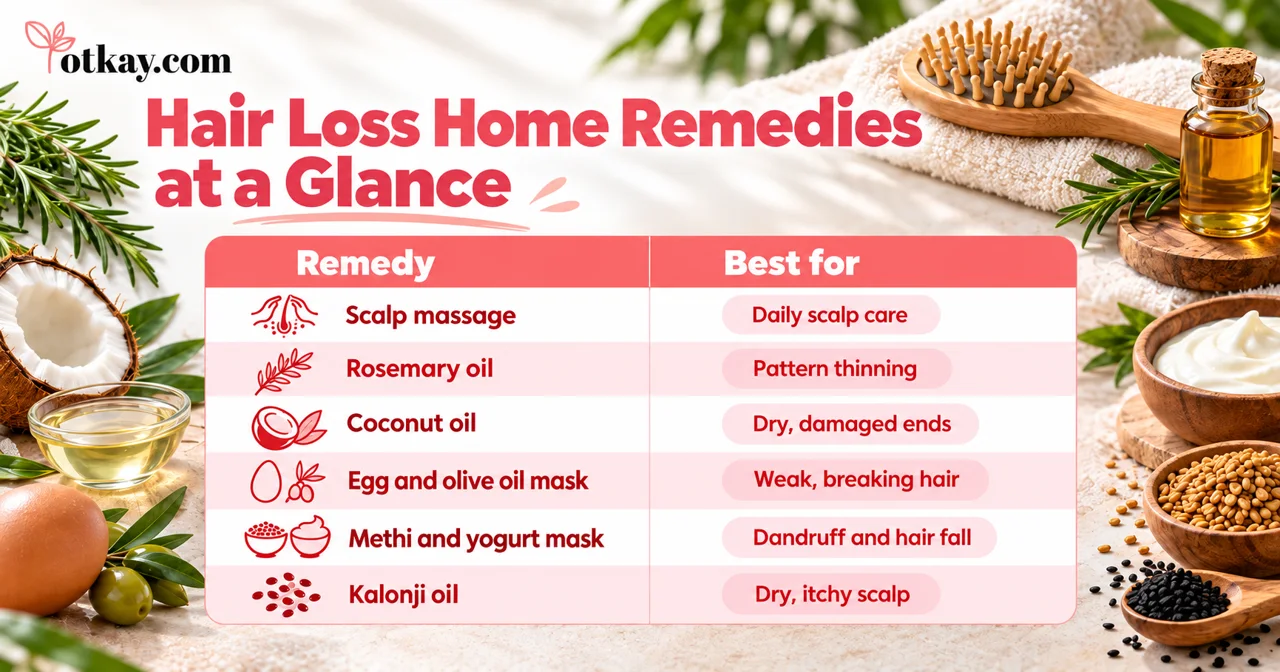
Compare the main remedies, then pick one or two:
| Remedy | Best For | How to Use | How Often | What the Evidence Shows |
| Scalp massage | Hair thickness | Fingertips, small circles, 4 to 5 minutes | Daily | One small study (9 men, device, 24 weeks) |
| Rosemary oil | Androgenetic alopecia | Diluted in carrier oil; patch test first | Per product label | One 6-month trial against 2% minoxidil |
| Onion juice | Patchy hair loss | See a dermatologist first | Not applicable | One small 2002 trial, in alopecia areata |
| Egg and olive oil mask | Dry, weak hair | Roots to ends, 20 to 30 minutes | Once a week | Traditional; no growth studies cited |
| Methi and yogurt mask | Dry scalp, dandruff | Paste on scalp, 30 minutes | Once a week | Traditional; no growth studies cited |
| Coconut oil | Dry, damaged ends | Warm oil before or after washing | Twice a week | Less protein loss in a lab study |
| Kalonji oil | Dry, itchy scalp | Mixed with coconut oil | Twice a week | Traditional; research limited |
If It Looks Like Pattern Baldness
Natural treatments and home care alone will not reverse pattern baldness or prevent genetically driven hair thinning.
- For hereditary hair loss, the AAD says minoxidil and an at-home laser can help some people regrow hair.
- Medical treatments tend to work best when started early, so ask a dermatologist before you decide.
- Read about natural and medical hair growth solutions.
Hair Masks for Softer, Less Brittle Hair
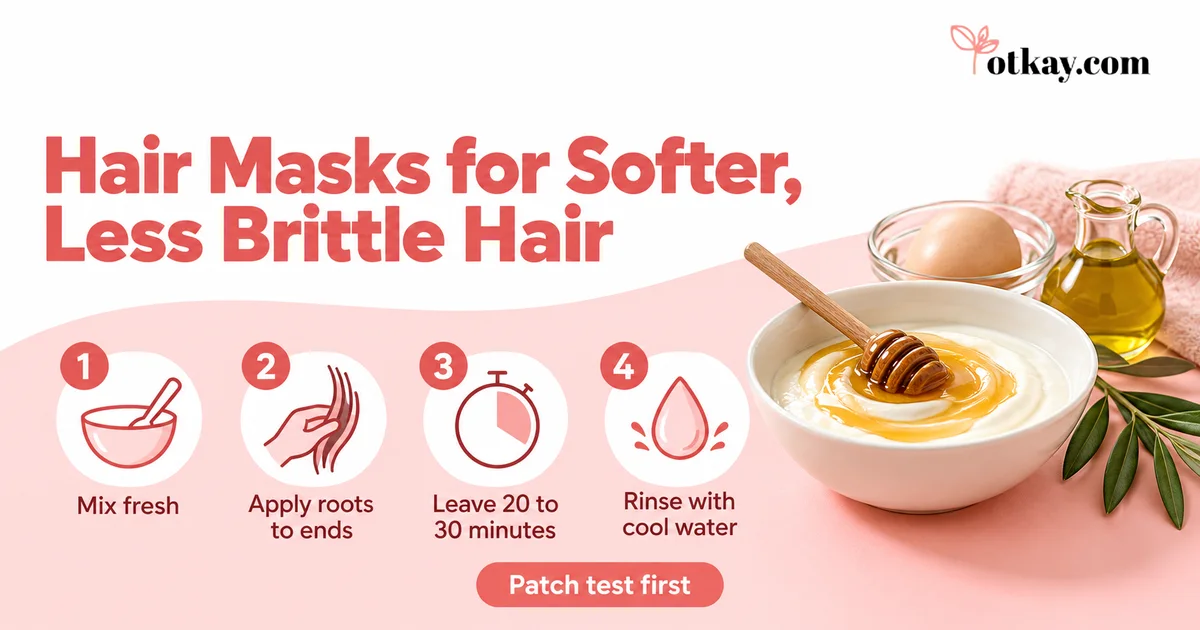
A DIY hair mask does not directly promote hair growth. It coats the hair with moisture and protein, which can reduce breakage and help you keep your hair length. It will not reduce hair fall caused by medical conditions. Use one mask a week, rinse with cool or lukewarm water, and patch test first.
Quick DIY Hair Mask and Rinse Options
These traditional options have little research behind them:
- Methi dana and yogurt: soak 2 tablespoons of fenugreek seeds overnight, grind with 2 tablespoons of yogurt, and leave on for 30 minutes; fenugreek seeds may strengthen hair follicles and support growth, but evidence is still limited. Used for dryness and dandruff; see our homemade dandruff remedies.
- Fresh aloe vera gel: apply 2 tablespoons to a dry, itchy scalp for 20 to 30 minutes. Skip lemon juice on sensitive skin, because it can sting.
- Banana and coconut oil: mash one ripe banana with 1 tablespoon of coconut oil to soften dry ends. It will not repair split ends, which need trimming.
- Green tea rinse: brew green tea, let it cool, and pour it over your hair after shampooing. It is a popular DIY rinse; green tea contains EGCG and other antioxidants that may help protect against DHT and promote healthy hair growth, but reliable growth studies are still lacking.
1. Honey and Yogurt Mask
Best for dry, brittle hair. It conditions the hair; it does not grow hair.
Mix it fresh each time because it spoils quickly in Pakistani summers. Steps:
- Mix 3 tablespoons of plain yogurt with 1 tablespoon of honey until smooth.
- Apply to the hair roots, scalp and lengths.
- Cover with a shower cap for 20 to 30 minutes.
- Wash with a gentle shampoo and lukewarm water.
- Many people find hair softer and easier to comb afterwards. More combinations: our hair mask recipes.
2. Egg and Olive Oil Mask
Keratin makes up most of each hair strand. An egg mask coats the hair with protein; it conditions the surface and does not rebuild the hair.
Olive oil adds moisture. The mask suits weak hair that snaps easily. Steps:
- Beat 1 whole egg with 2 tablespoons of olive oil.
- Apply to damp hair, focusing on the hair roots and ends.
- Leave it on for 20 to 30 minutes.
- Rinse with cool water first, because hot water cooks the egg into the hair; then wash with a mild shampoo.
- Use once a week. Skip it if you have an egg allergy and use the honey and yogurt mask instead.
Hair Oils for Growth and Care: What the Research Says
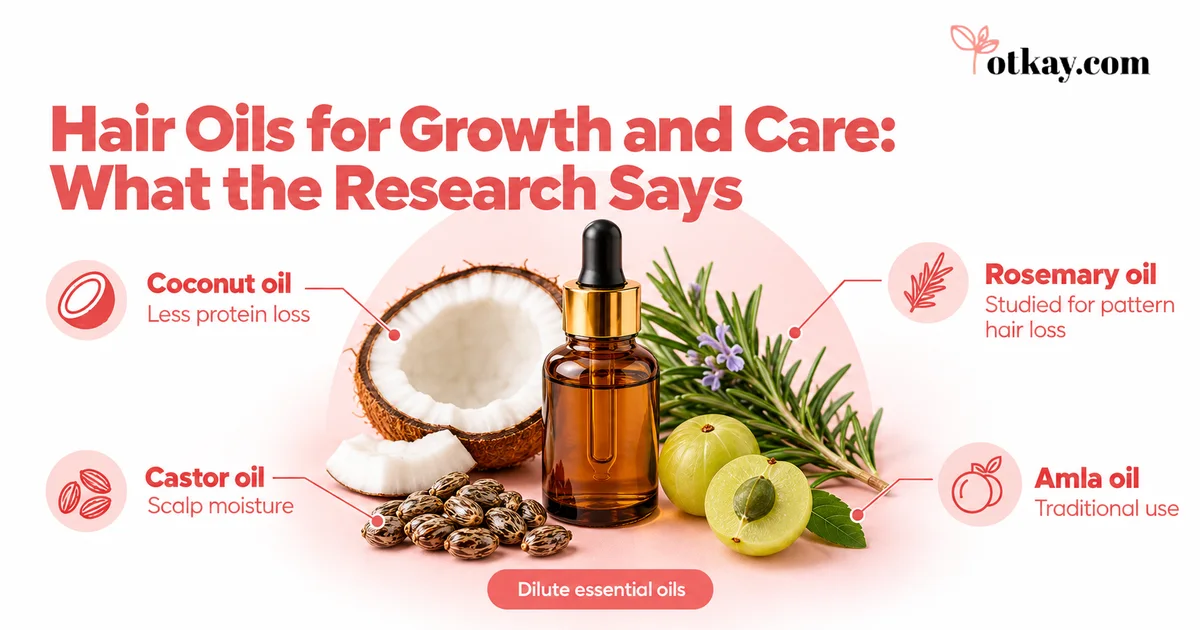
Most oils coat the hair shaft or soothe the scalp. Only a few may promote growth, and the evidence is based on small studies. Always dilute essential oils in a carrier oil such as coconut or olive oil because undiluted essential oils can burn the scalp.
Rosemary Oil
A 2015 trial of 100 people with androgenetic alopecia found results similar to 2% minoxidil after six months (Panahi et al.).
- Hair counts rose at six months, not at three, and itching was more common with minoxidil.
- The trial gives no home recipe. If you use rosemary essential oil, add a few drops to a carrier oil only as your product label directs, and patch test first.
Coconut Oil
A 2003 laboratory study found less protein loss from hair when coconut oil was used before or after washing.
- It protects the hair you have; it has not been shown to promote hair regrowth.
Onion Juice
A 2002 trial in alopecia areata, a condition that causes patchy hair loss, found regrowth in 20 of 23 people using onion juice twice daily for two months, compared with 2 of 15 using tap water.
Traditionally, people blend onions to extract the juice and apply it briefly before rinsing. Onion juice is also linked to claims about collagen production and hair regrowth, although evidence remains limited.
- Patchy loss needs a dermatologist’s diagnosis, so do not self-treat bald patches.
- Fresh onion juice can irritate the scalp, so use it briefly before rinsing rather than leaving it on too long.
Pumpkin Seed Oil
In a 2014 trial of 76 men with androgenetic alopecia, 400 mg capsules daily for 24 weeks increased hair count by 40%, compared with 10% with placebo.
- They were taken by mouth, so ask a doctor before you start capsules.
Other Traditional Oils
None of these has reliable hair growth studies cited here:
- Castor oil: thick and sticky. If you use it, mix one part with two parts coconut oil so it washes out easily.
- Amla oil: a homemade tonic made by boiling dried amla in coconut oil.
- Kalonji oil: a traditional remedy for a dry, itchy scalp. Mix 1 teaspoon with 2 tablespoons of coconut oil because undiluted kalonji oil can feel strong on the scalp.
- Almond and jojoba oil: lighter oils used to reduce dryness. Sesame (til) oil is a common local alternative to jojoba.
- Garlic oil: can burn the skin, so dilute it well and never leave raw garlic on the scalp. Make your own herbal hair oil at home.
Diet and Seasonal Hair Care Tips for Healthy Hair
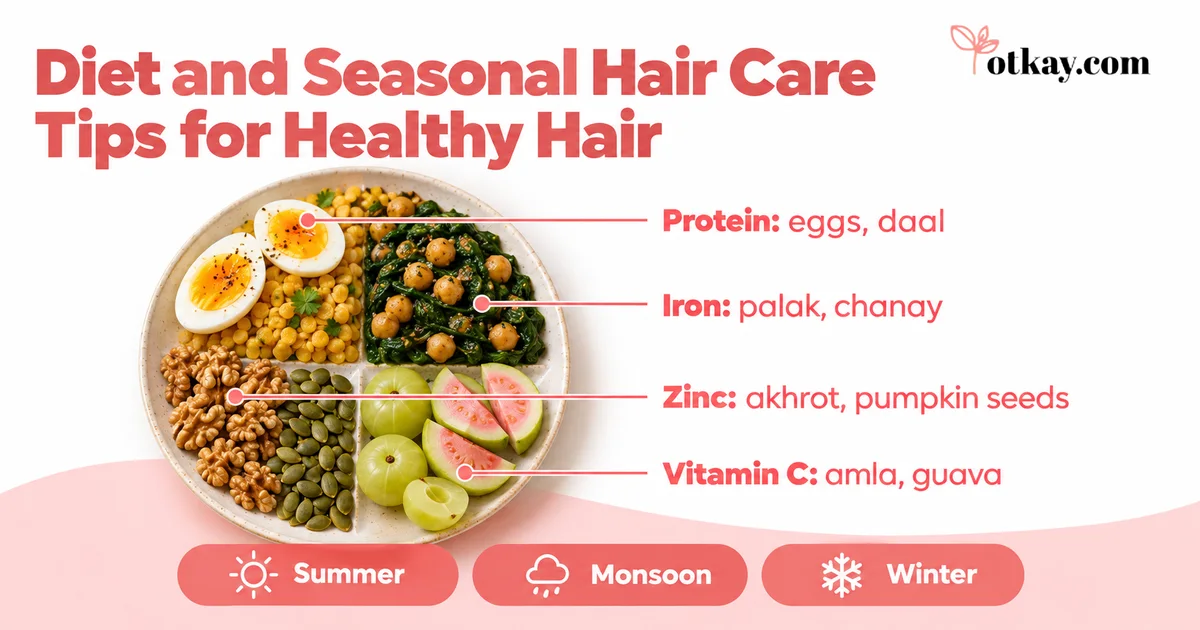
A healthy lifestyle and a balanced diet support healthy hair growth and overall hair health, though food alone does not treat hair loss. Nutrient-rich whole foods help nourish hair follicles.
Foods to Add to Your Weekly Meals
- Eggs, chicken, fish and daal give protein.
- Palak, chanay and red meat supply iron.
- Akhrot (walnuts) and alsi (flaxseed) add omega-3 essential fatty acids; pumpkin seeds add zinc.
- Amla, guava and oranges give vitamin C, which helps your body absorb iron.
- Fish, eggs, and fortified milk contain some vitamin D, and morning sunlight helps your body make vitamin D.
Seasonal Hair Care Routine
Adjust your hair care routine with the season:
- Summer: heat and sweat can clog the scalp, so wash your hair and scalp more often with a mild shampoo and use aloe vera gel instead of heavy oil, since heavy oils and buildup can contribute to clogged follicles on some scalps. Read Does Shampooing Daily Cause Hair Loss?.
- Monsoon: humidity can make dandruff worse, so dry your hair fully and avoid tying it up wet.
- Winter: dry air can leave hair brittle, so add a warm oil massage and a weekly mask; lighter soothing remedies may also improve hair texture by reducing dryness, though they do not guarantee growth.
- All year: if your water is very hard, rinse your hair and scalp well after washing to remove mineral build-up.
Tips, Common Mistakes, and When to See a Doctor
Safe Use Tips
Follow these tips to keep your scalp healthy:
- Patch test every new remedy on your inner forearm and wait at least 24 hours before using it on your scalp. Stop if you notice redness, itching, or burning.
- Start one new remedy at a time so you can tell what helps and what irritates.
- Give each remedy several months, since the studies here ran for 24 weeks or six months, but stop sooner if your scalp is irritated.
- Wash oil out within a day to keep a healthy scalp environment, because heavy oil left on for days can trap dirt and may worsen dandruff.
- Loosen tight ponytails and braids. Constant pulling causes traction alopecia, and the AAD lists too-tight hairstyles among the causes of hair loss.
- Keep lemon, garlic, and essential oils in separate recipes, because too many strong ingredients irritate the scalp.
- Ask a doctor before supplements. The AAD says to take biotin, iron, or zinc only when a blood test shows a deficiency, and NCCIH says saw palmetto may be unsafe in pregnancy or while breastfeeding.
When to See a Doctor
See a doctor or dermatologist if you notice:
- Severe hair loss, clumps of hair, or shedding much heavier than usual, for more than a few weeks.
- Round bald patches or a parting that widens quickly.
- A scalp that hurts, burns, oozes, or develops scaly sores.
- Hair loss with tiredness, weight change, irregular periods, or acne.
- Hair loss that started after a new medicine; do not stop a prescribed medicine on your own. Ask your doctor first.
Why a doctor helps:
- The AAD advises seeing a board-certified dermatologist for an accurate diagnosis, and treatment tends to work best when started early.
Conclusion
Hair loss home remedies work slowly and are most useful as part of a consistent routine.
- Start with gentle scalp massage, diluted rosemary oil, and a weekly DIY hair mask.
- See a doctor or dermatologist if hair loss continues.
- More routines: our hair care category.
This guide gives general information and does not replace medical advice.
Frequently Asked Questions
How long do home remedies for hair growth take to work?
There is no fixed timeline.
- The massage study ran for 24 weeks and the rosemary oil trial for six months, so give a remedy several months.
- Oils and masks can soften hair after a few uses, but they do not grow new hair.
- Take a photo of your parting every month.
Does coconut oil help hair regrowth?
Coconut oil mainly protects the hair you already have rather than promoting new hair growth.
- A 2003 laboratory study found that it reduced protein loss from hair, which can mean less breakage.
- It has not been shown to regrow hair.
How often should I apply rosemary oil?
There is no standard schedule.
- The 2015 trial lasted six months, but its summary does not say how often people applied the oil.
- Follow the dilution and directions on your product label, patch test first, and stop if your scalp turns red, itchy, or starts to burn.
What is the best baal mazboot karne ka tarika for men?
Men commonly experience pattern hair loss, called androgenetic alopecia.
- Rosemary oil and gentle scalp massage have small studies behind them, but none of the home options can reverse genetic baldness on their own.
- Treatment tends to work best when started early, so see a dermatologist if your hairline recedes quickly or your crown is thinning.