
Best Hair Oil for Curly Hair: Choose a Formula Without Miracle Claims
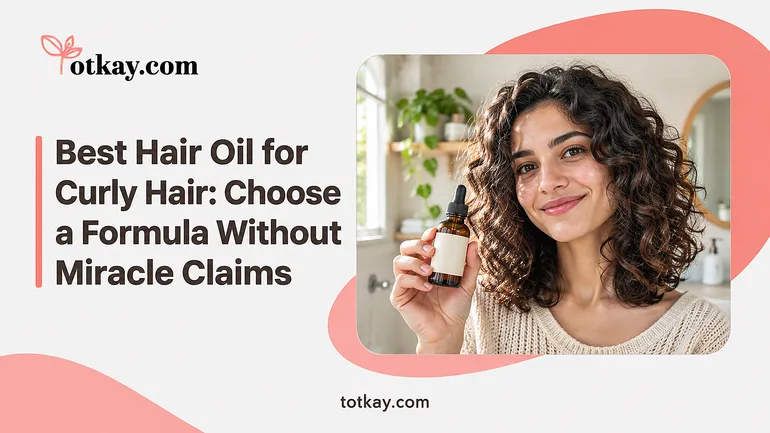
There is no single best hair oil for curly hair. The right hair oil depends on your hair type, strand thickness, and how much product your hair can take before it feels heavy. This guide explains how a hair oil differs from a conditioner, how to read the label, how to apply it, and when to see a dermatologist. It follows the American Academy of Dermatology (AAD) advice on curly hair and leave-in conditioner. We have not tested any products, so we do not rank brands.
There Is No Universal Best Oil for Curly Hair
- Curly hair, including wavy hair, coily hair, and other textured hair, needs more conditioning than straight hair (AAD).
- How your hair responds to an oil depends on the formula, the amount, and your hair type, so results differ from person to person.
- Sources do not rank oils for every curl type, so a “best overall” label is a marketing claim, not a fact.
- Trial and error is normal. The AAD says a routine often takes some testing, so do not be discouraged if a product does not suit your natural hair.
- Choose by formula, strand needs, and directions, not by a “top pick” list.
Hair Oil vs Conditioner: What Each One Does
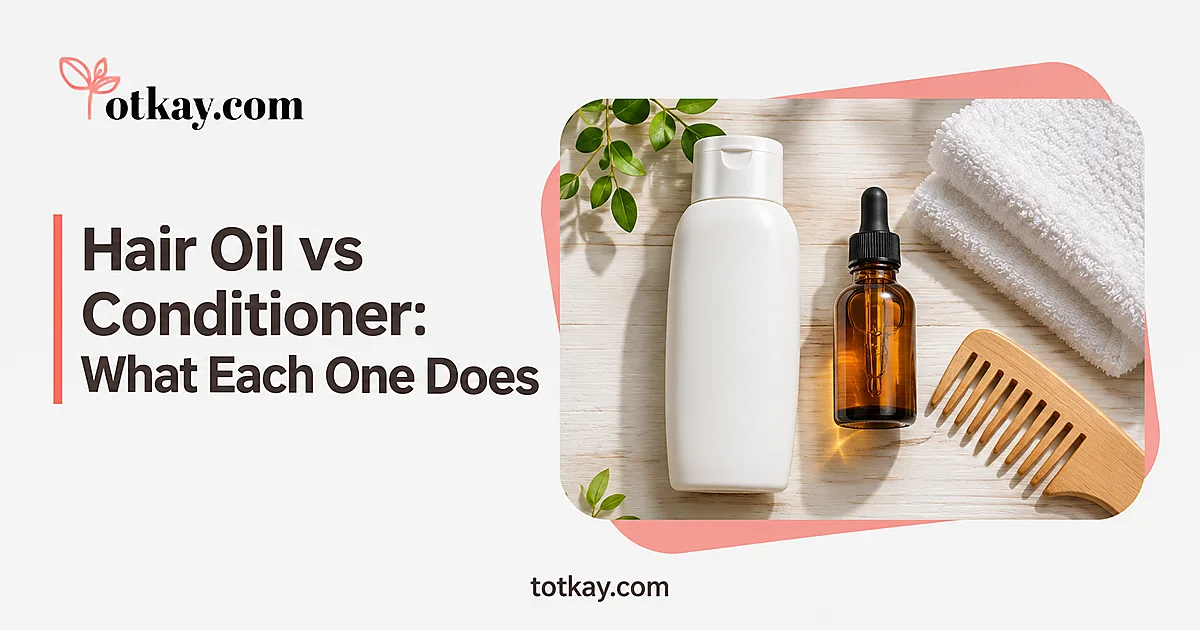
- A conditioner is the main step. The AAD says to condition all your hair, not just the ends, and to apply a thick conditioner after washing.
- A hair oil is usually a finishing step. The AAD suggests applying an oil or a leave-in conditioner after washing and conditioning to help moisturize.
- A leave-in conditioner protects hair and helps with frizz, static, and flyaways, and some products add heat protection.
- If hair is still dry or frizzy after a leave-in conditioner, one dermatologist quoted by the AAD suggests a small amount of oil, such as argan oil.
- Realistic benefits are cosmetic: hair that feels smoother, looks shinier, and shows less frizz. We found no AAD support for structural change.
- Our Hair Care Guide covers the wider routine around washing and conditioning.
How to Choose Curly Hair Oils by Hair Type
- Fine hair: needs a lighter formula so it does not look limp or greasy (AAD, on leave-in products). Lightweight oils or a lighter oil may suit it, but the AAD does not name one.
- Medium hair and thick hair: thick hair needs more product than fine hair, so add a little at a time.
- Coarse hair and coily hair: many websites recommend heavier oils, but the AAD does not, so check how your hair feels after a day.
- Wavy hair, straight hair, and curly textures: the same rule applies. Use the smallest amount that works, and increase only if needed.
- Oily hair or an oily scalp: keep oil on the mid-lengths and ends, away from the roots.
- Blonde hair or color-treated hair: the AAD says color-treated hair can benefit from a leave-in conditioner. Check the oil label for color-safe directions.
- High porosity hair and low porosity hair: some brands sort oils by porosity, but the AAD does not, so treat it as a label hint, not a rule.
For dry hair problems beyond oils, see The Best Remedy for Dry Hair.
Reading the Label: Ingredients and Product Claims
| On the label | What to know |
| Argan oil | The AAD names argan oil as an ingredient to look for in conditioners, and as a small-amount finishing oil. |
| Glycerin, cetyl alcohol, stearyl alcohol | The AAD lists glycerin and fatty alcohols such as cetyl or stearyl alcohol as conditioner ingredients to look for. |
| “Heat protectant” | Some leave-in products add heat protection, and the packaging says so. |
| Nourishing hair oil, weightless hair oil, add shine, frizz control | These are marketing words. Check the ingredients and directions. |
| Vitamin E, omega fatty acids | Common label claims. The AAD pages do not list them as needed. |
| Repairs, restores, bond repair | Be careful. We found no AAD support for structural repair claims. |
| Growth, stimulates hair follicles | We found no AAD support. See the section below. |
Many oil blends use a carrier oil such as jojoba oil, sweet almond oil, grapeseed oil, avocado oil or olive oil, plus extra oils. A longer ingredient list does not mean a better product.- Claims that an oil enters the hair shaft or smooths the hair cuticle also come from brands, not from the AAD pages.
- For other hair oil topics, browse our Hair Oils & Masks section, and check any claim against the product label and a reliable source.
How to Apply Hair Oil Correctly: Oiling Curly Hair Step by Step
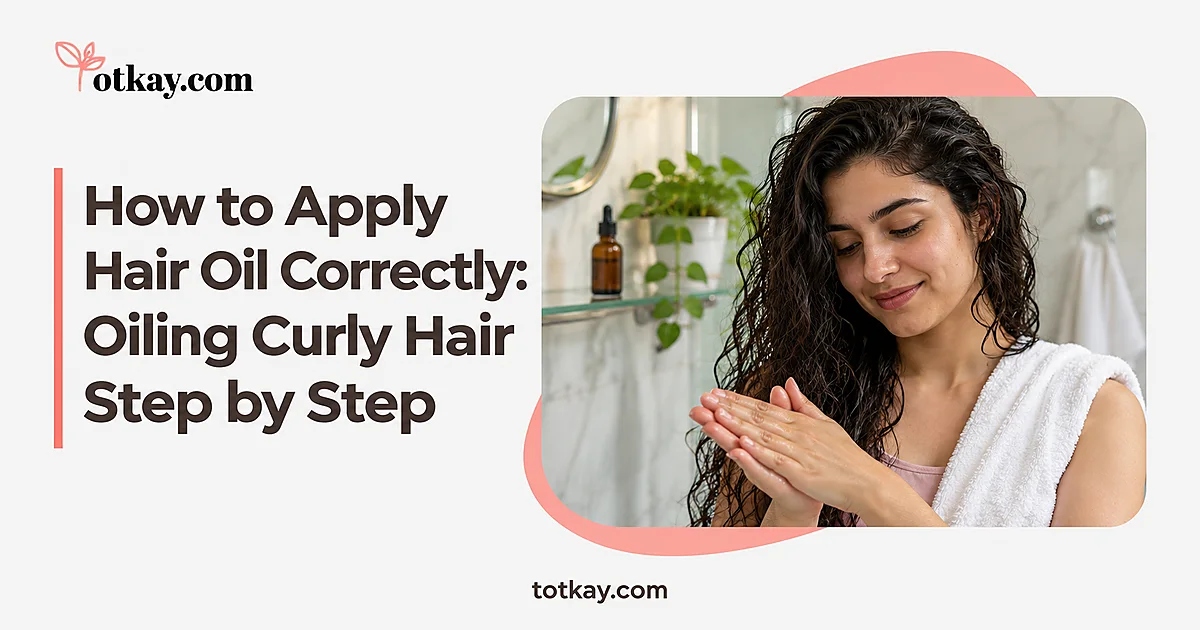
- Start after washing and conditioning, on clean, damp hair. Towel-dry first, but leave the hair slightly damp. The AAD says this spreads leave-in products evenly so they do not collect in one spot.
- Use just a few drops, warm them between your palms, and smooth them over the mid-lengths and ends. The AAD says to use the smallest amount that does the job.
- Work in sections for thick or long hair, and add more only if the hair still feels dry.
- Detangle wet hair with your fingers or a wide-toothed comb, and avoid brushing dry hair (AAD). Some labels say you can use the product on wet or dry hair, so follow the directions.
- Some oils are labeled as a pre-shampoo treatment. If yours is, follow its directions and shampoo it out. The AAD itself suggests conditioning before shampooing when hair is very dry or hard to detangle.
- Protect curls from strong sun with a wide-brimmed hat, because heat and UV rays can dry them out (AAD).
- For dryness and frizz beyond oils, see our Dry & Frizzy Hair articles.
Oil Claims We Did Not Find Sources For
Many websites say that oils such as coconut oil, castor oil, rosemary oil, rosehip oil, or peppermint oil help hair growth, repair damaged hair, or lower hair loss. The AAD pages we reviewed do not make these claims.
- Hair growth and healthy hair growth from scalp massage or rosemary oil: not supported in the AAD sources.
- Repair of damaged hair or split ends: not supported. An oil can make hair feel smoother, but we found no source that it fixes the damage.
- “Restores hair” or “repairs bonds”: not supported.
- Castor oil, coconut oil, or avocado oil being right for a specific curl type: common advice, but not in the AAD sources.
- Homemade blends, essential oil recipes and fixed overnight schedules: we do not give them, because we found no reliable guidance.
Common Mistakes With Hair Oil and Buildup
- Using too much oil. It can weigh hair down and leave a greasy residue.
- Applying oil to the scalp. The AAD warns that leave-in products on the scalp can build up and irritate it, and that dandruff can result from oil buildup when hair goes a long time between washes.
- Skipping the clarifying shampoo when you use oils, gels, and creams often. The AAD suggests one before the moisturizing shampoo.
- Using oil instead of conditioner. The oil is a finishing step, not a replacement.
- Mixing rinse-off conditioner with water in a spray bottle. The AAD says this can do more harm than good.
When to See a Dermatologist
See a board-certified dermatologist if:
- Your hair keeps breaking or stays unmanageable after using both a rinse-out and a leave-in conditioner.
- You notice hair loss, a very itchy or irritated scalp, or dandruff.
- You have questions about caring for thick, curly hair or scalp health.
Do not treat hair loss or scalp irritation with oil alone.
Conclusion
Choose a hair oil for curly hair by hair type, formula weight, buildup, and directions, and skip miracle claims. Use conditioner first, keep oil on mid-lengths and ends, and use the smallest amount that works. For the full routine, see our Hair Care category.
Frequently Asked Questions
What is the best hair oil for curly hair?
There is no single best oil. Choose based on your hair type, strand thickness, and how much product your hair can take, and read the label and directions.
Does hair oil moisturize curly hair?
The AAD suggests applying an oil or a leave-in conditioner after washing and conditioning to help moisturize. Use conditioner as the main step and oil as a finishing step.
Which hair oil is best for fine curls?
Fine hair needs a lighter formula (AAD). Start with a few drops and see how your hair feels.
Can hair oil cause buildup?
Yes. Too much oil, or oil on the scalp, can cause buildup. Use a small amount, and ask a dermatologist about a clarifying shampoo if you use oils, gels, or creams.
Can I use hair oil every day?
Check the product directions. A fixed schedule is not given in the AAD sources, so use the smallest amount that works and stop if your hair feels heavy.
Does hair oil make hair grow faster?
We did not find a source that supports this. See a dermatologist for hair loss.